Report of the 65th Anniversery Annual General Meeting, 2026
The Mongolia Society’s 65th Annual Meeting & Panels was held October 2-3, 2026, at Western Washington University in Bellingham, Washington. The event wasa sponsored by The Mongolia Society, Western Washington University, Mr. Tony Ettinger and the Mongol American Cultural Association.
This year’s meeting honored Professor Henry G. Schwarz, Professor Emeritus at Western Washington University, whose scholarship, teaching, and institutional leadership have shaped the field of Mongolian Studies for more than half a century.
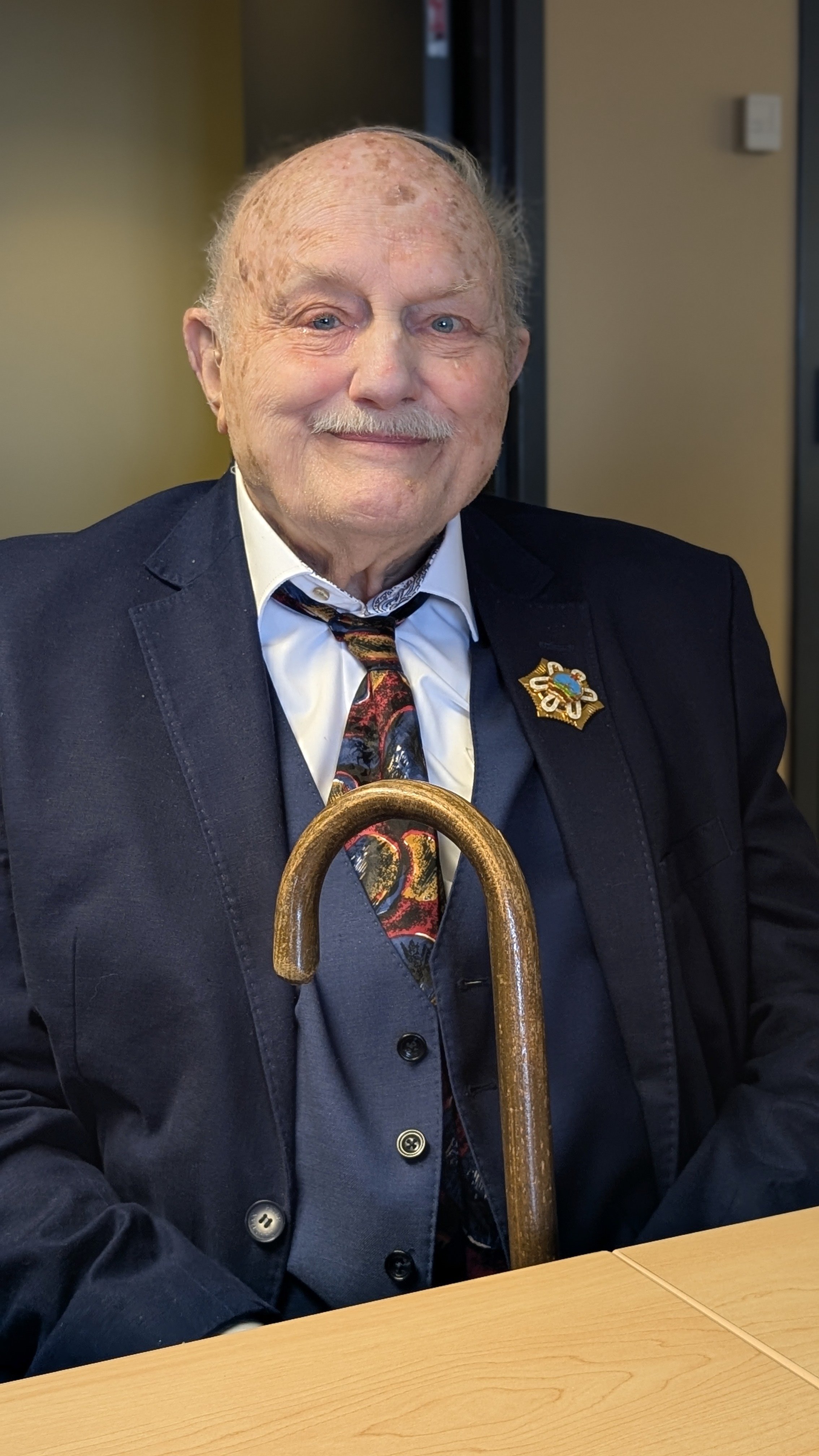
Professor Henry G. Schwarz
The main campus of Western Washington University in Bellingham, Washington, sits on a hill that directly overlooks Bellingham Bay. Bellingham Bay opens up into the larger Salish Sea, which is the overarching marine basin surrounding the area.
The Mongolia Society’s 65th Anniversary Annual General Meeting took place in the Viking Union, located near the University Library on the main campus.
As President Michael Klecheski and Prof. Melissa Chakars discovered in the images below, the walk to and through the Viking Union building includes amazing views of the Bay.
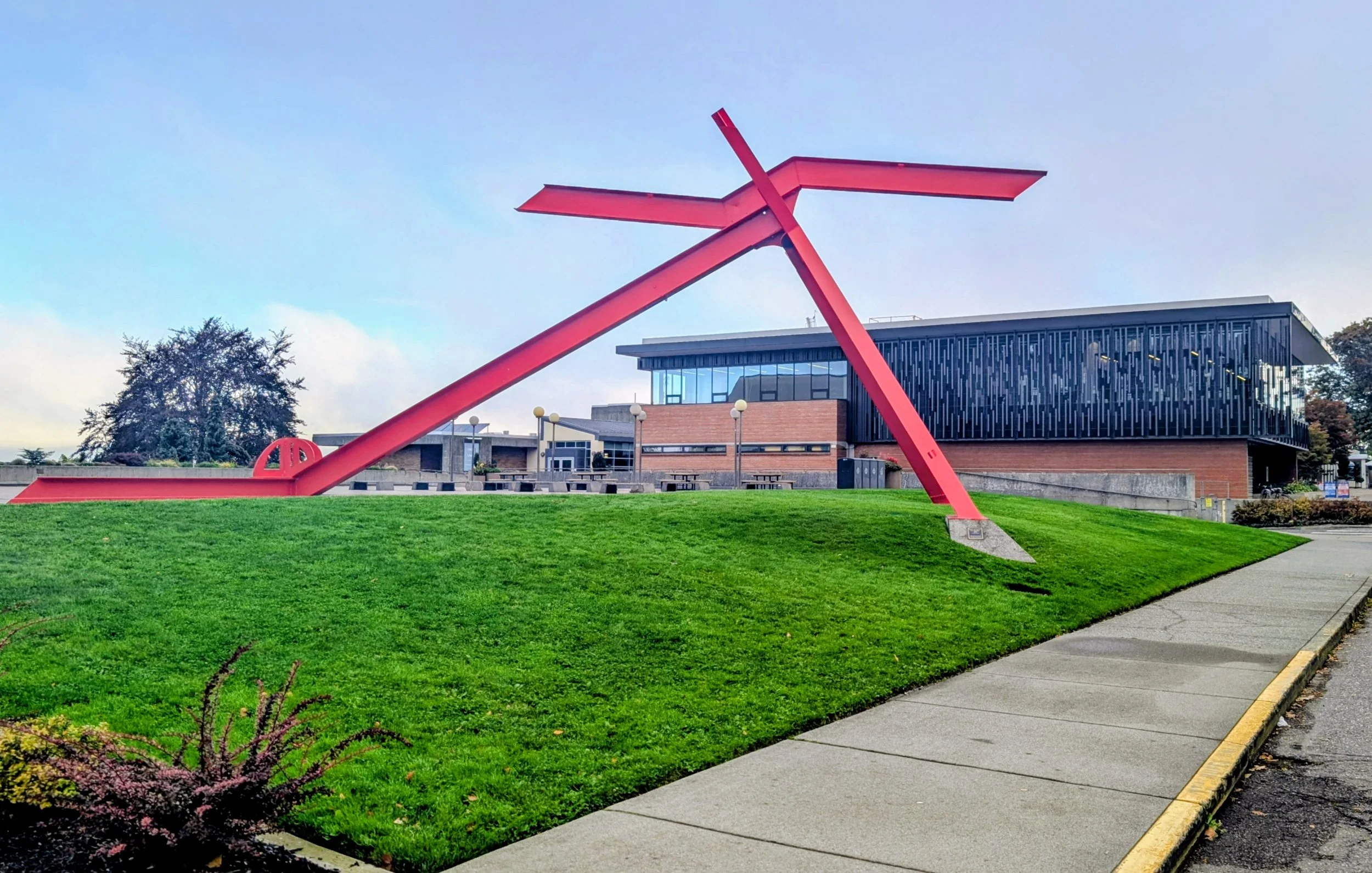
Asculpture on the grass outside the Viking Union at Western Washington University.
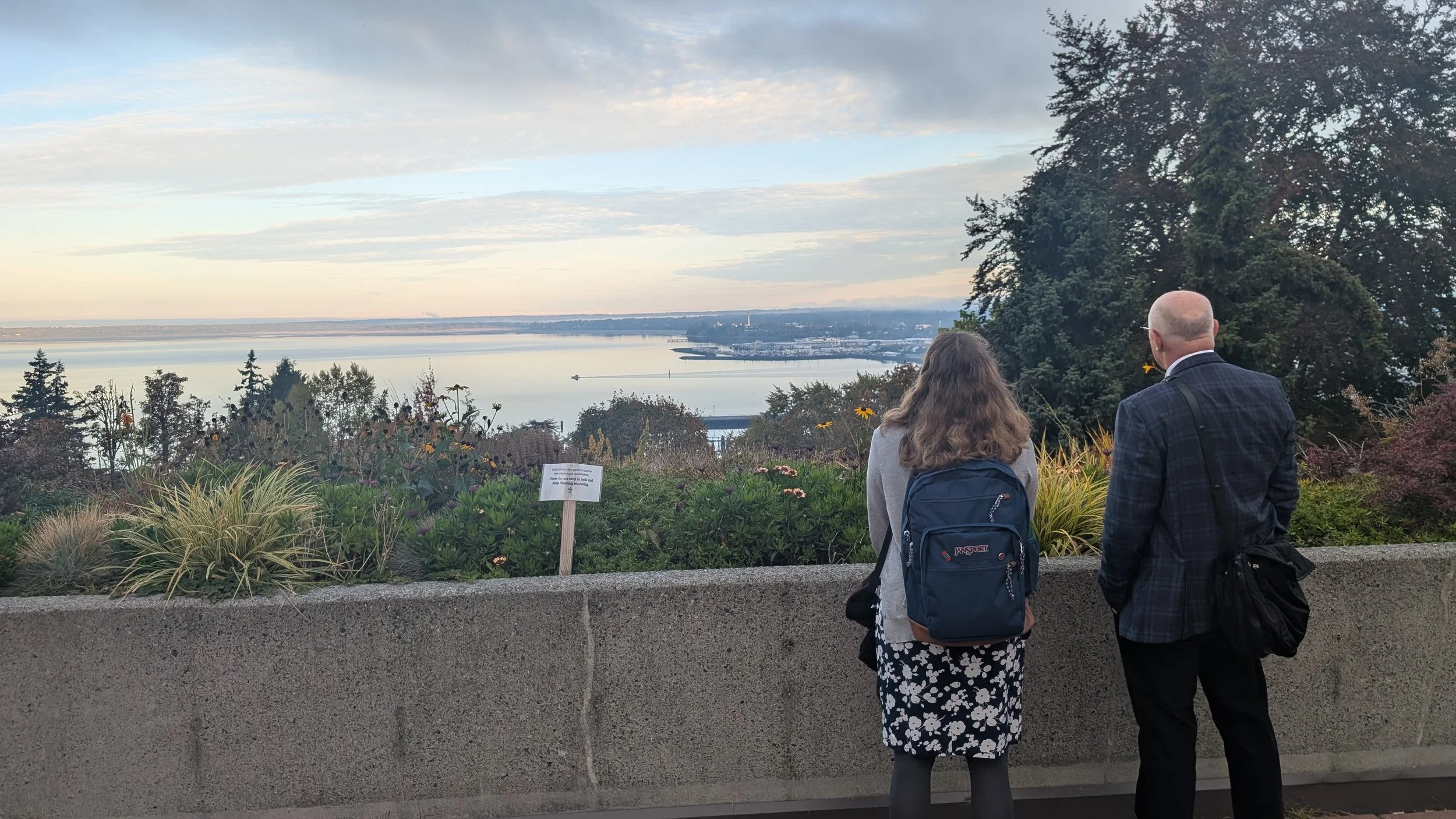
Dr. Melissa Chakars (St. Joseph’s University) and Pres. Klecheski enjoying the view of the Bay from outside the Viking Union.
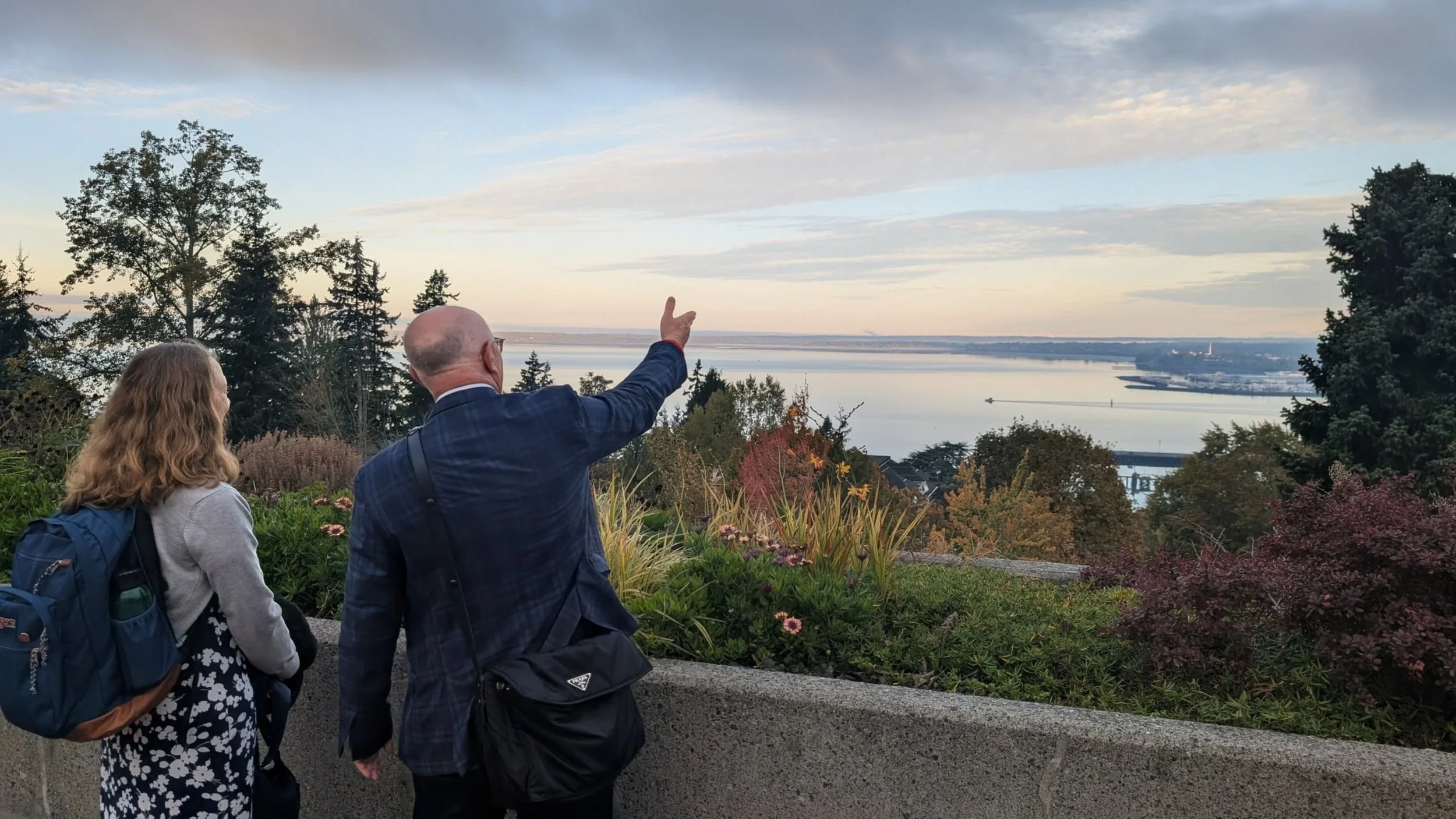
Dr. Chakars and Pres. Klecheski enjoying the view of the Bay from outside the Viking Union.
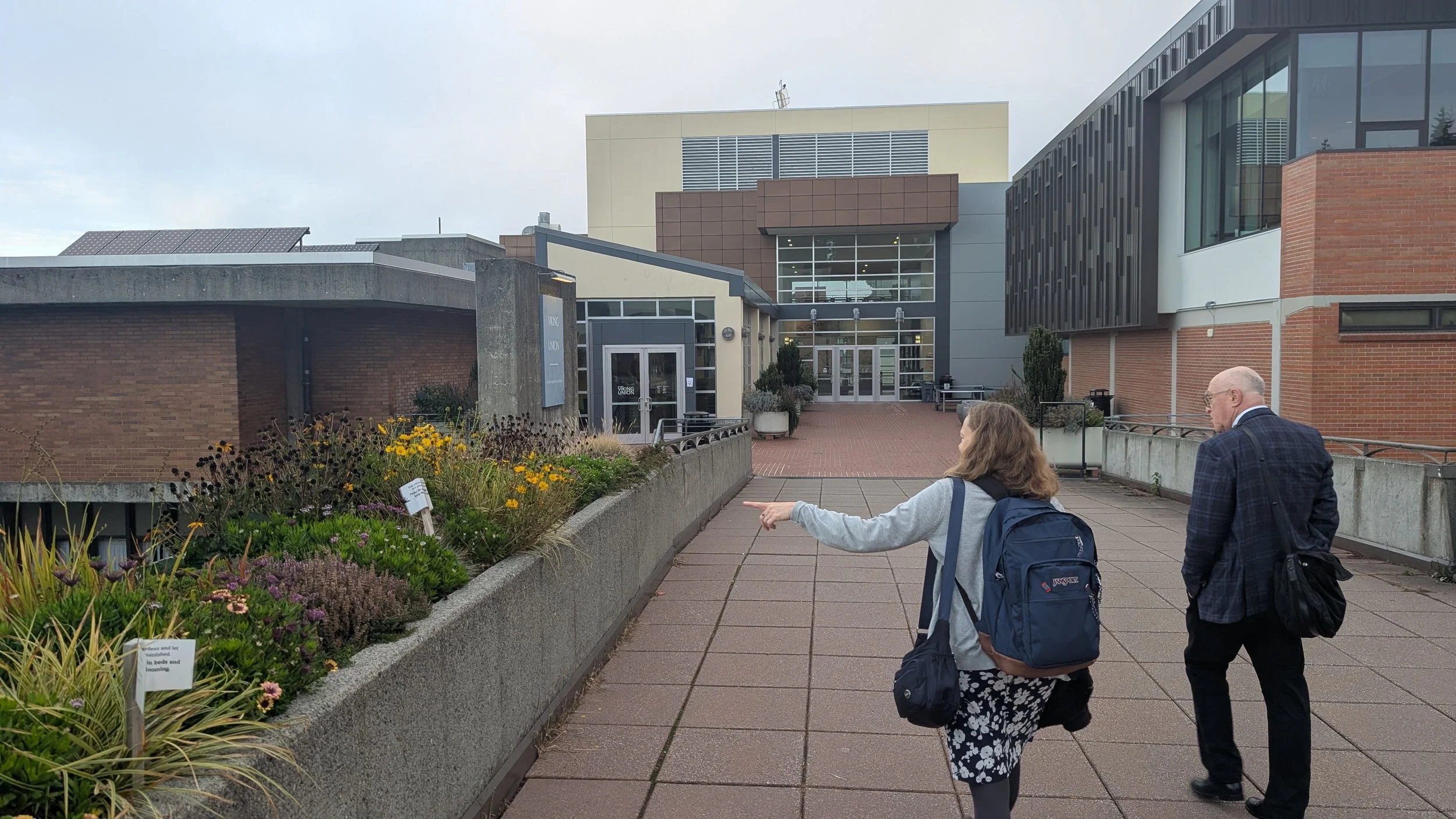
Dr. Chakars and Pres. Klecheski enjoying the view of the Bay from outside the Viking Union.
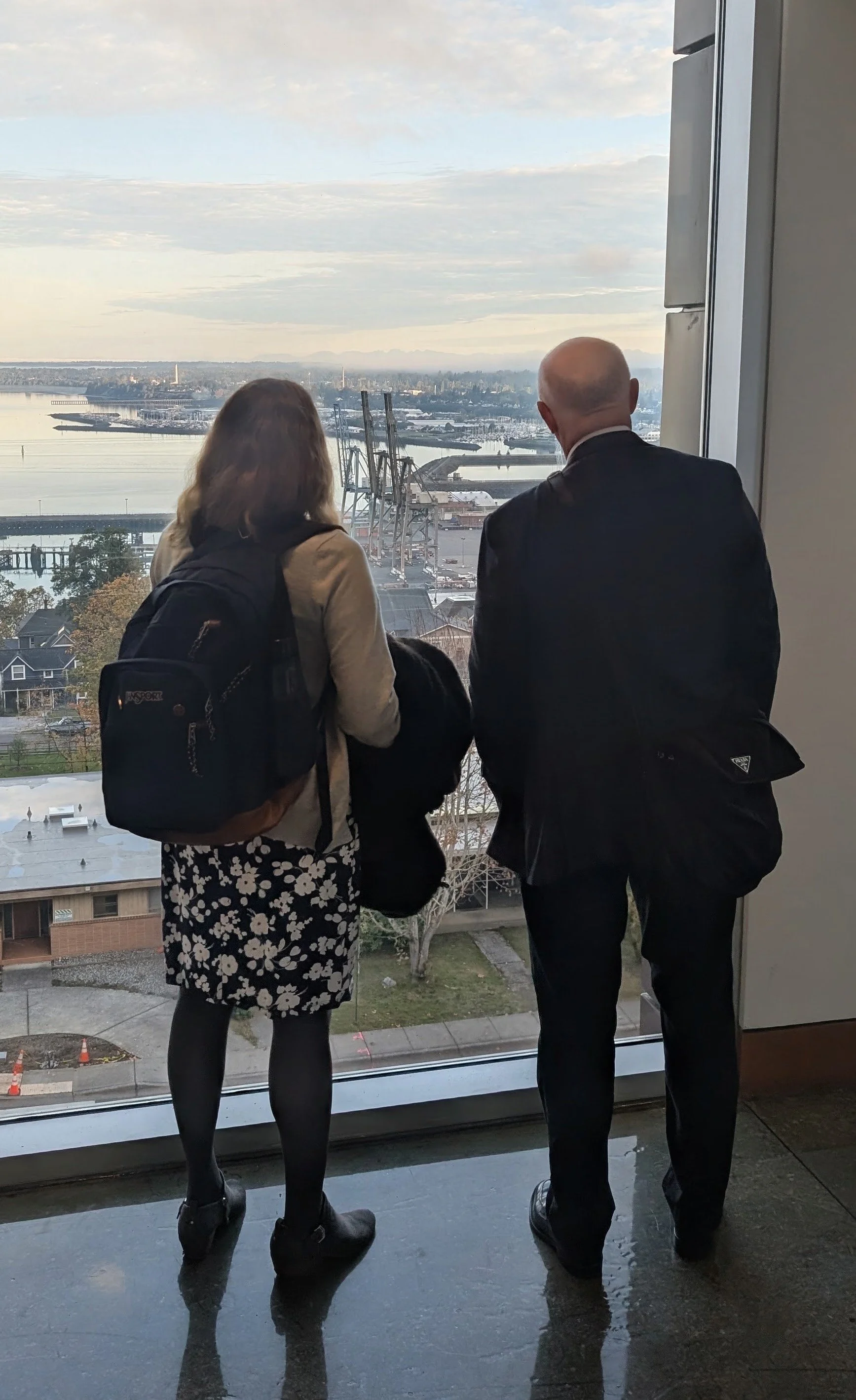
Dr. Chakars and Pres. Klecheski enjoying the view of the Bay from inside the Viking Union.
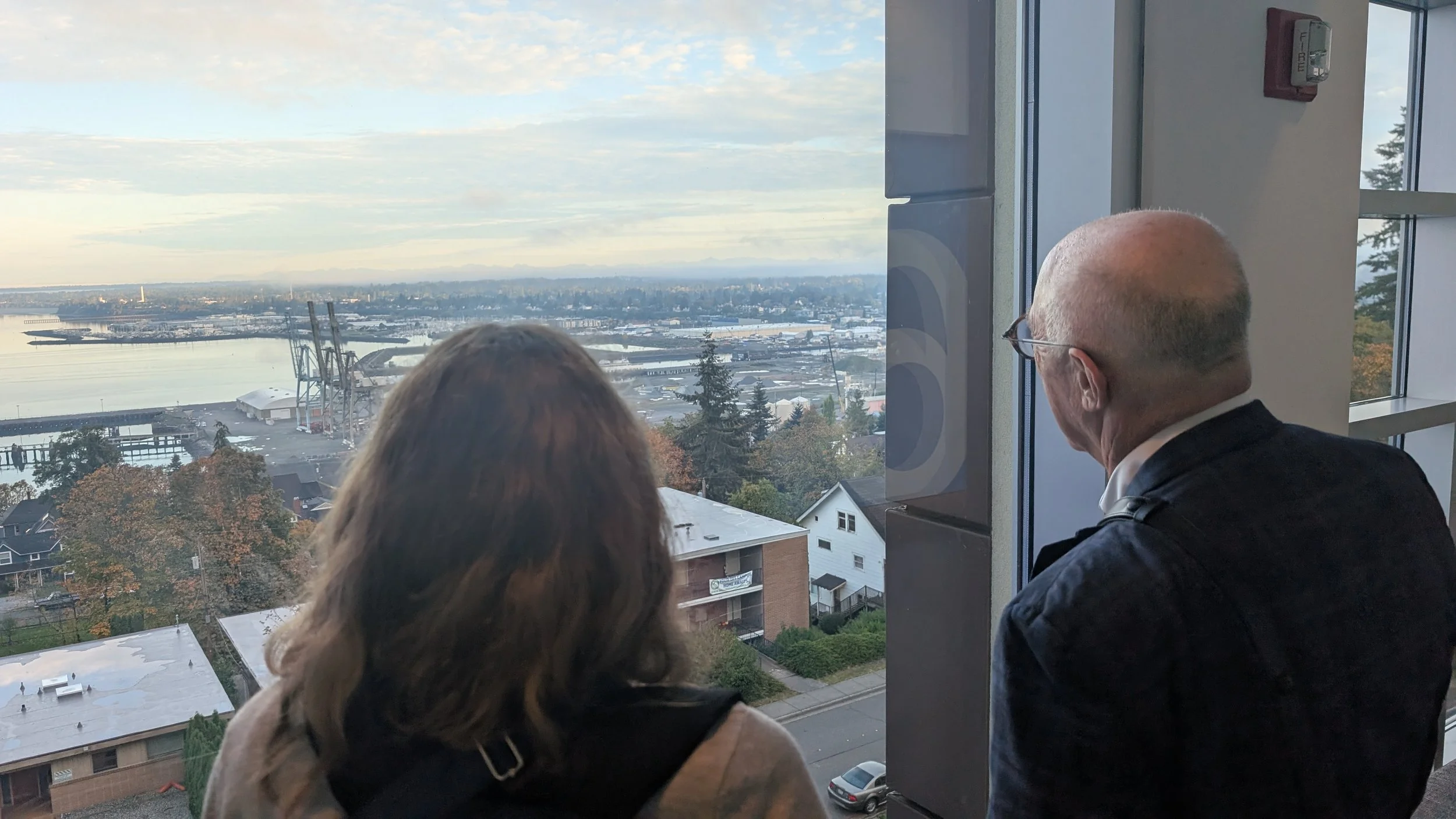
Dr. Chakars and Pres. Klecheski enjoying the view of the Bay from inside the Viking Union.
Tour of Western Washington University's Mongolian Collections
Friday, October 2, 2026 | 8:30–9:30 a.m.
The Annual Meeting began on Friday morning with a curated tour of Western Washington University's library holdings on Mongolia and the Mongols, led by Prof. Munkhchimeg (Chimgay) Tserendorj. Held in the university's Wilson Library, the tour introduced participants to the institution's Mongolian Studies collections, highlighting an important scholarly resource and Western Washington University's longstanding involvement in the field.
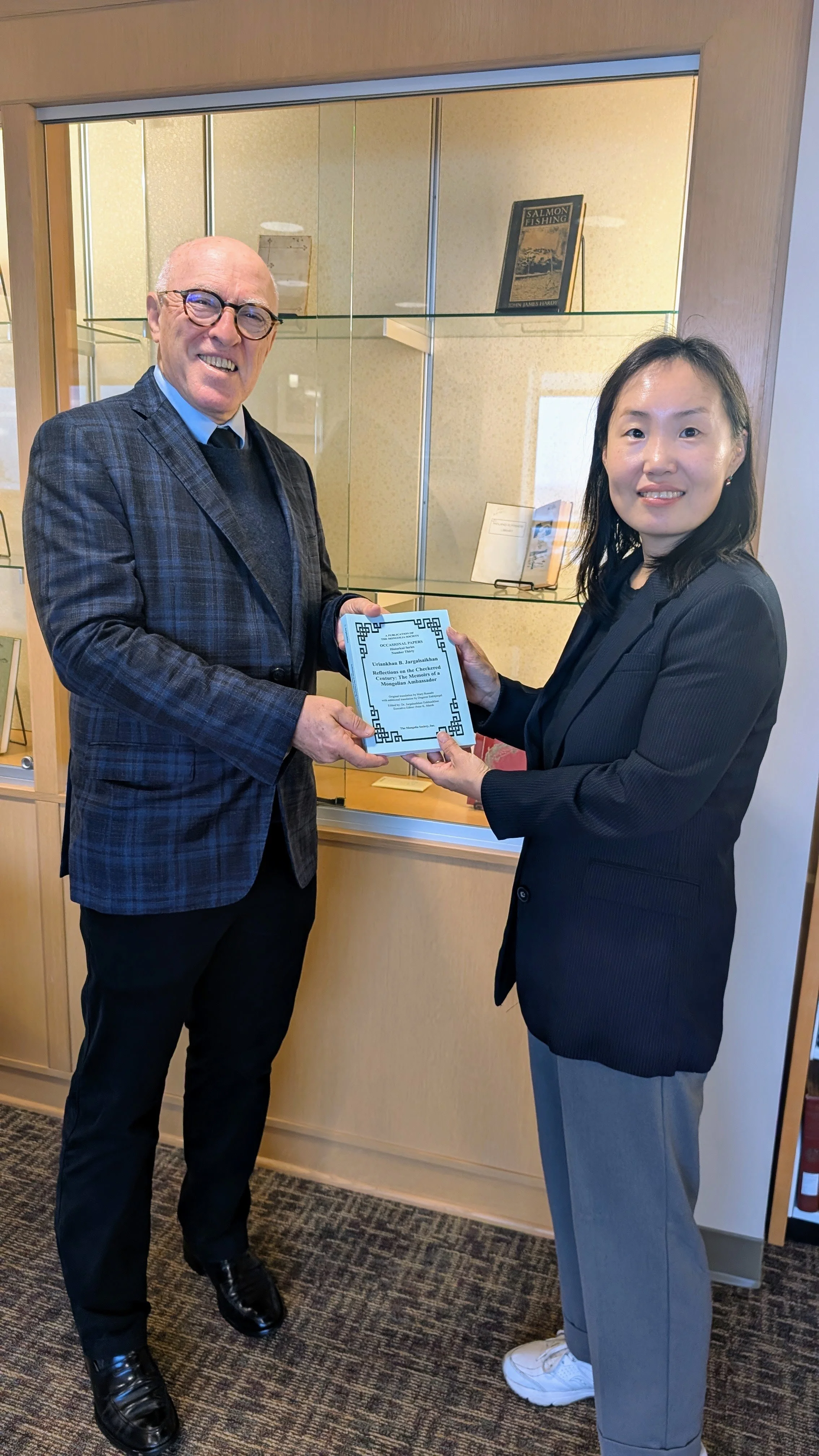
President Klecheski presenting a copy of the Society's Occasional Papers No. 30 (2025) to Dr. Chimgay Tserendoj (Western Washington University).
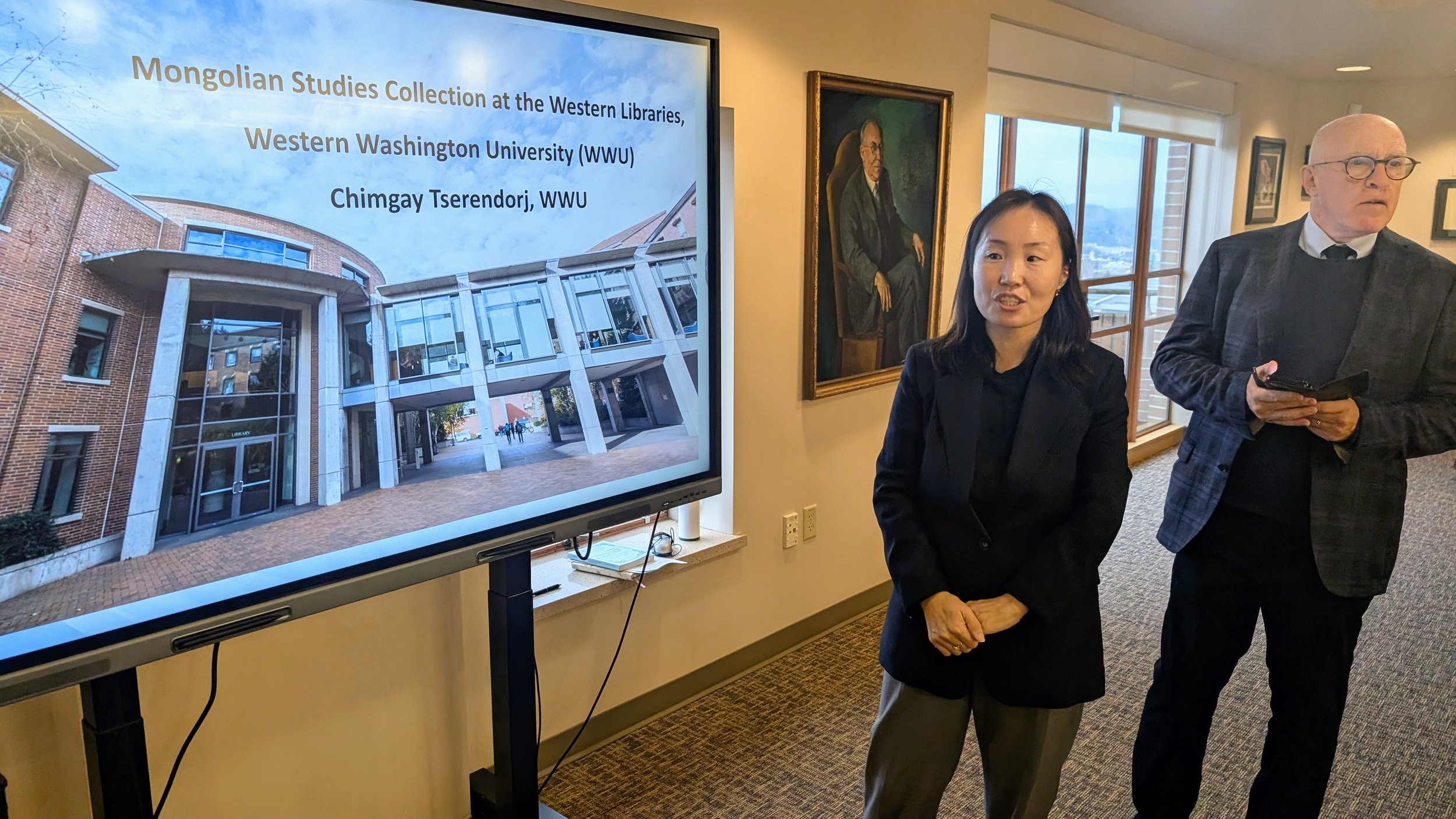
Dr. Tserendorj and Pres. Klecheski
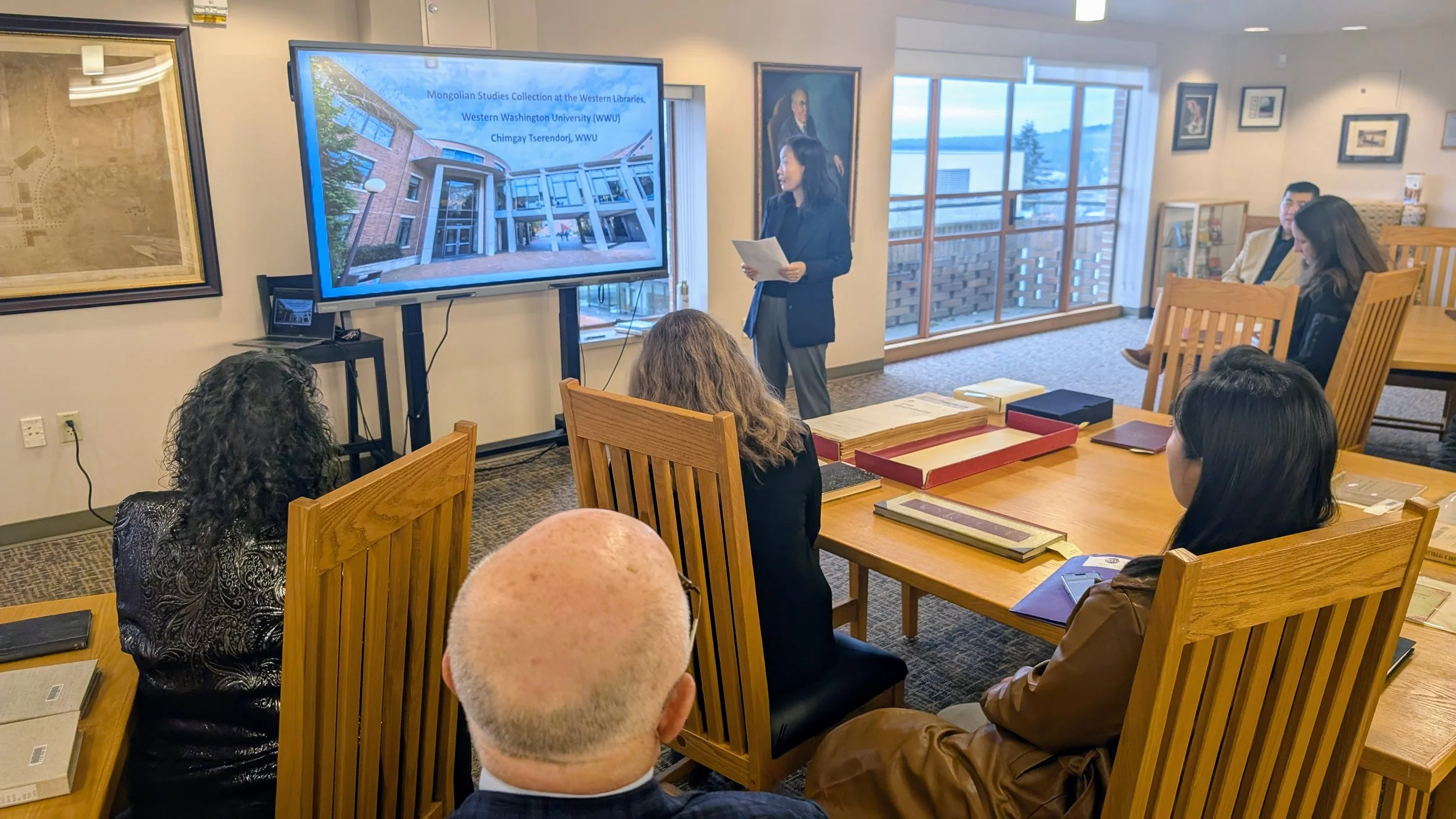
Dr. Tserendorj introduces conference participants to the Mongolian Studies collections at the WWU Library.
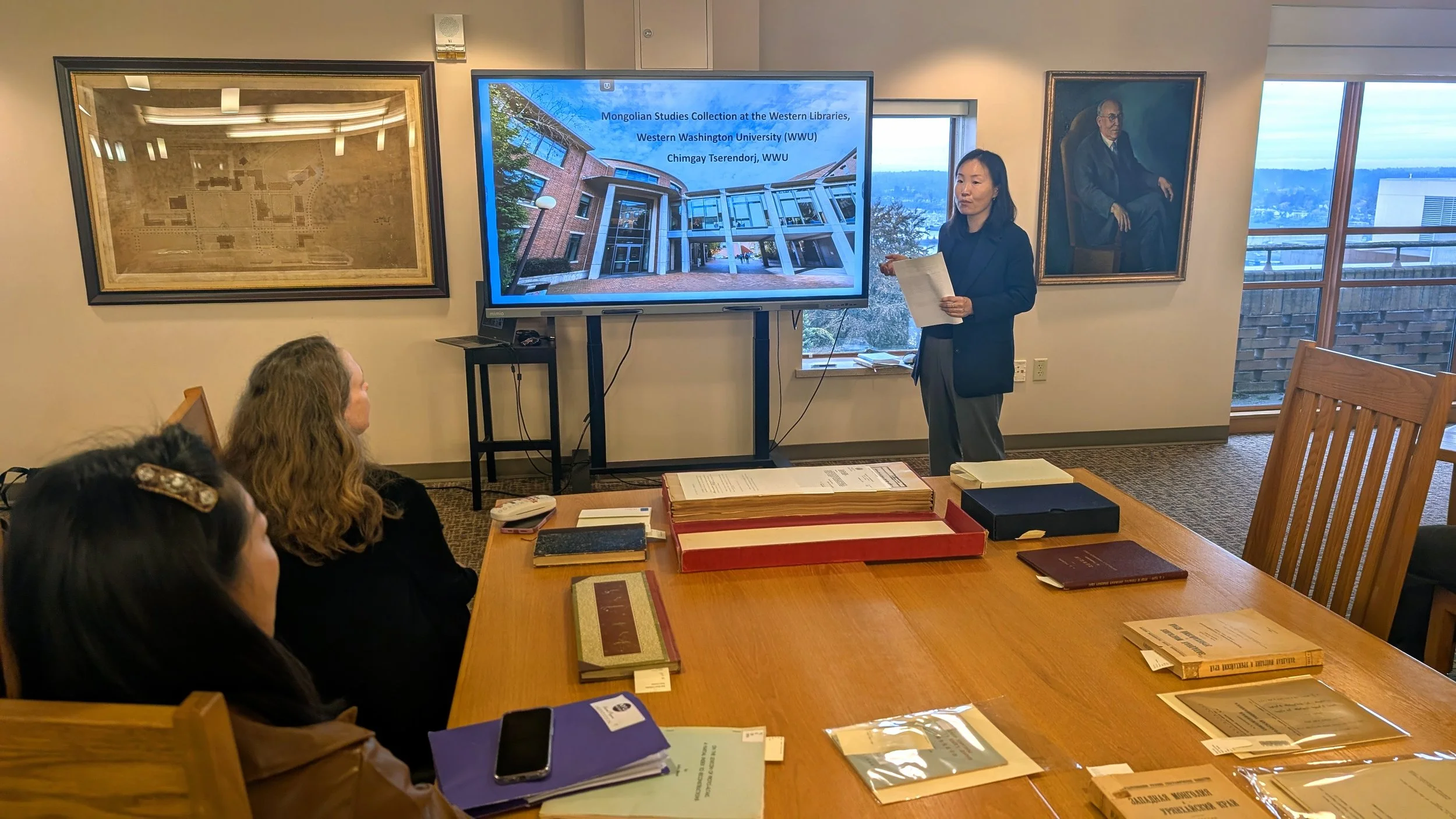
Dr. Tserendorj and conference participants
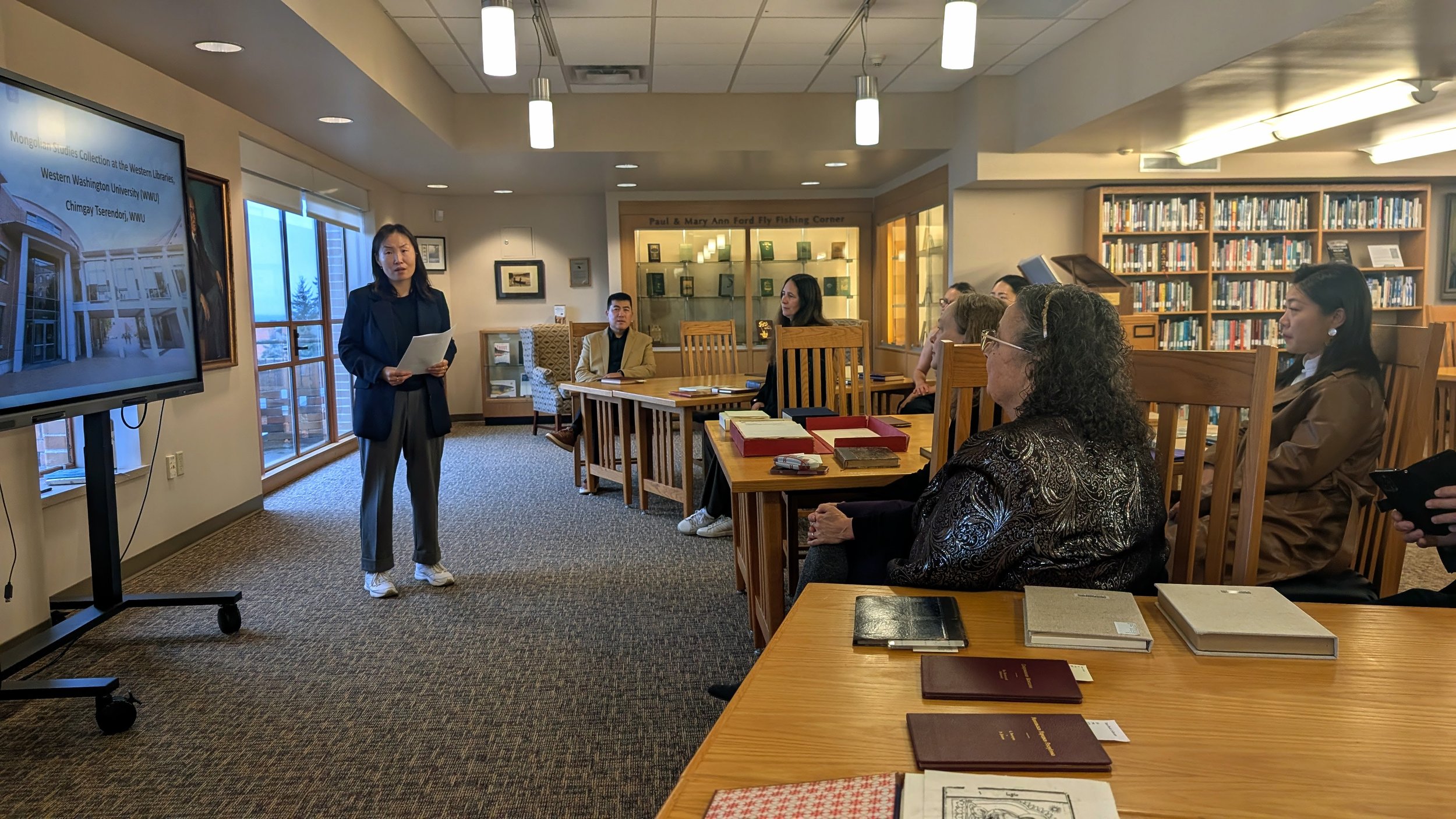
Dr. Tserendorj and conference participants
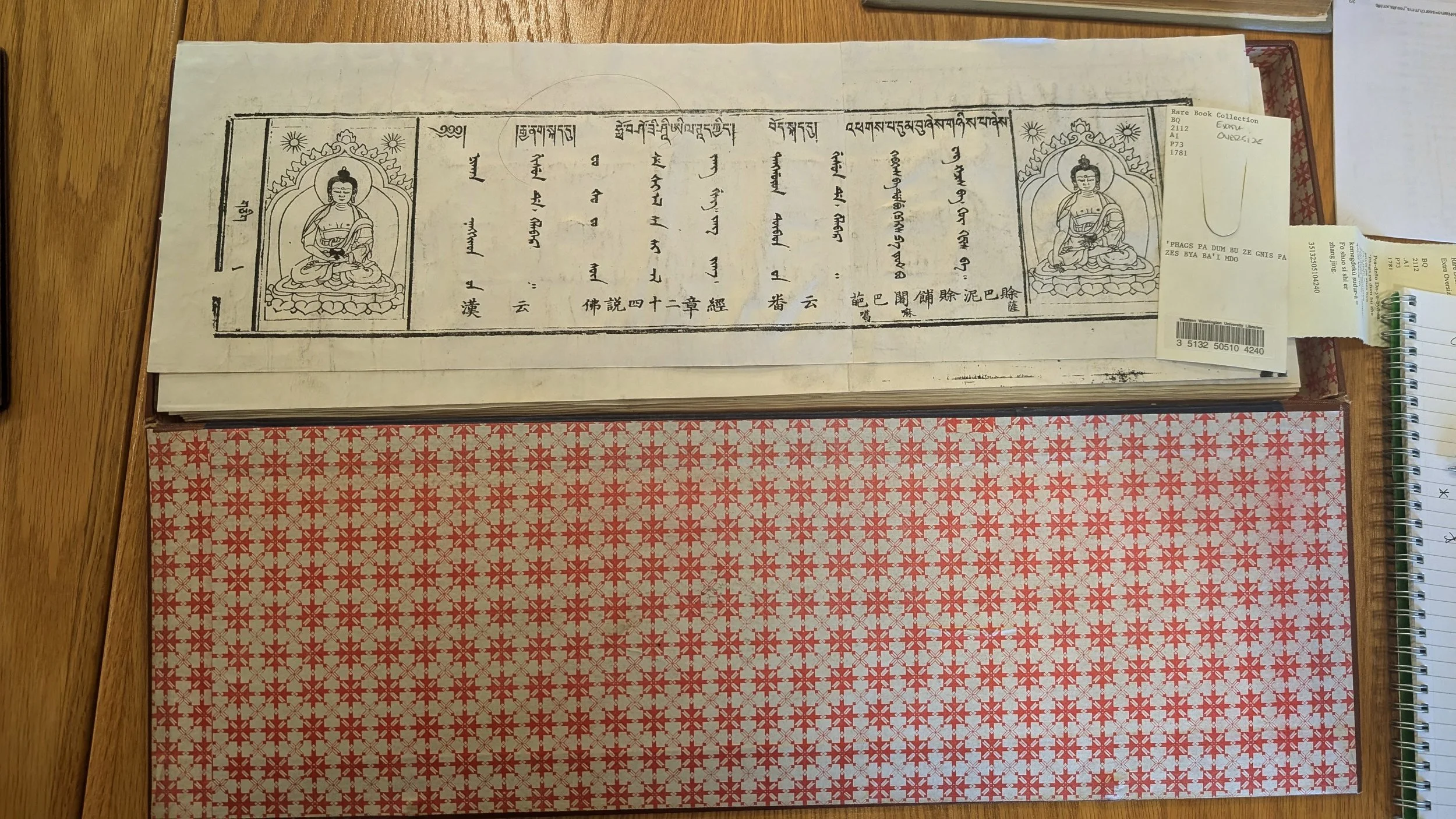
One of the rare and special books Dr. Tserendorj selected from the University's Mongolian collection for MonSoc members to review.
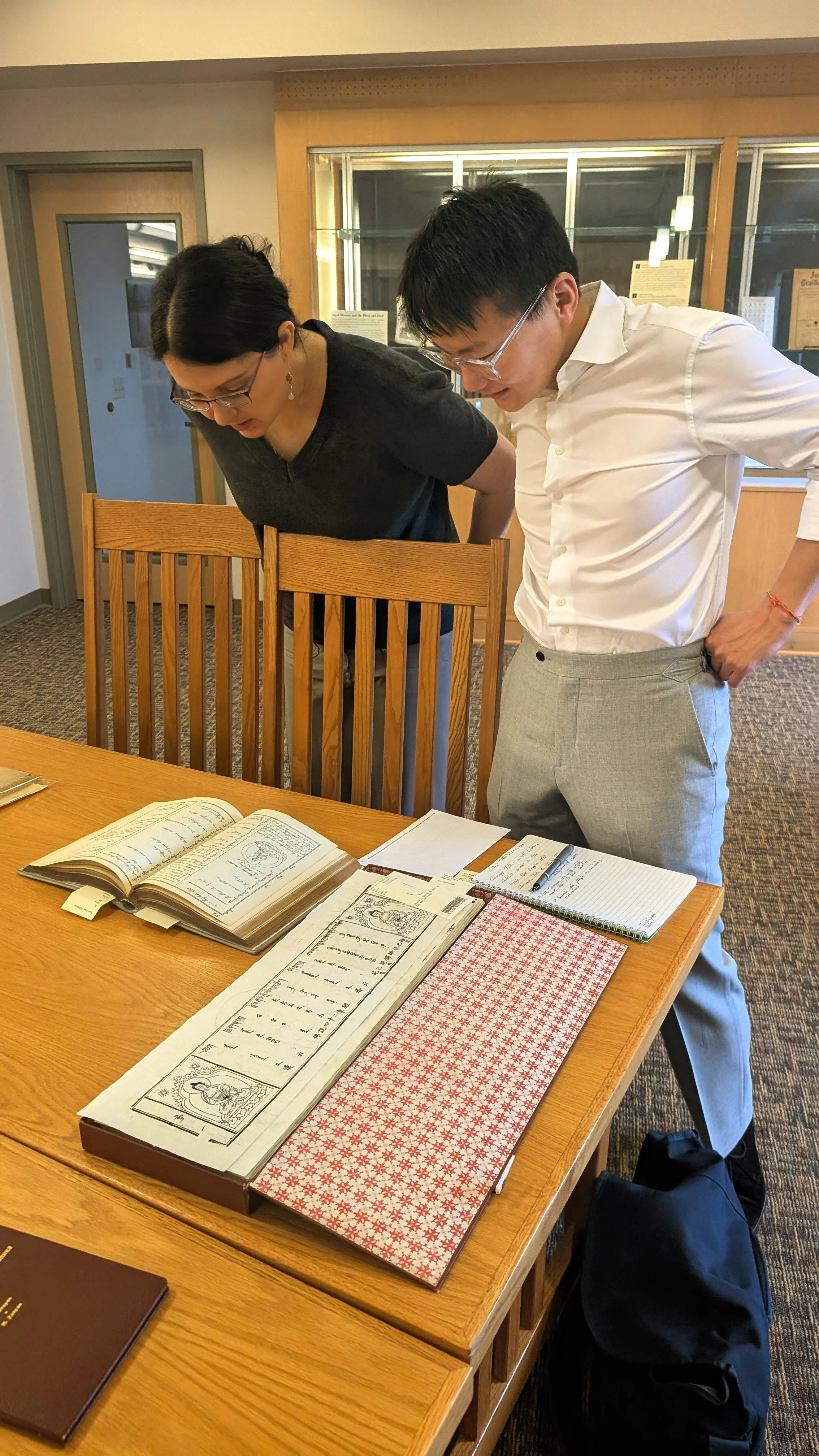
Dr. Charlotte D'Evelyn (Skidmore College) and Mr. Batorgil Batjargal examining selected texts.
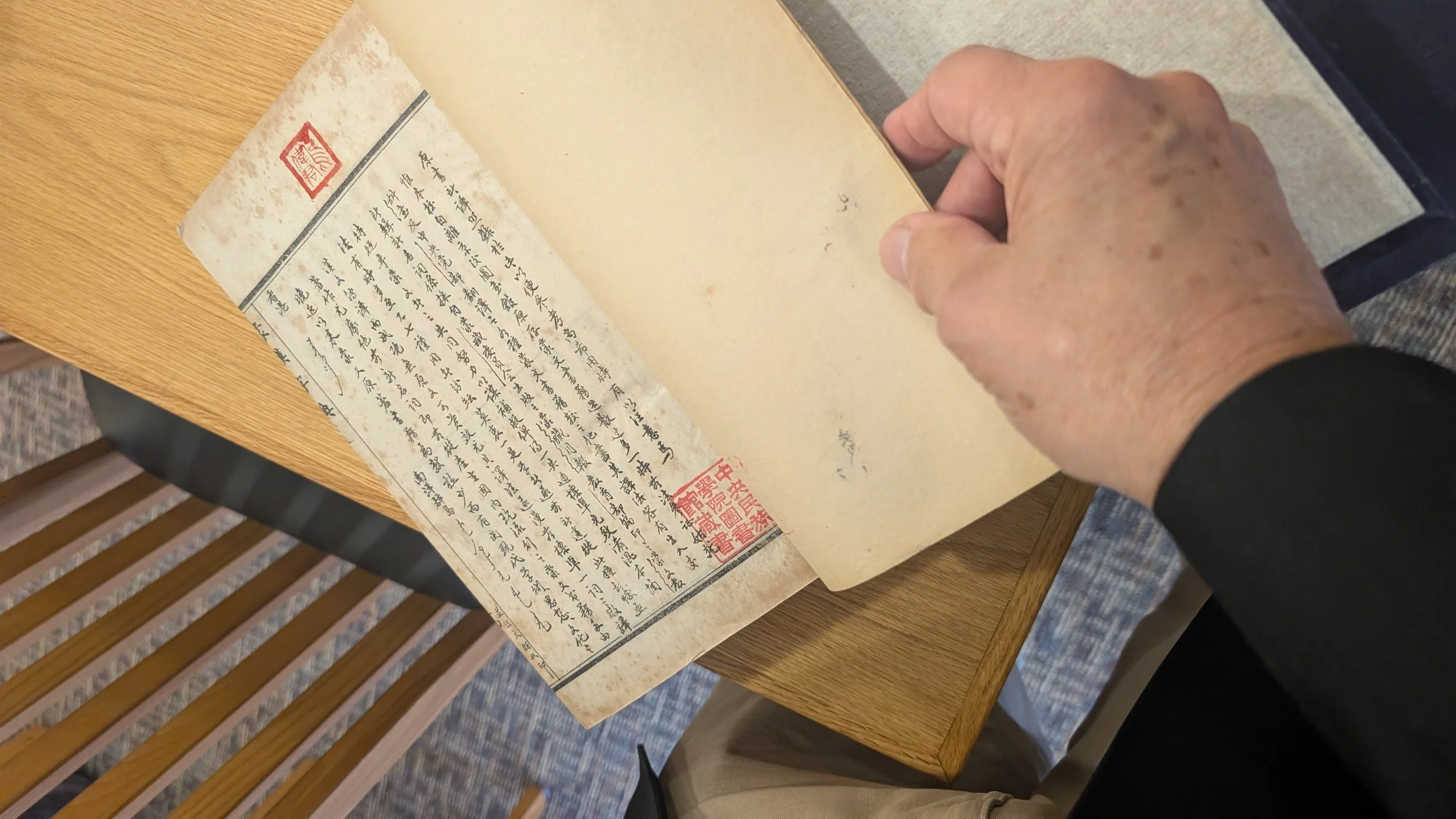
One of the rare and special books Dr. Tserendorj selected from the University's Mongolian collection for MonSoc members to review.
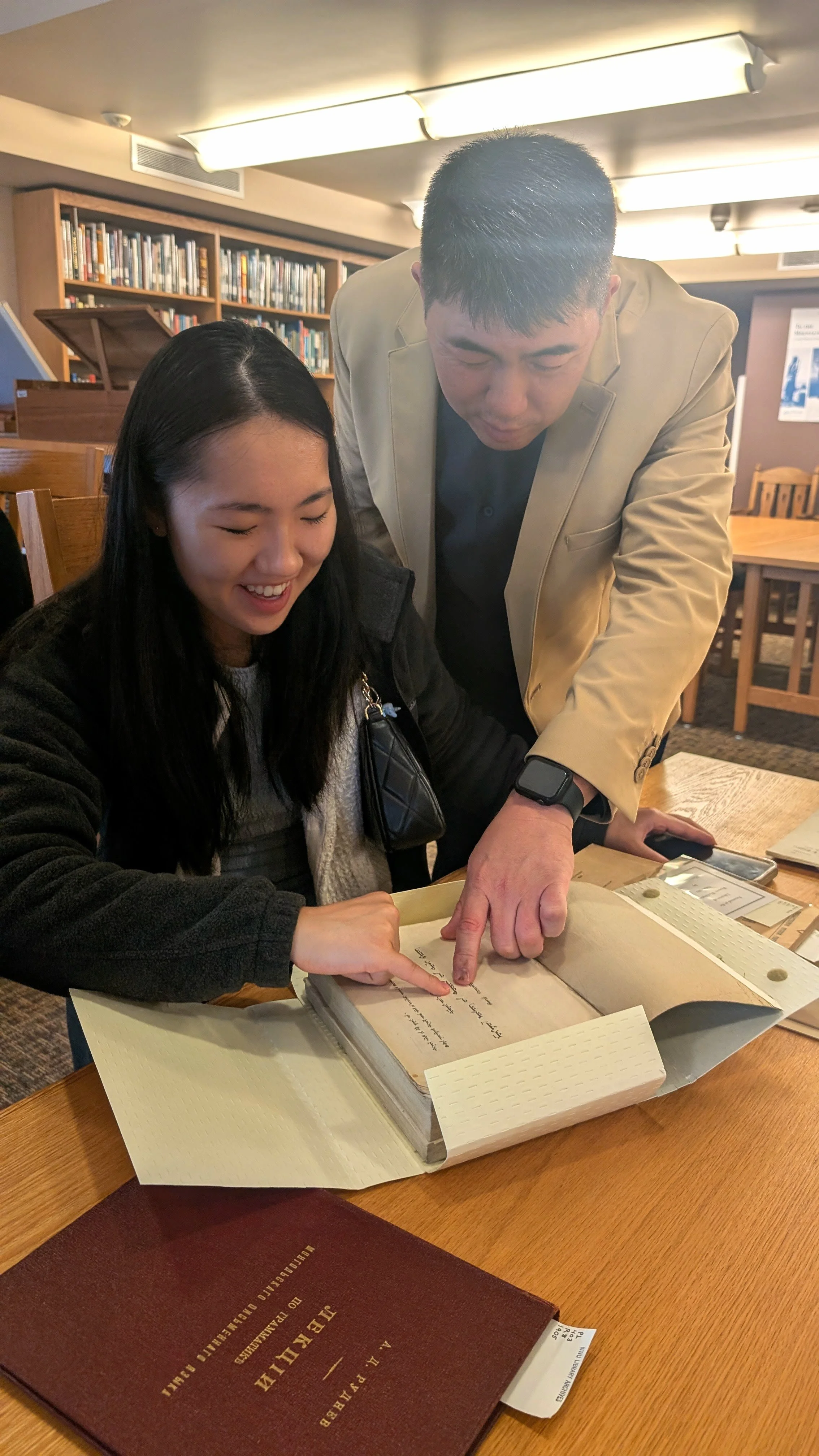
Mr. Tuuvchinjargal Tuul and Ms. Elain Tuvchingargal examining a book.
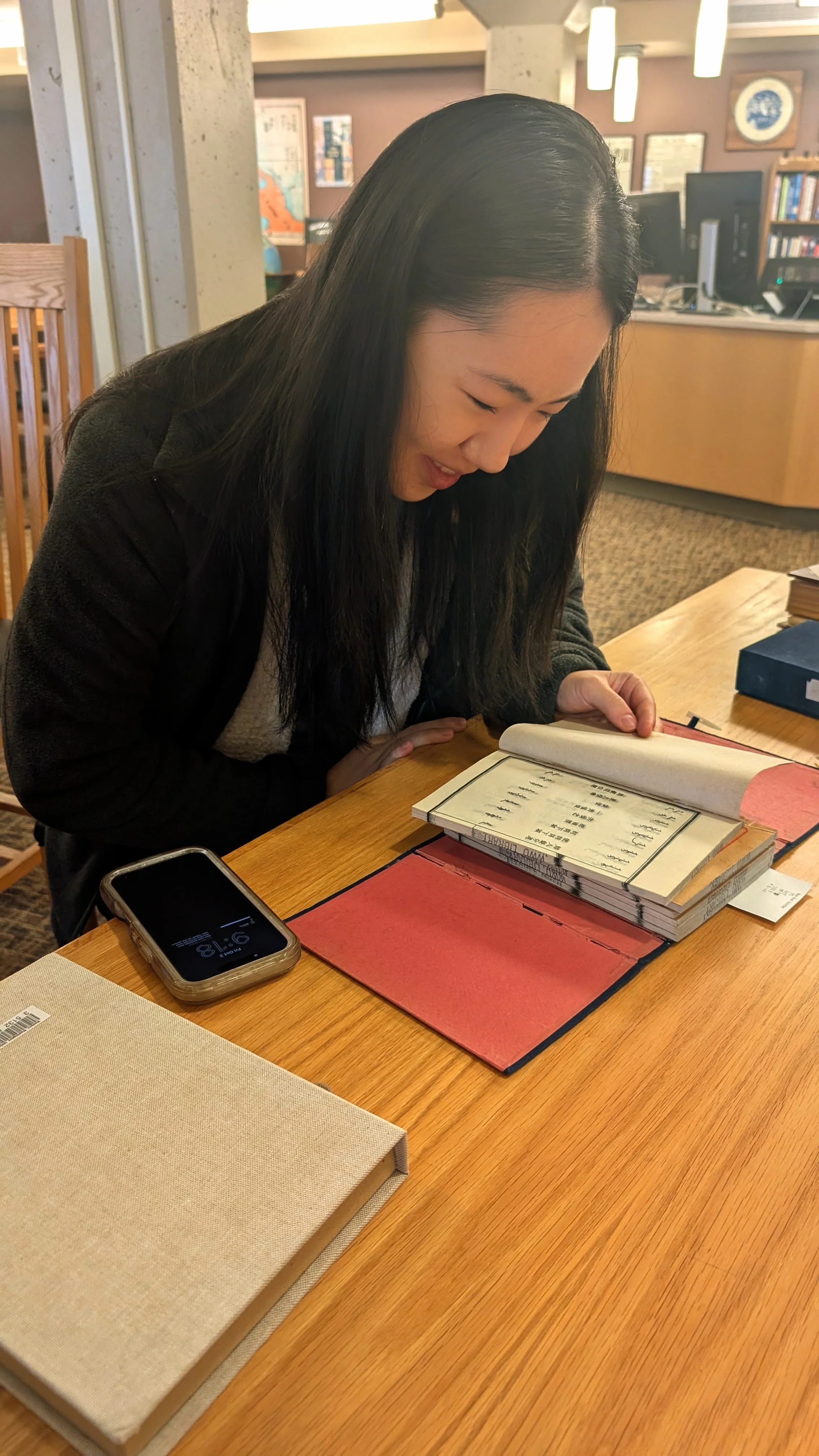
Ms. Elain Tuvchinjargal examining a book.
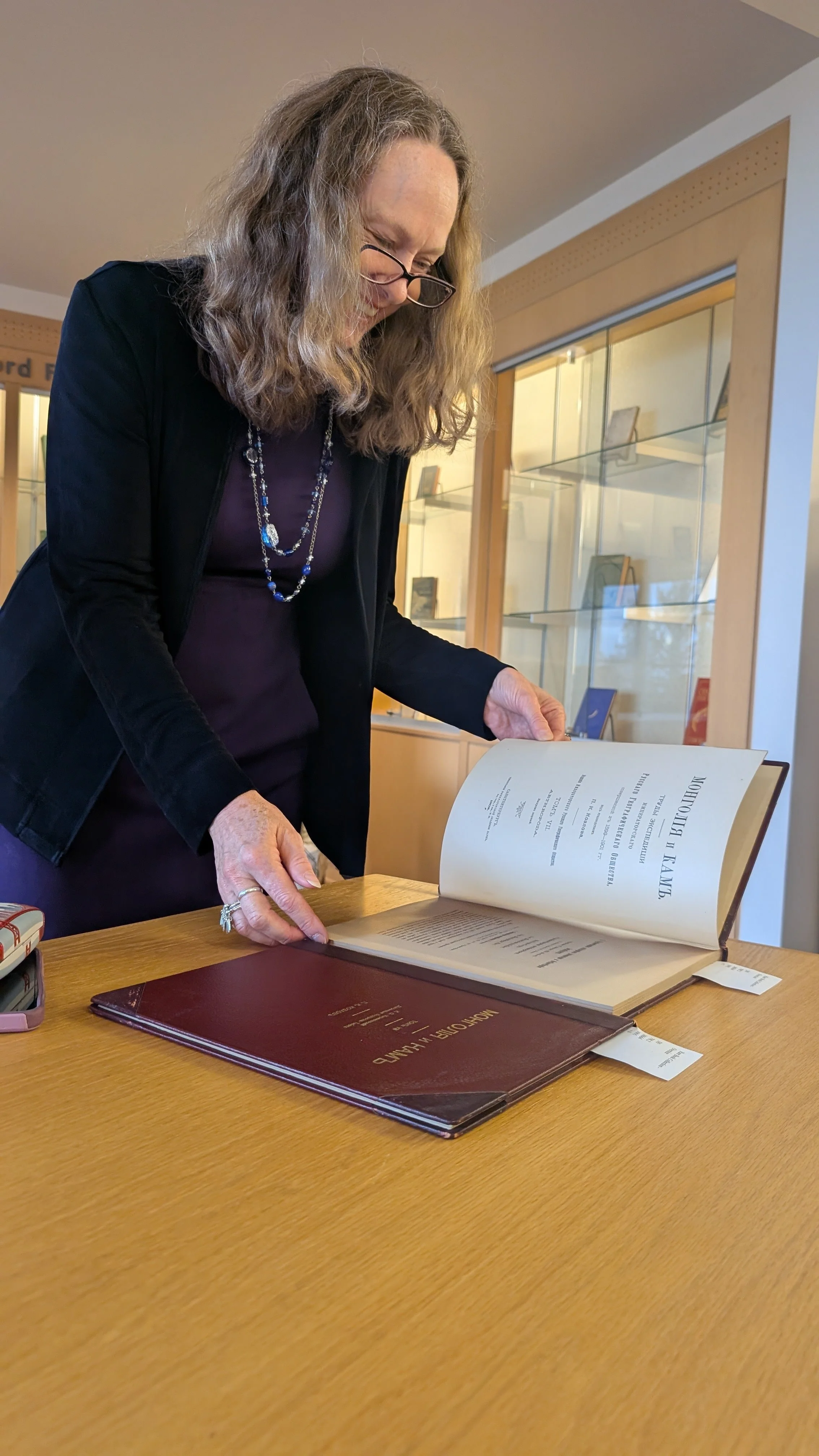
Dr. Melissa Chakars (St. Joseph’s University) examining a book.
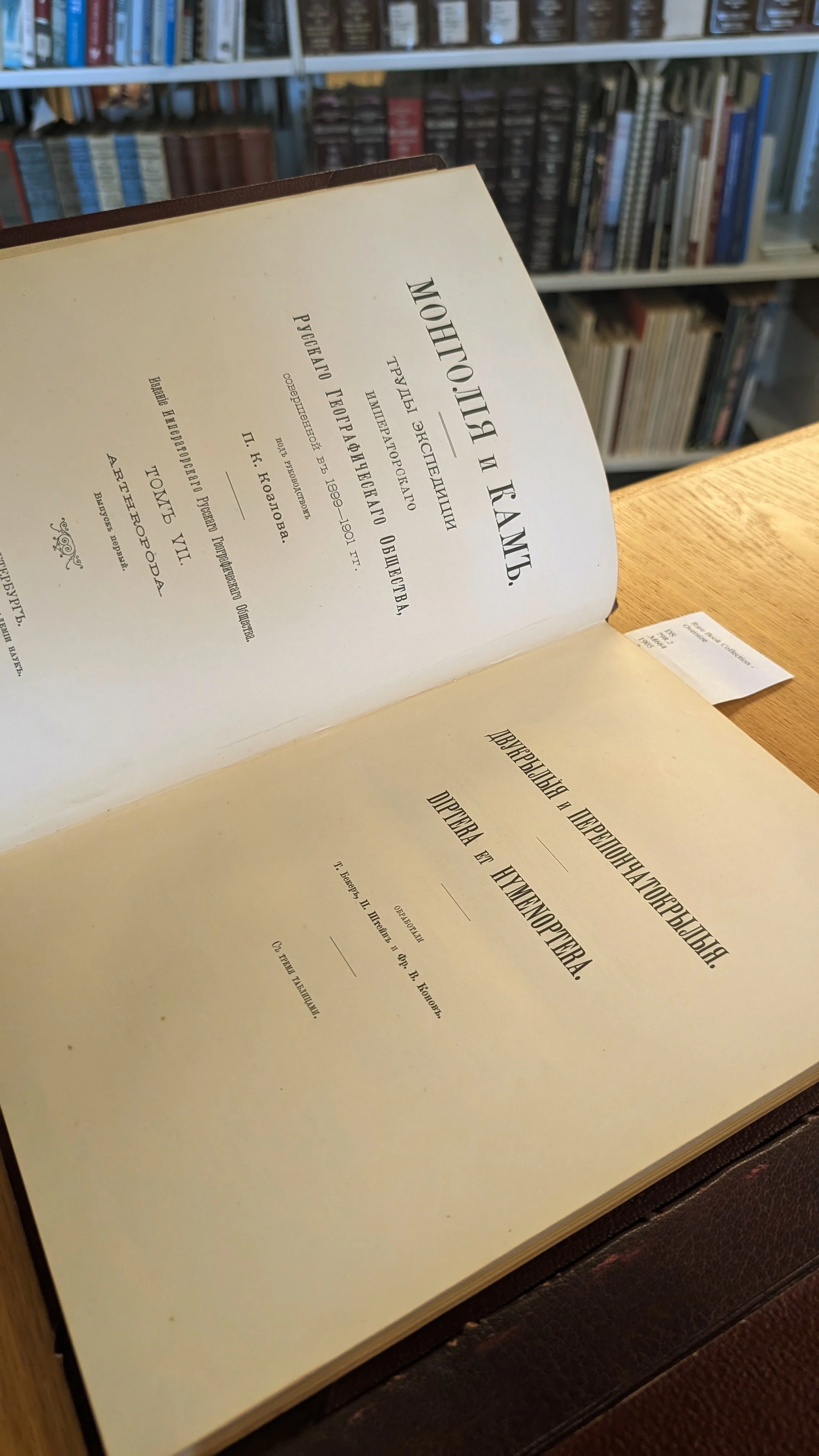
One of the rare and special books Dr. Tserendorj selected from the University's Mongolian collection for MonSoc members to review.
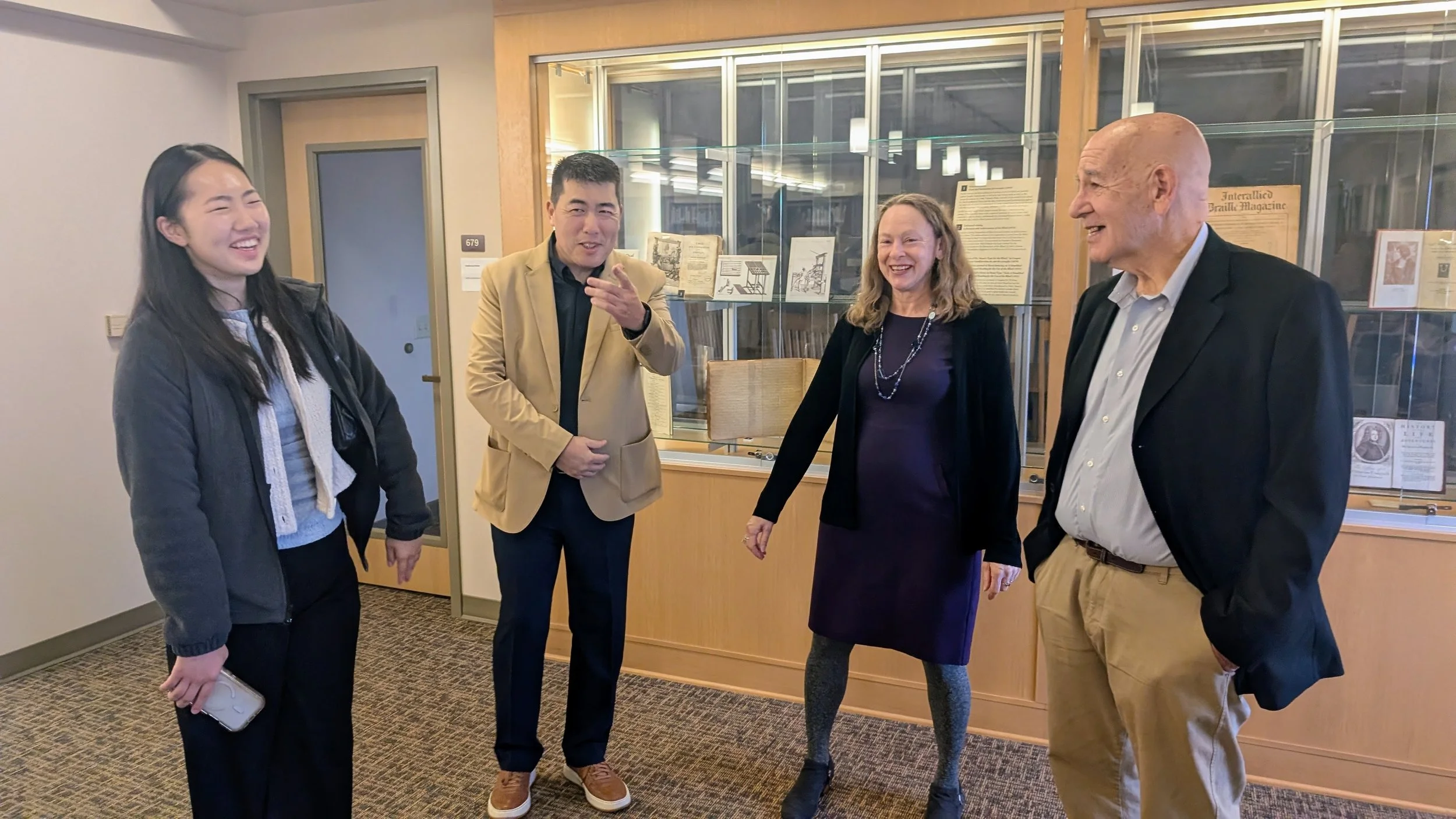
(Left to right) Ms. Elaine Tuuvchinjargal, Mr. Tuvchinjargal Tuul, Dr. Melissa Chakars, and Mr. William Bikales.
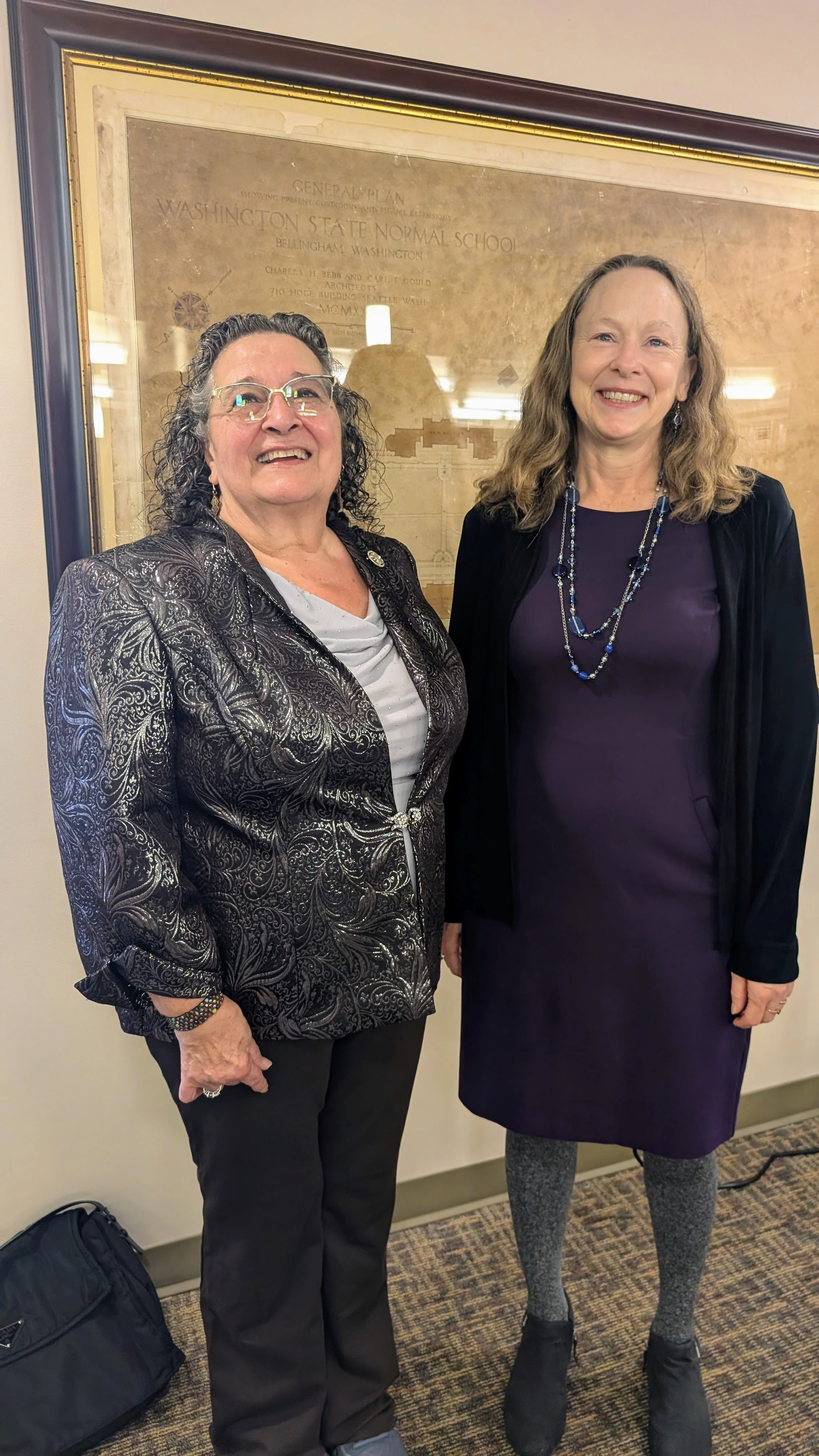
Ms. Susie Drost, Executive Director of the Mongolia Society, and Dr. Chakars.
Opening Ceremony and Tribute to Professor Henry G. Schwarz
Friday, October 2, 2026 | 10:00 a.m.–12:00 p.m.
The Mongolia Society’s 65th Anniversary Annual Meeting opened on Friday morning at Western Washington University with a special session honoring Professor Emeritus Henry G. Schwarz, whose distinguished career as a scholar, teacher, and former president of the Society has contributed greatly to the development of Mongolian Studies in the United States.
The session began with welcoming remarks by Mongolia Society President Ambassador (Ret.) Michael Klecheski, followed by addresses from His Excellency Batbayar Ulziidelger, Ambassador of Mongolia to the United States, and Dr. Brad Johnson, Provost and Executive Vice President of Western Washington University.
The morning continued with a tribute to Professor Schwarz, chaired by Dr. Mark Greenberg of Western Washington University. Three scholarly presentations explored subjects reflecting Schwarz’s wide-ranging intellectual interests and contributions to the field.
Professor T. Erdene-Ochir of the National University of Mongolia presented “Metaphor, Culture, and Social Reality: A Cognitive-Cultural Perspective on Contemporary Mongolian Political Discourse.” Dr. Alicia Campi, an independent scholar, contributed a paper titled “Conflicting Cultural and Economic Images of Nomads in Democratic Mongolia’s Development,” which was read on her behalf by Ambassador Klecheski. Professor Christopher Atwood of the University of Pennsylvania joined virtually to present “Henry Schwarz and Summer Mongolian in Höhhot,” reflecting on an important chapter in the development of Mongolian language education.
Together, the opening remarks and presentations provided a fitting beginning to a meeting that celebrated both the Society’s 65th anniversary and Professor Schwarz’s enduring contributions to Mongolian Studies.
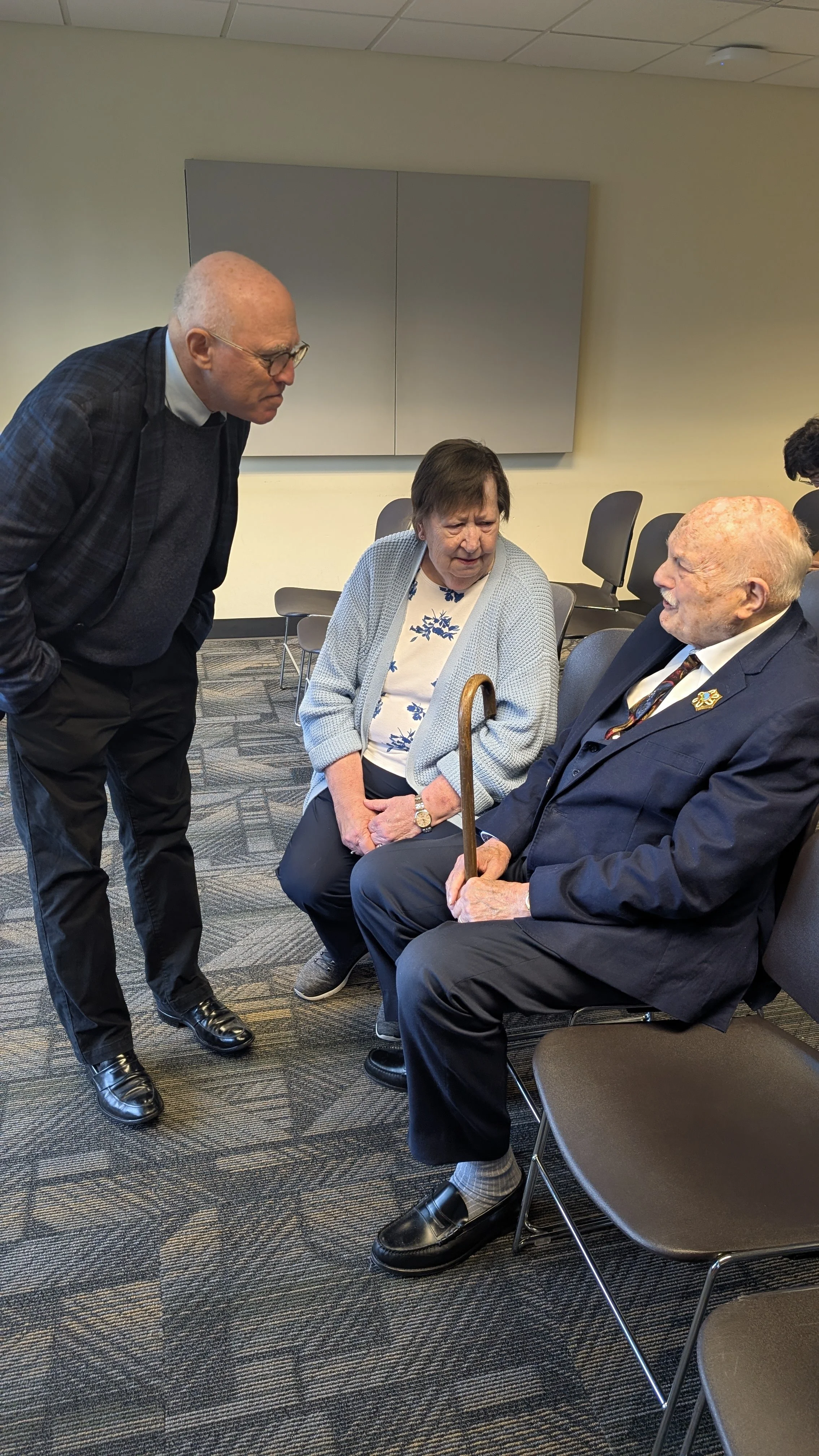
Pres. Klecheski meeting with Dr. Henry Schwarz and his wife Maggie before the start of the meeting.
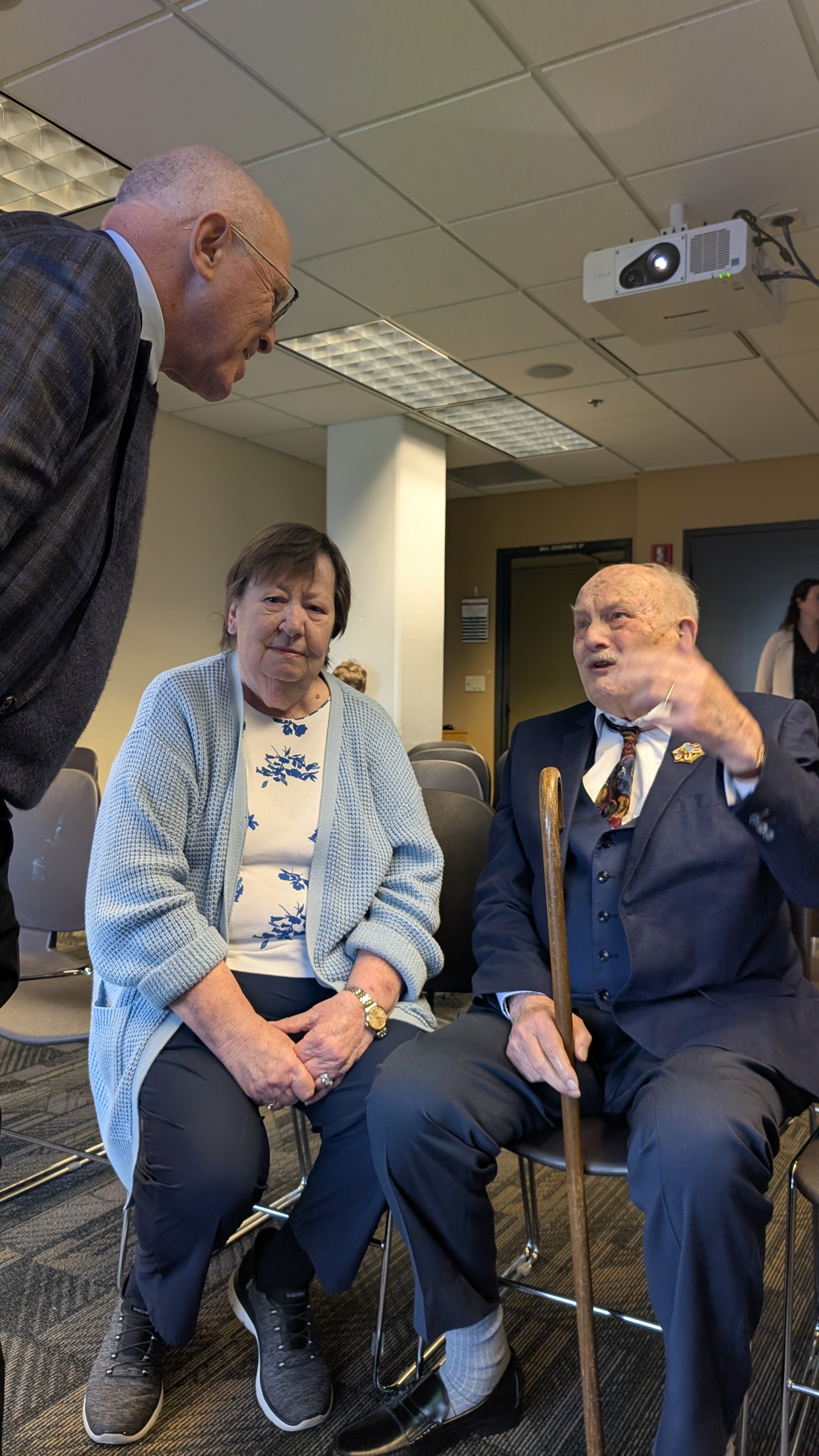
Pres. Klecheski meeting with Dr. Henry Schwarz and his wife Maggie before the start of the meeting.
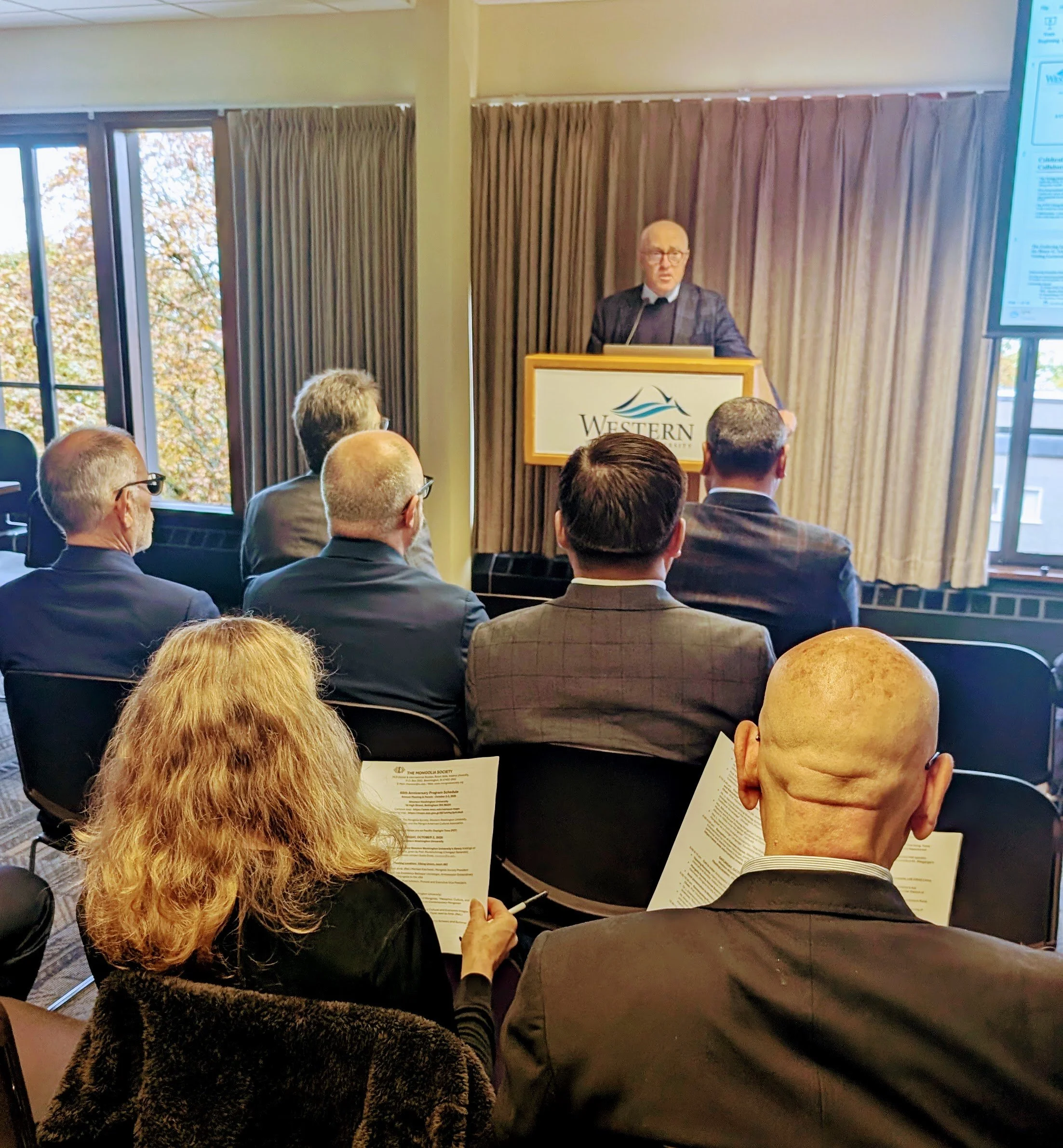
Pres. Klecheski delivering his welcome to the participants and guests of the conference.
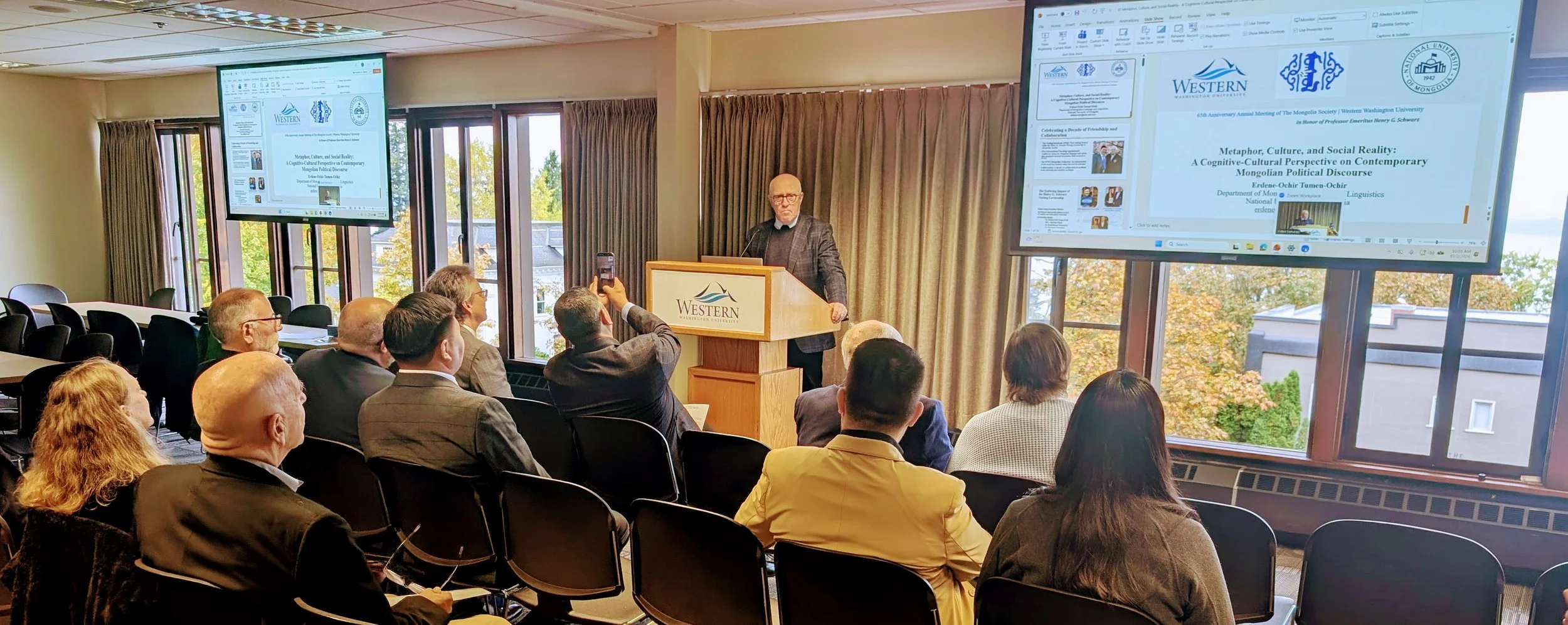
Pres. Klecheski delivering his welcome to the participants and guests of the conference.
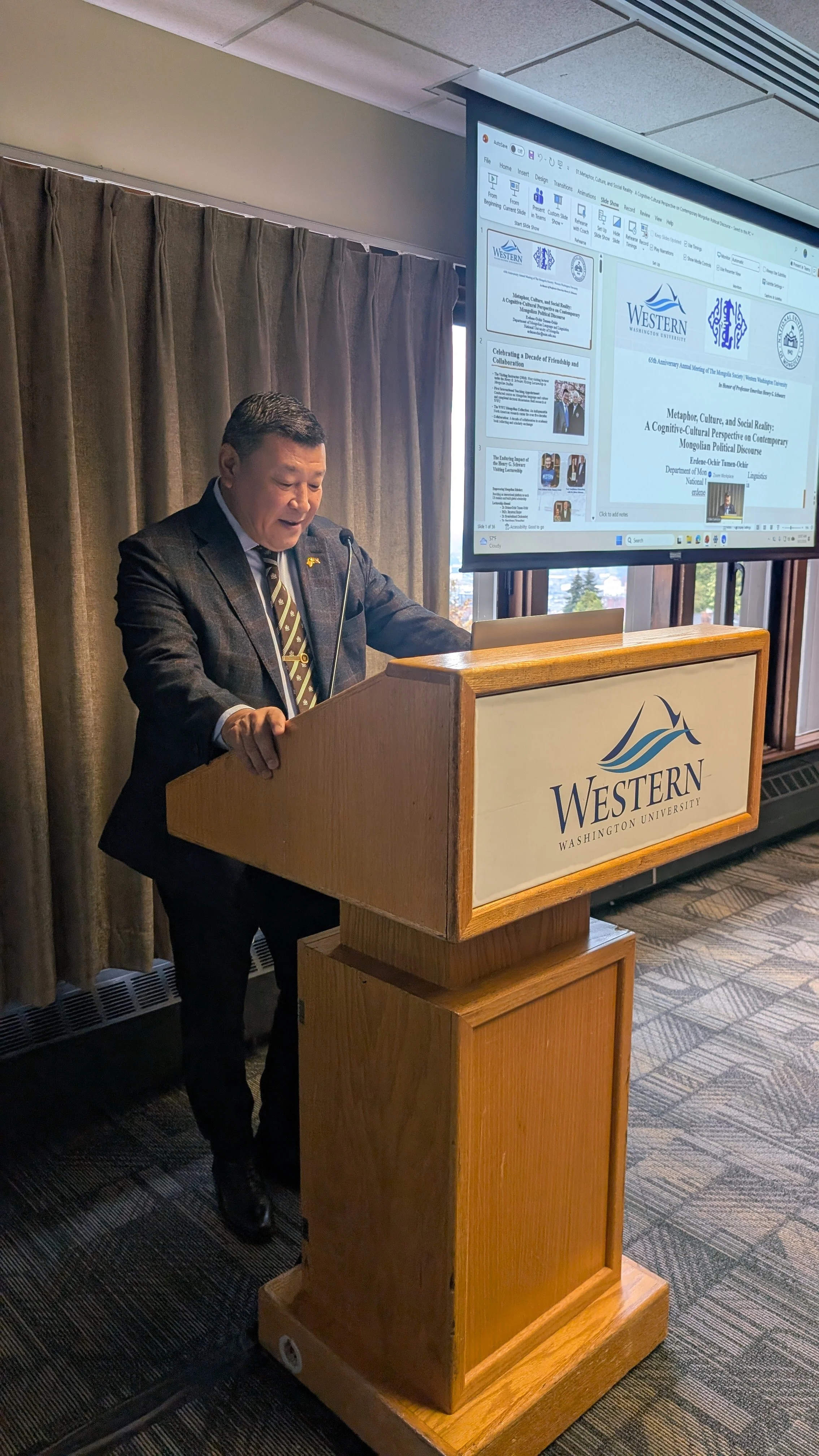
His Excellency Batbayar Ulziidelger, Ambassador Extraordinary and Plenipotentiary of Mongolia to the USA, delivering his opening remarks.
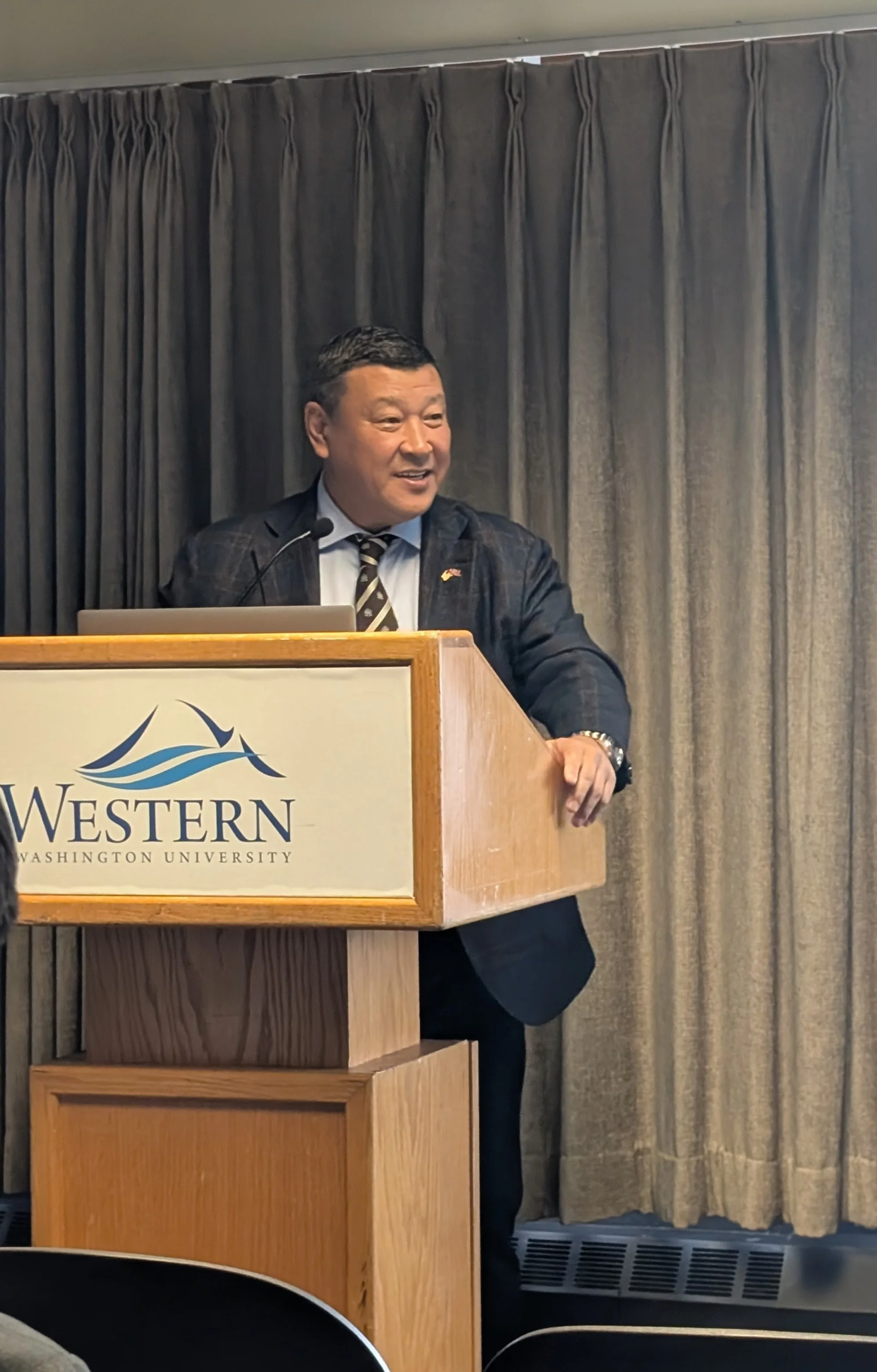
Ambassador Batbayar delivering the opening remarks.
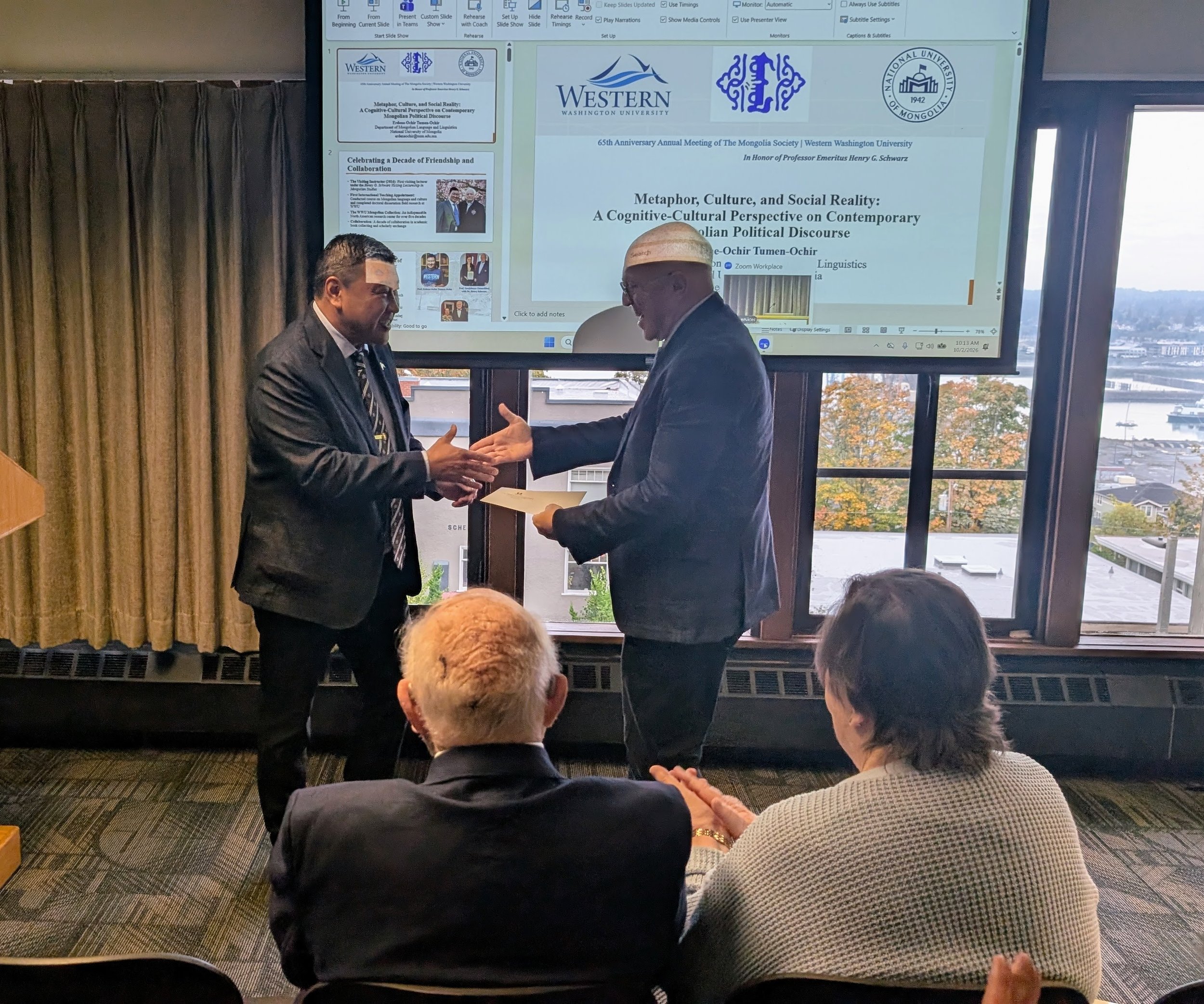
Amb. Batbayar presents a gift from the Embassy of Mongolia in the United States to Pres. Michael Klecheski on behalf of The Mongolia Society.
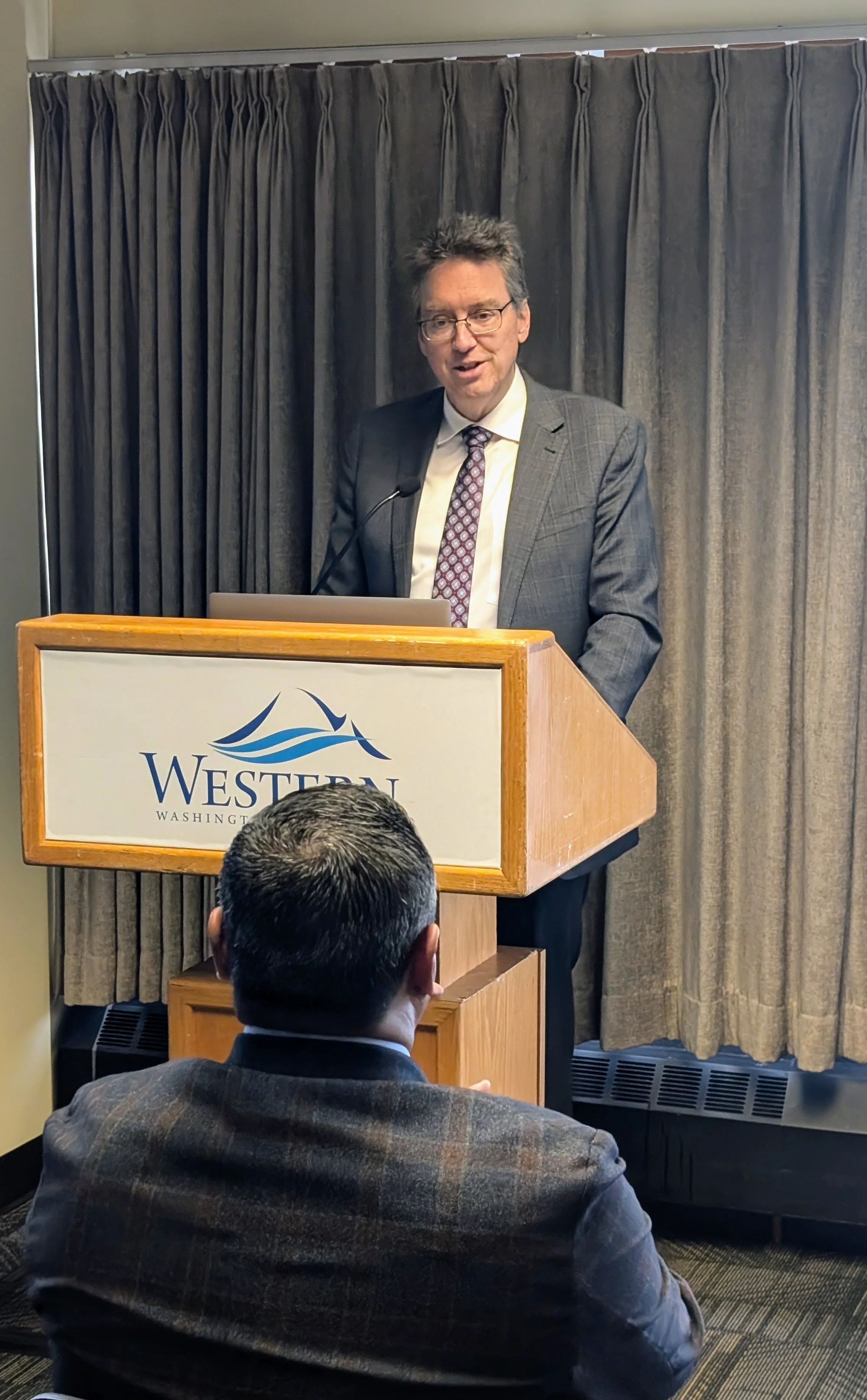
Dr. Brad Johnson, Provost and Executive Vice President of Western Washington University, delivering his welcoming remarks.
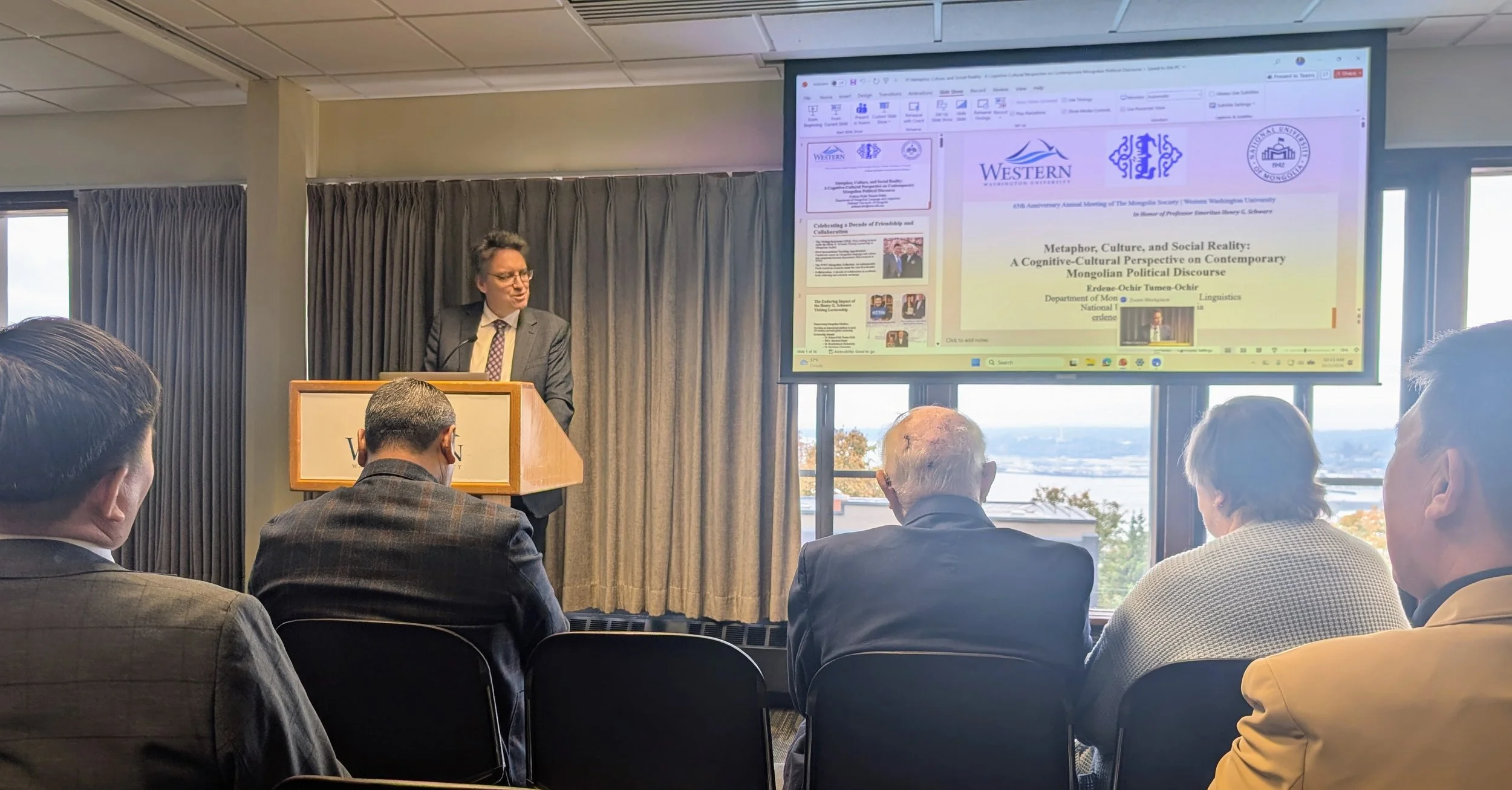
Dr. Brad Johnson, Provost and Executive Vice President of Western Washington University, delivering his welcoming remarks.
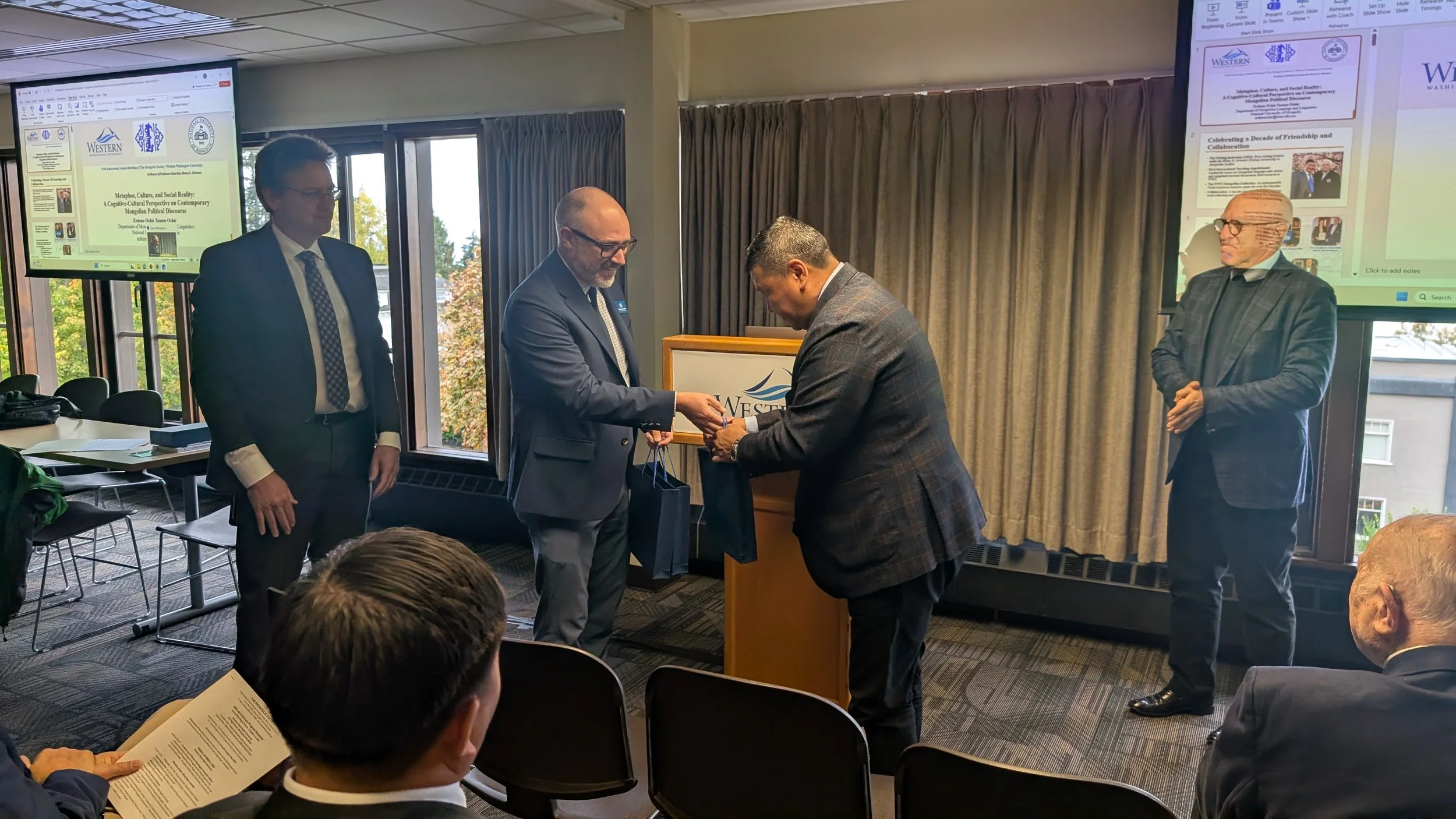
Dr. Brad Johnson and Dr. Mark Greenberg, Director of Faculty Global Engagement, presenting a gift to Amb. Batbayar on behalf of WWU. Pres. Klecheski looks on.
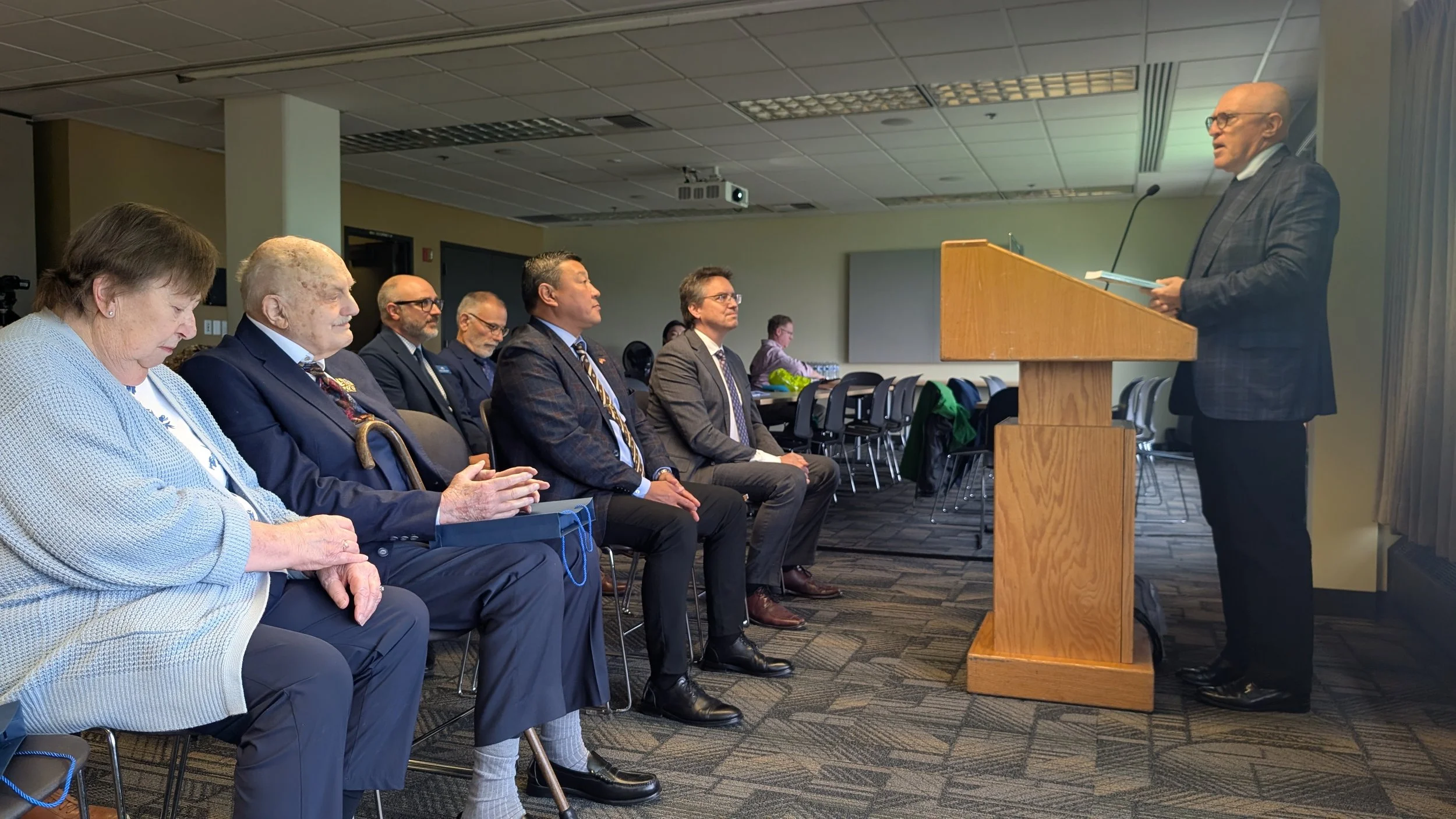
Pres. Klecheski expressing the Society's appreciation to those individuals and institutions that provided support for this year's Annual Meeting.
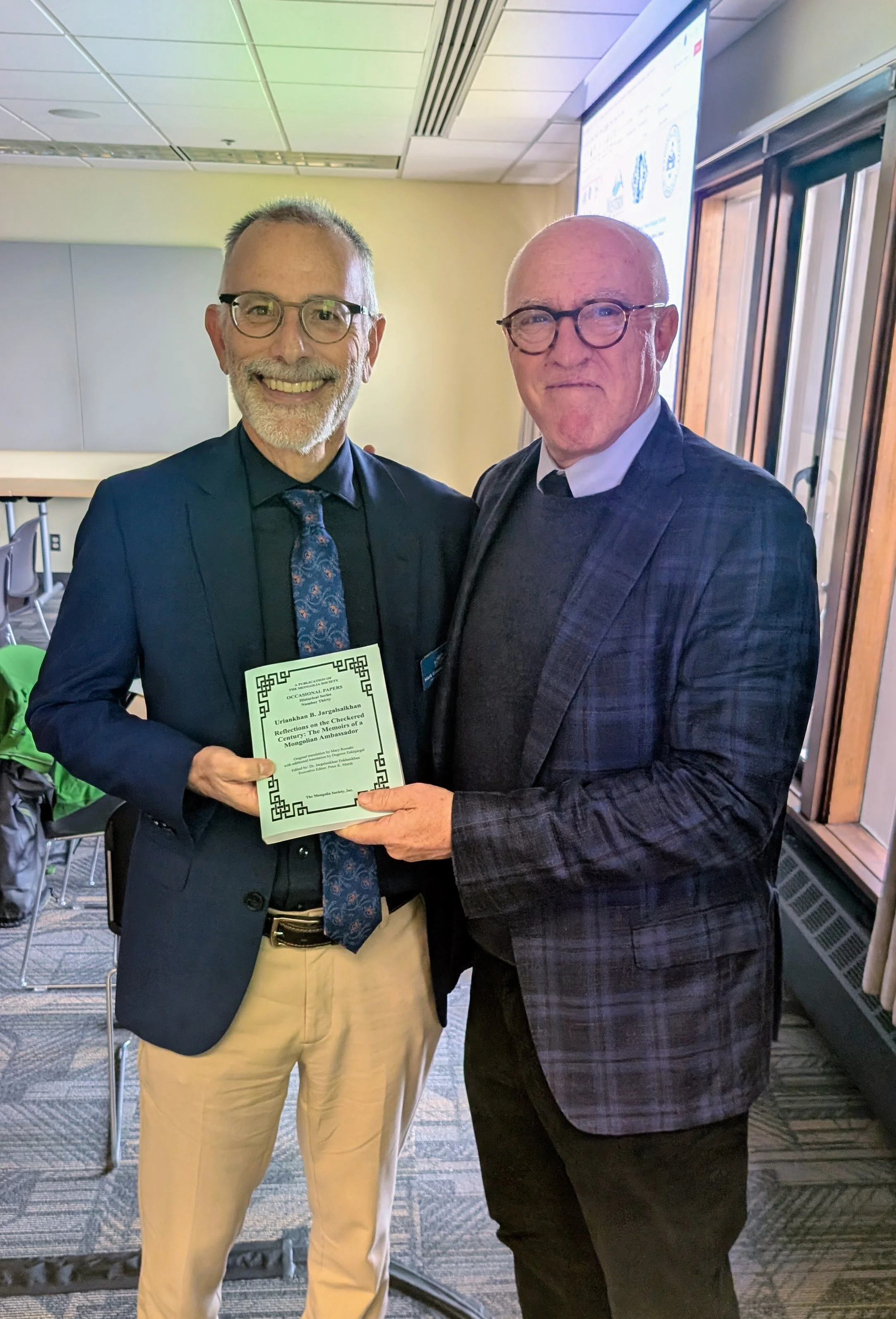
Dr. Brad Johnson receiving a copy of a recent MonSoc publication.
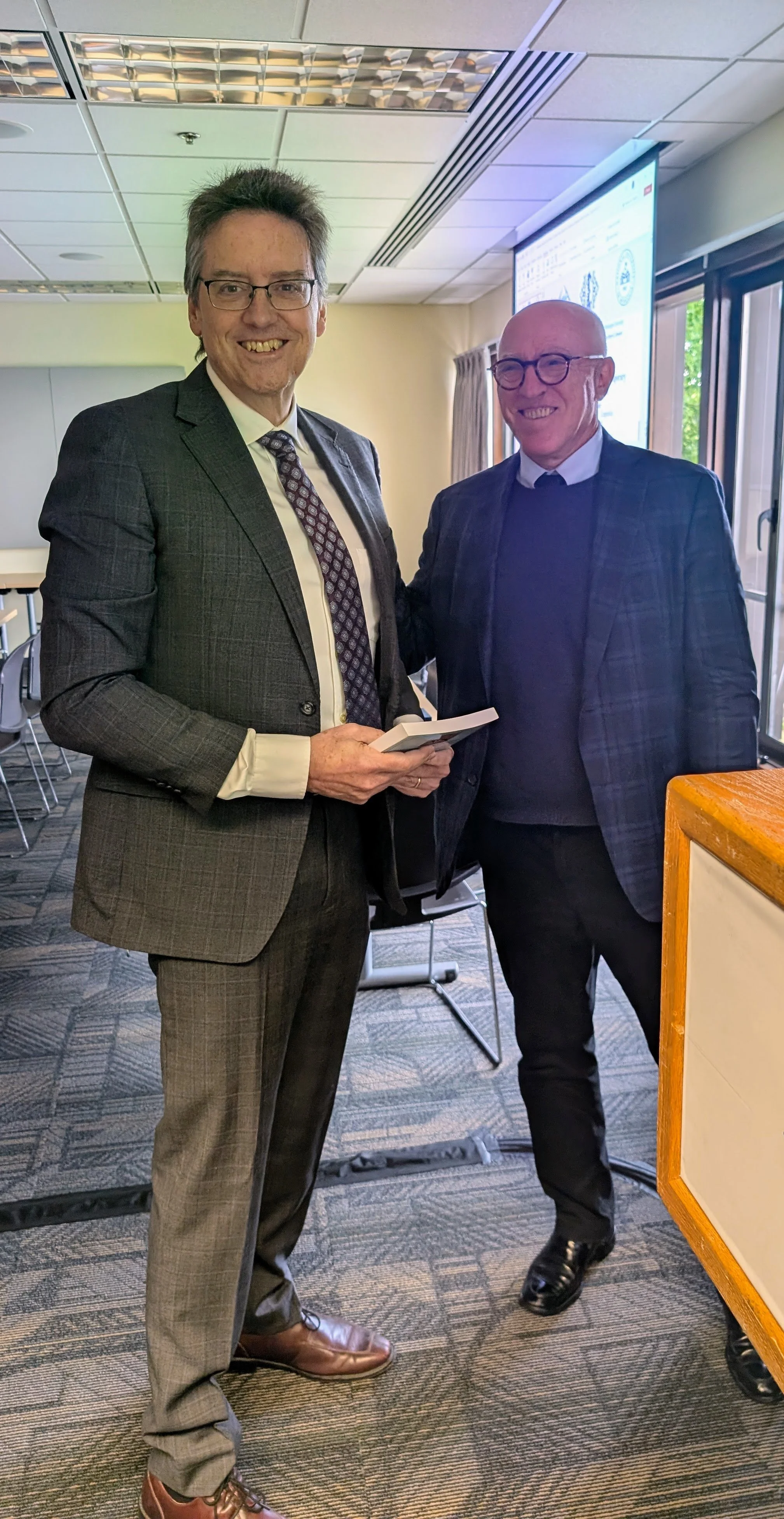
Dr. Mark Greenberg receiving a copy of a recent MonSoc publication from Pres. Klecheski.
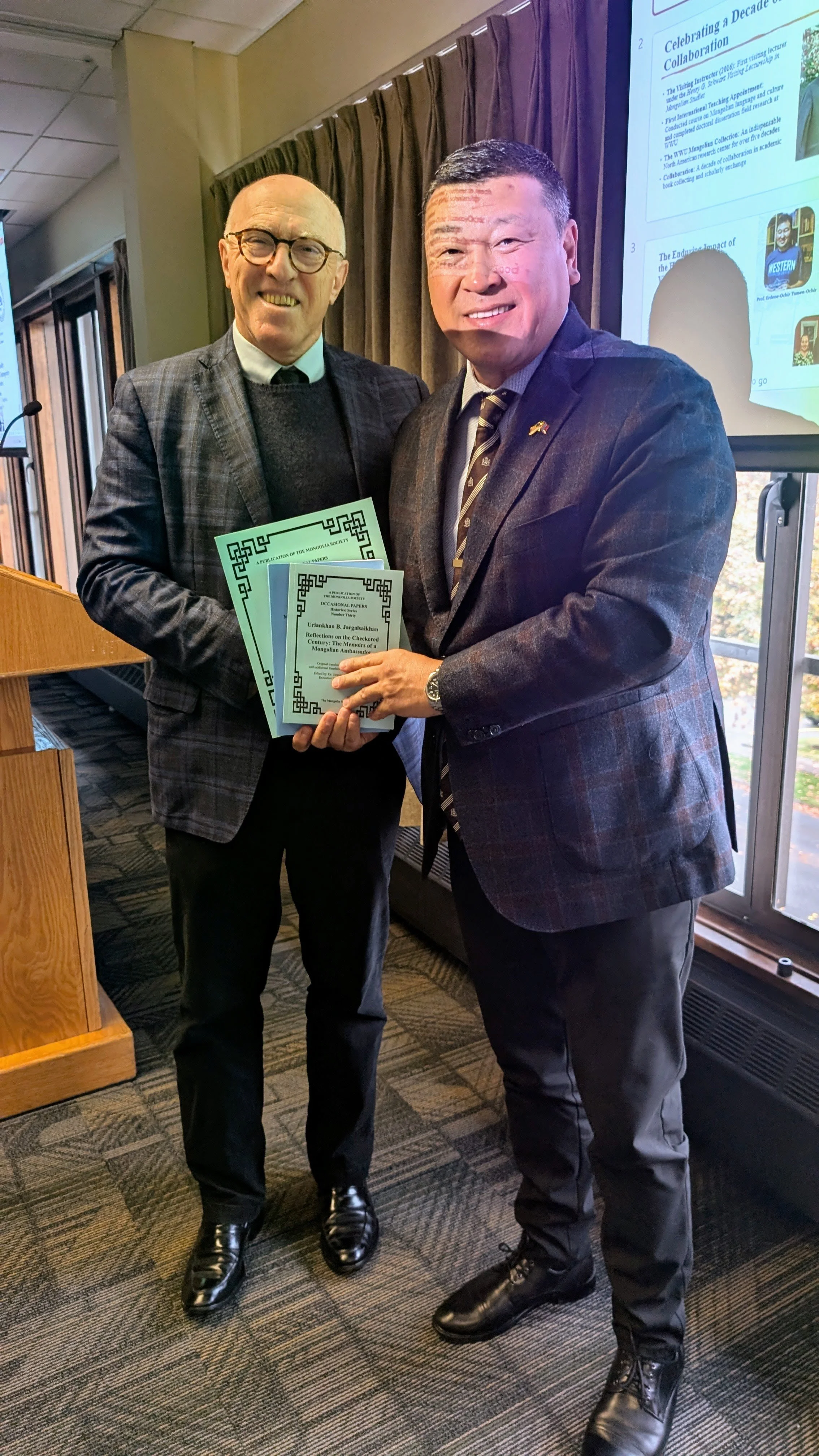
Amb. Batbayar receiving a copy of a recent MonSoc publication from Pres. Klecheski.
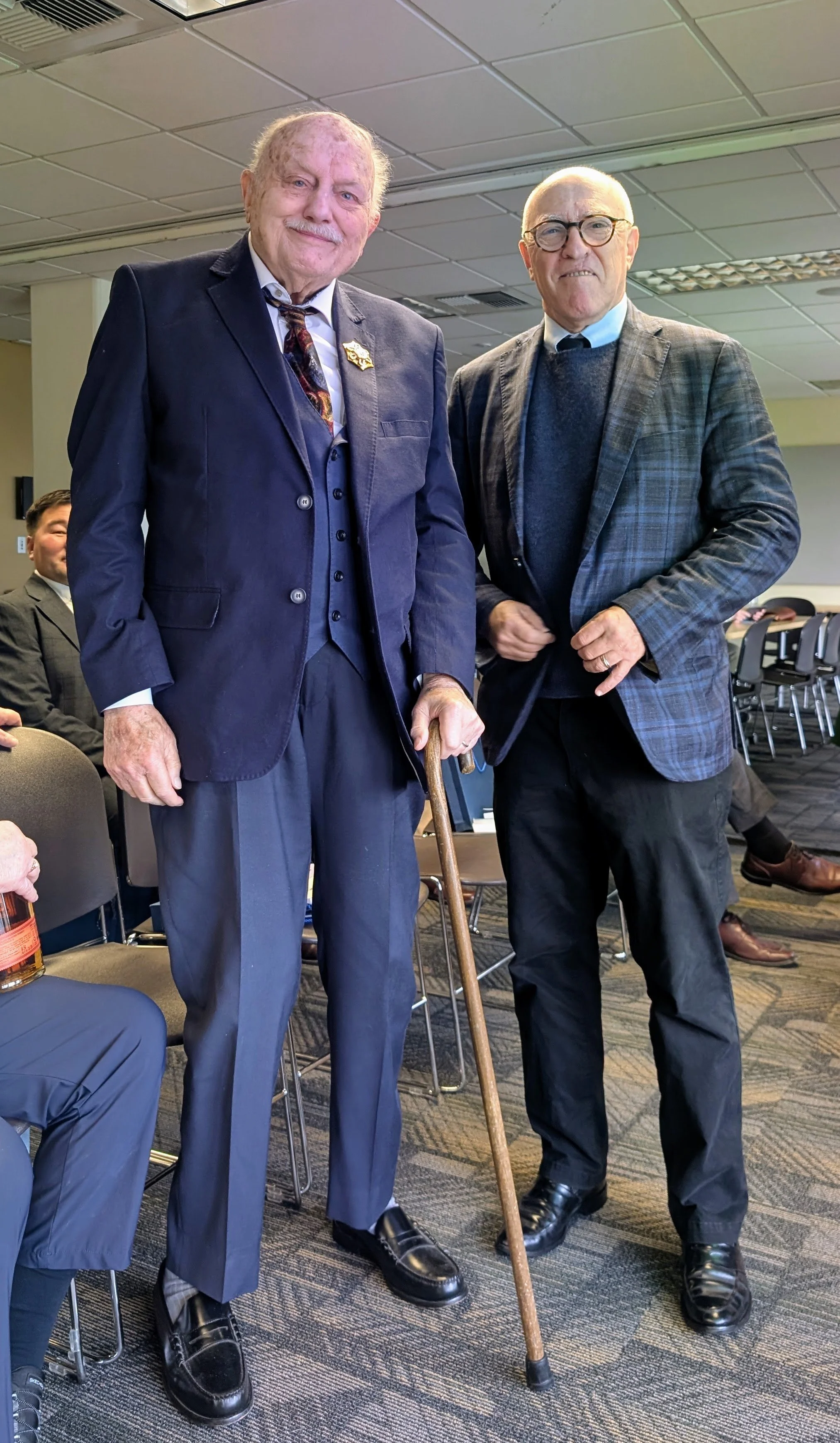
Dr. Henry Schwarz with Pres. Klecheski.
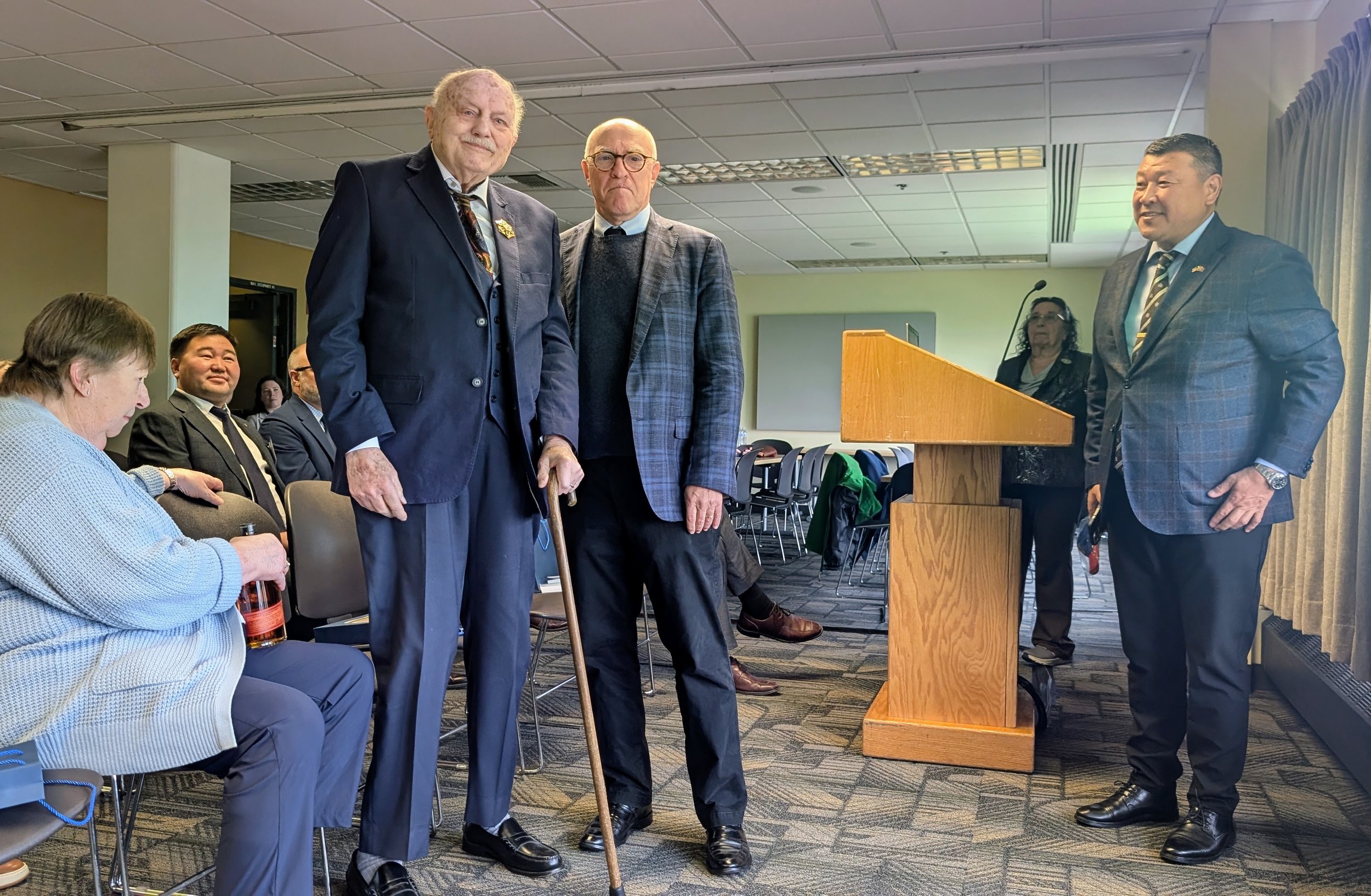
Dr. Henry Schwarz with Pres. Klecheski and Amb. Batbayar.
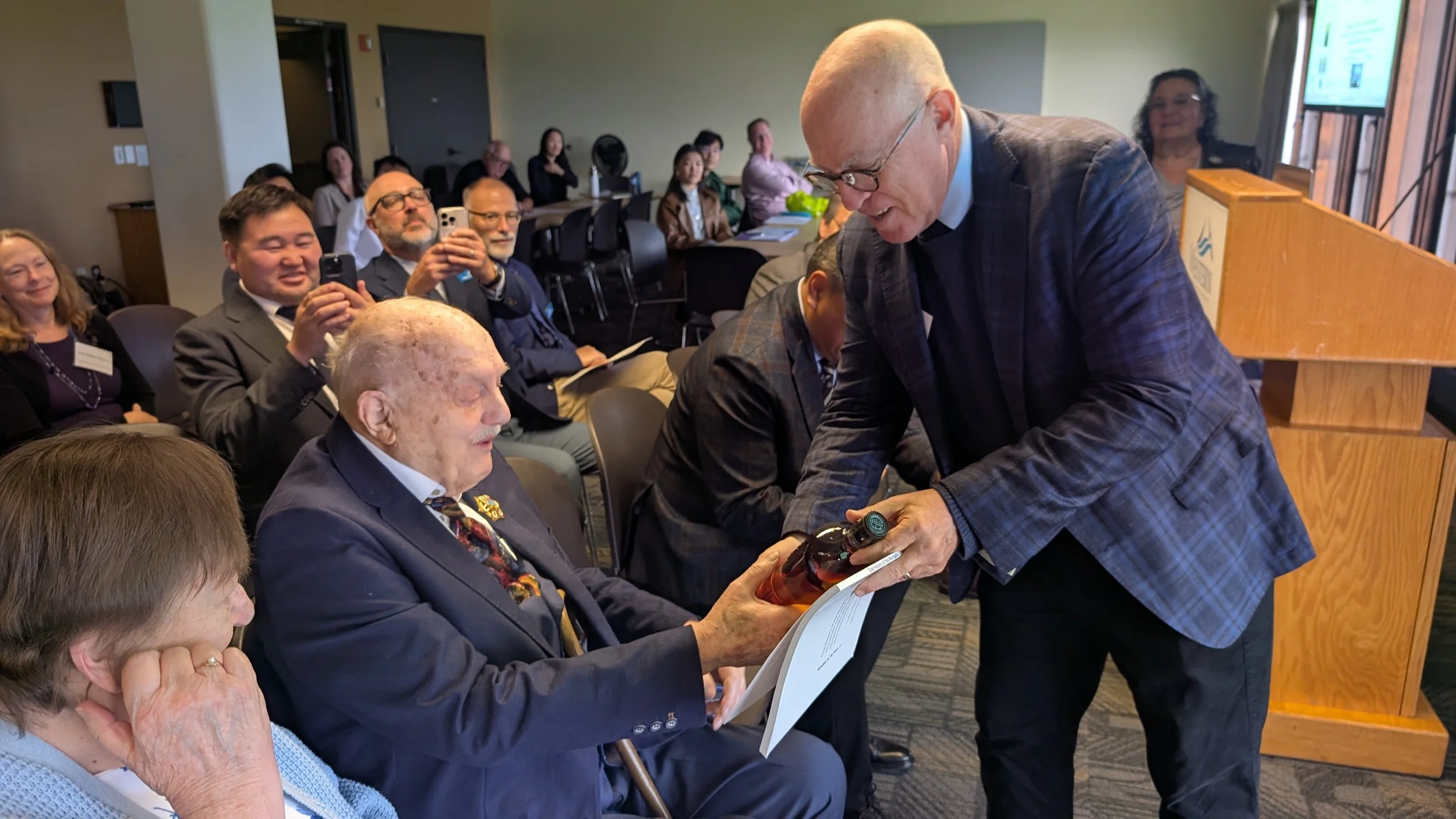
Pres. Klecheski presenting a gift to Dr. Schwarz.
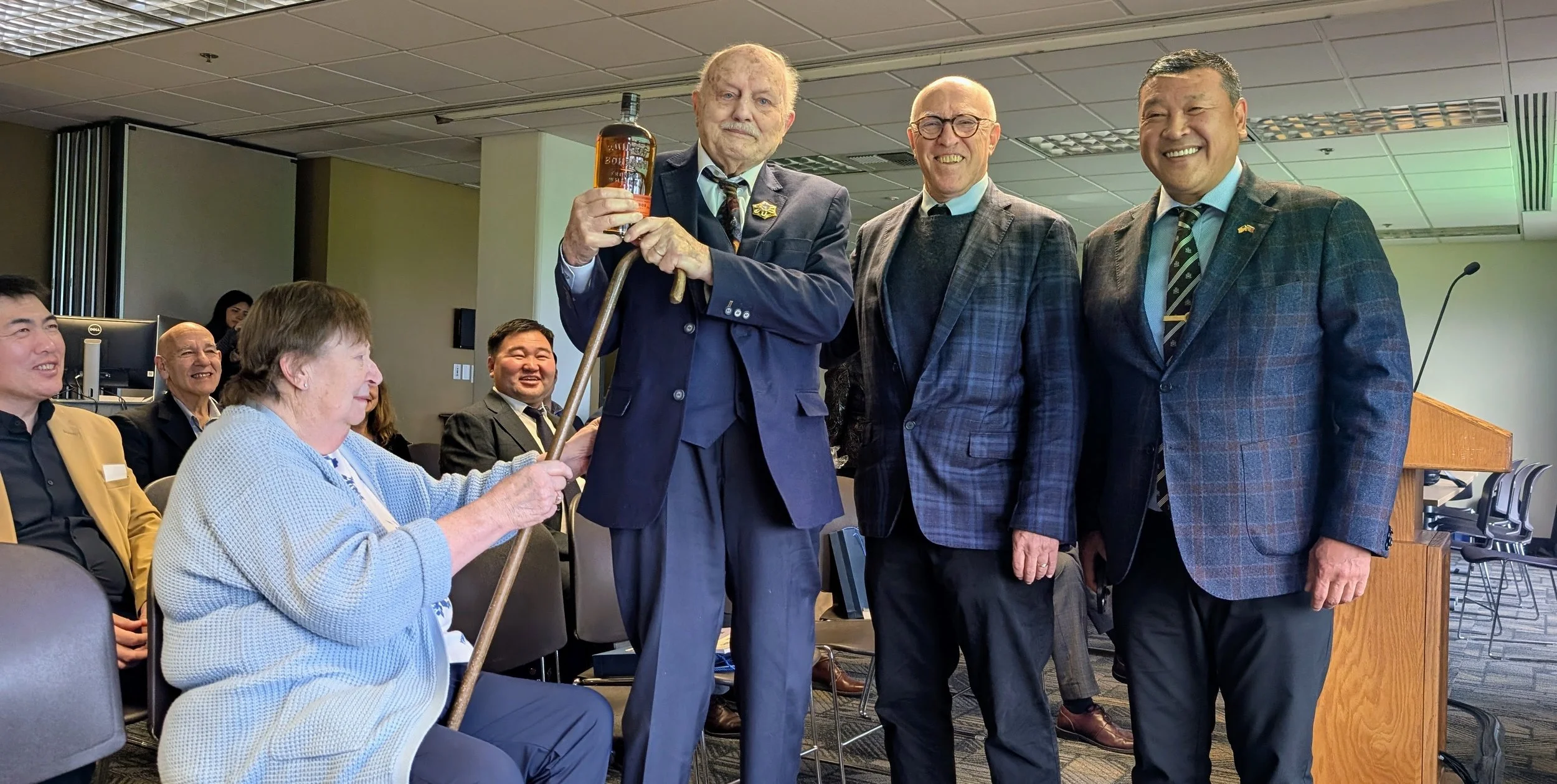
Dr. Henry Schwarz with Pres. Klecheski, Amb. Batbayar, and Maggie Schwarz.
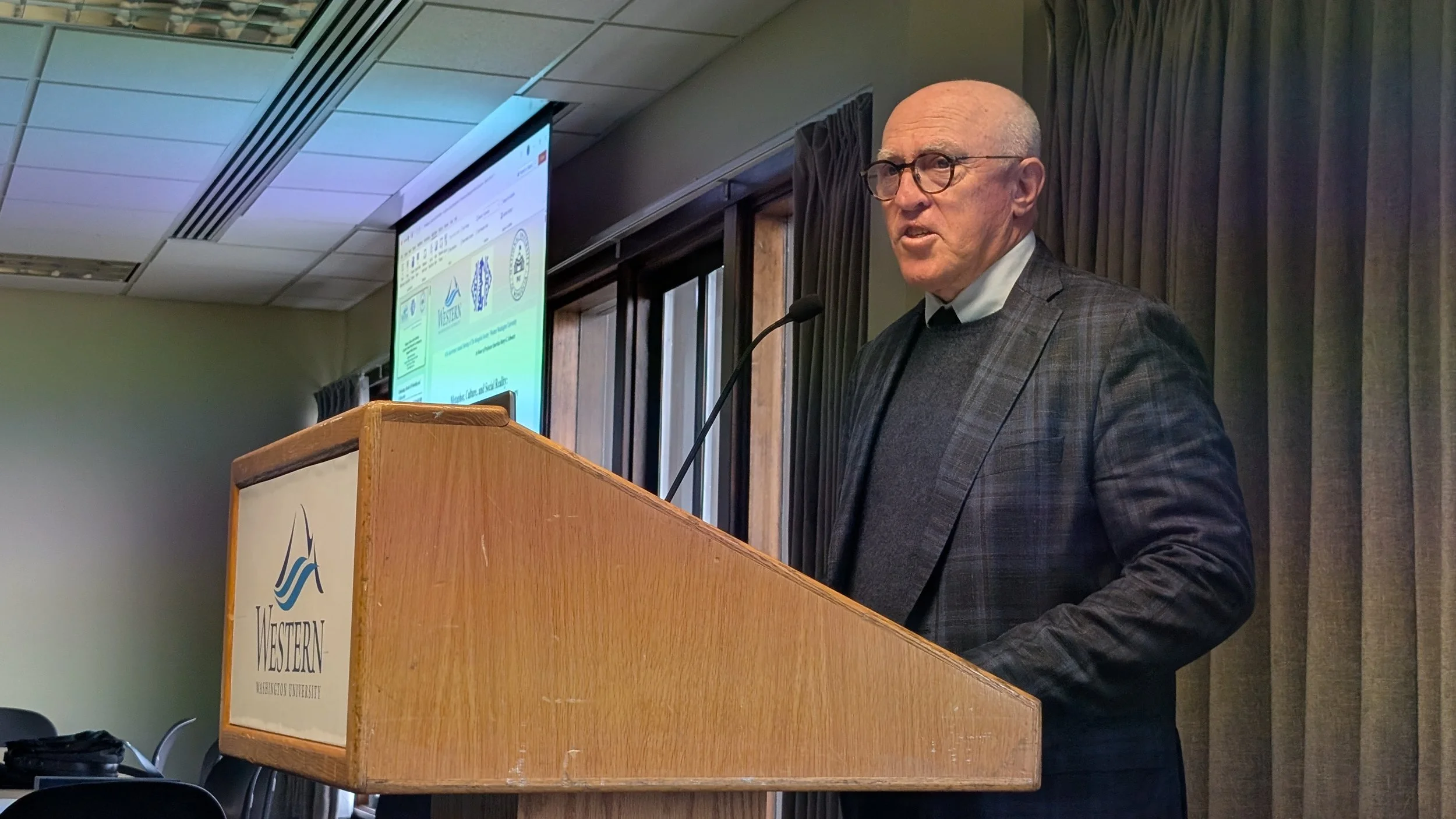
Pres. Klecheski introducing Dr. Mark Greenberg, Director of Faculty Global Engagement.
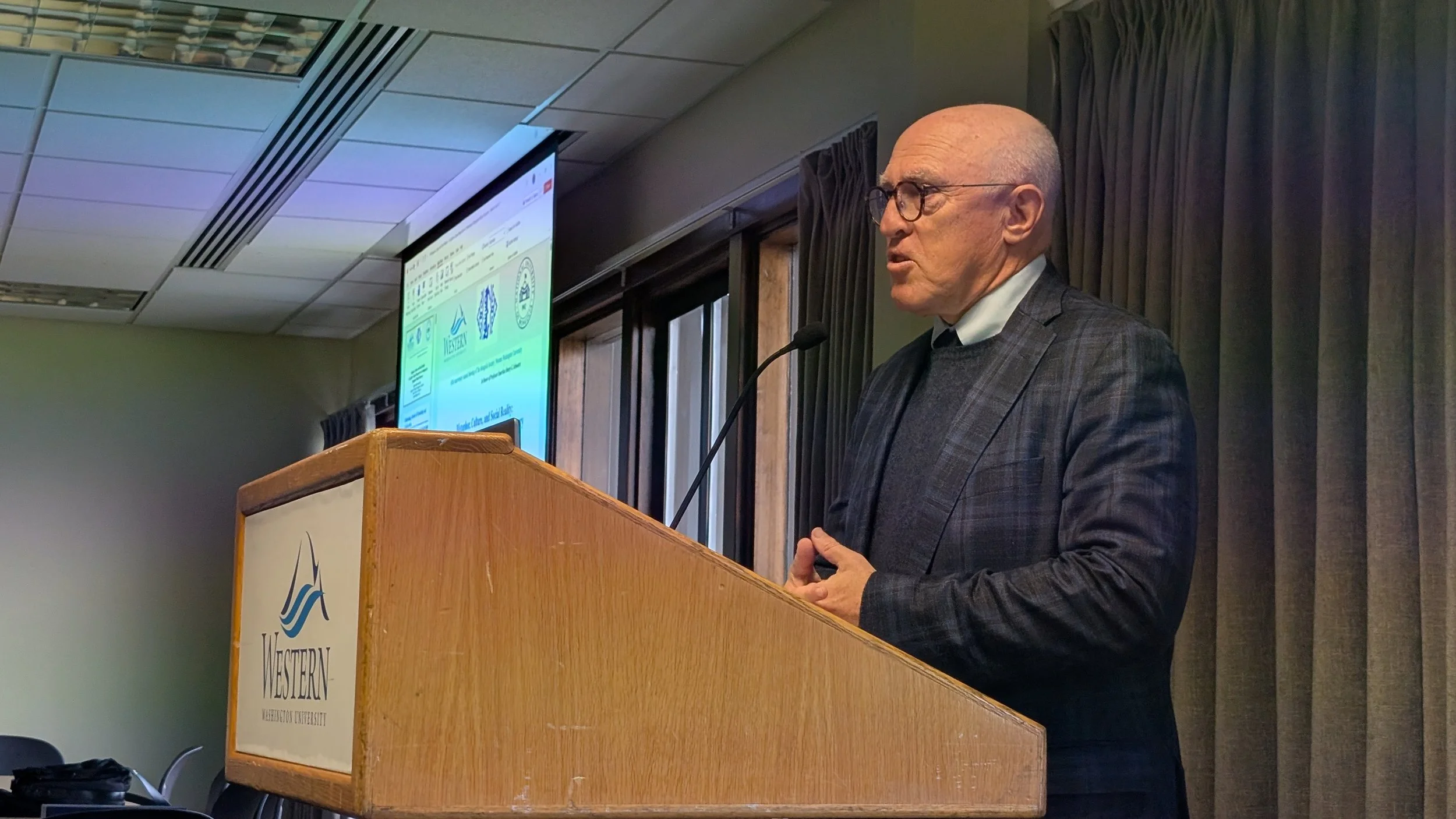
Pres. Klecheski introducing Dr. Mark Greenberg, Director of Faculty Global Engagement.
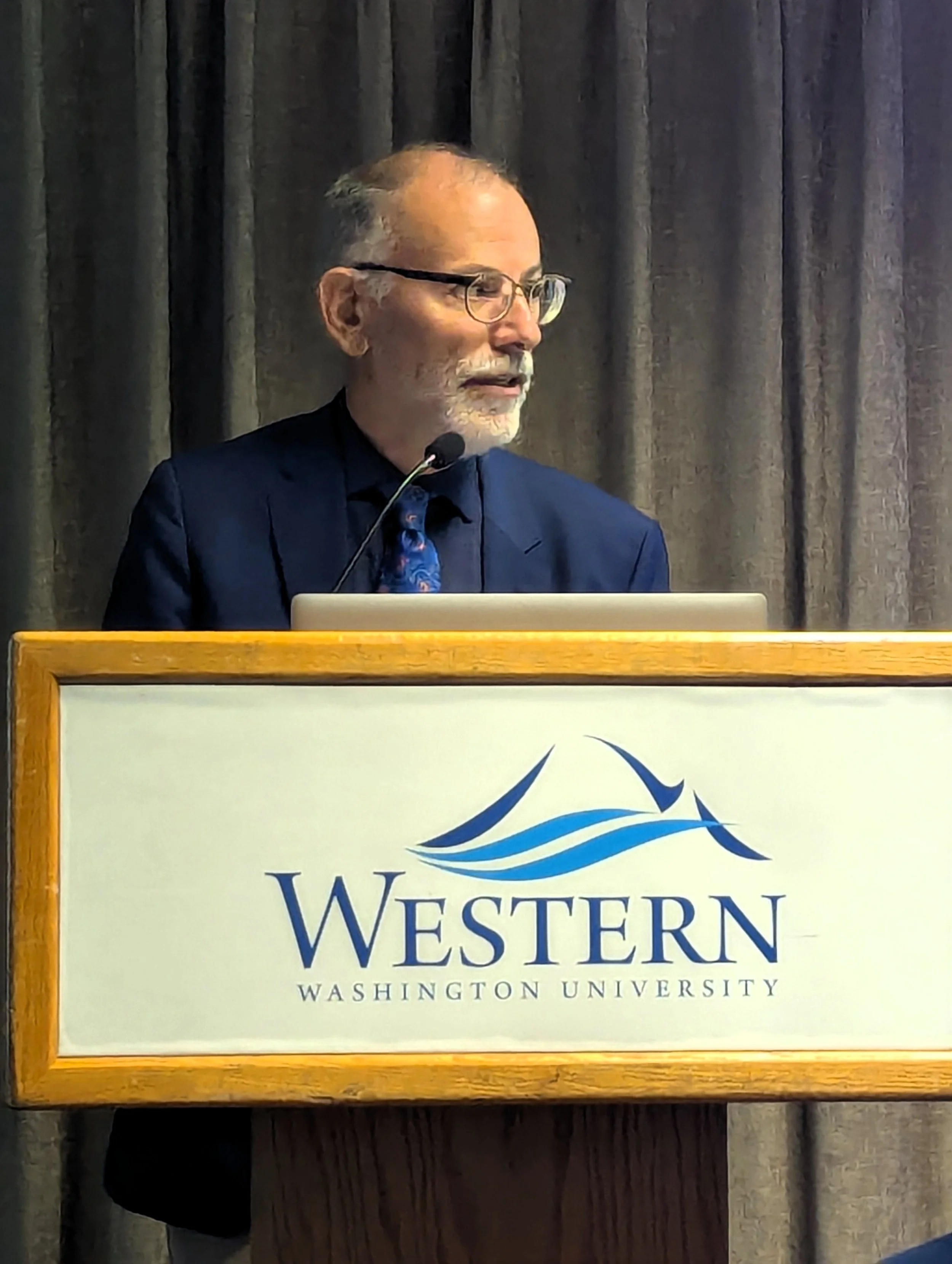
Dr. Mark Greenberg presenting a tribute to Dr. Henry G. Schwarz.
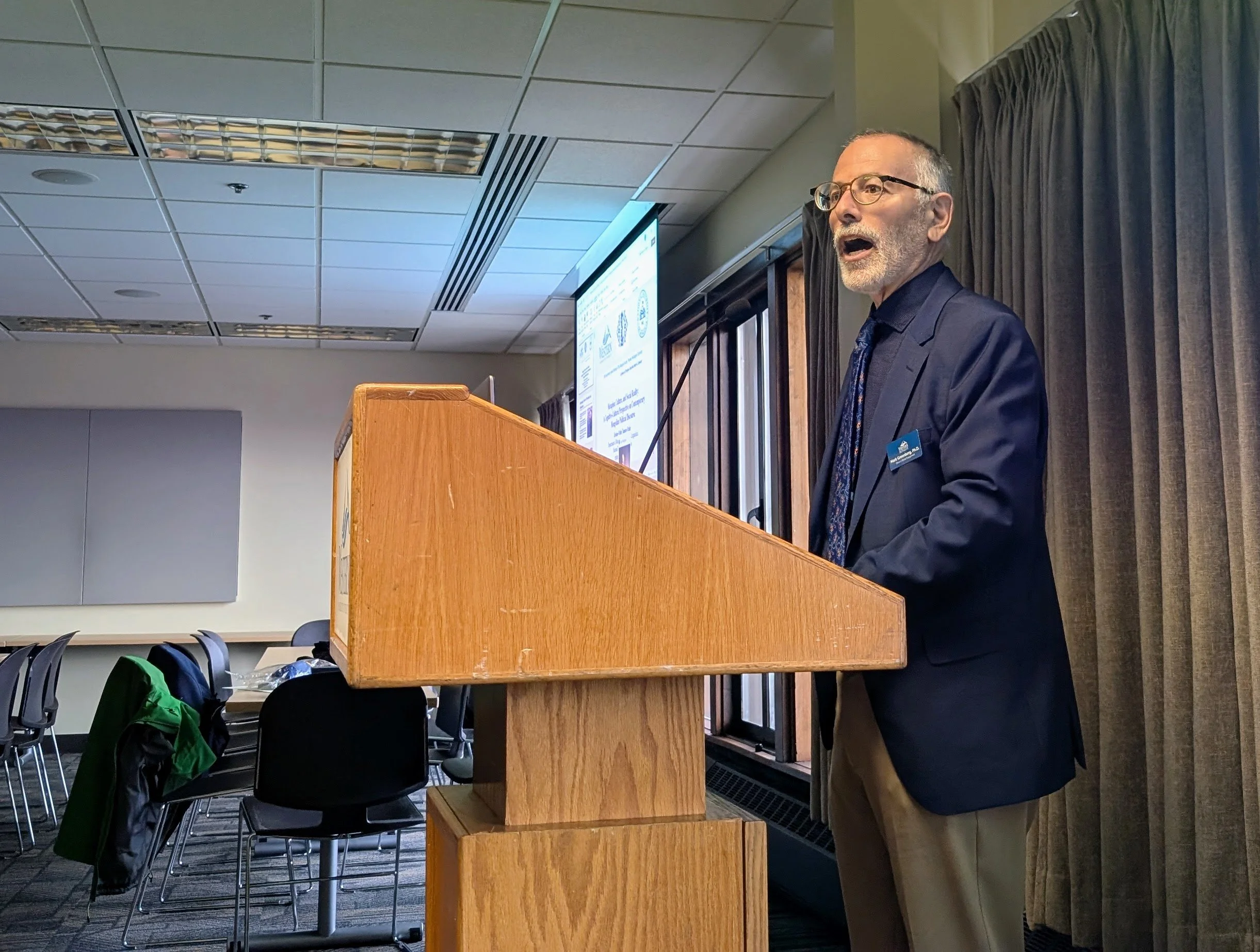
Dr. Mark Greenberg presenting a tribute to Dr. Henry G. Schwarz.
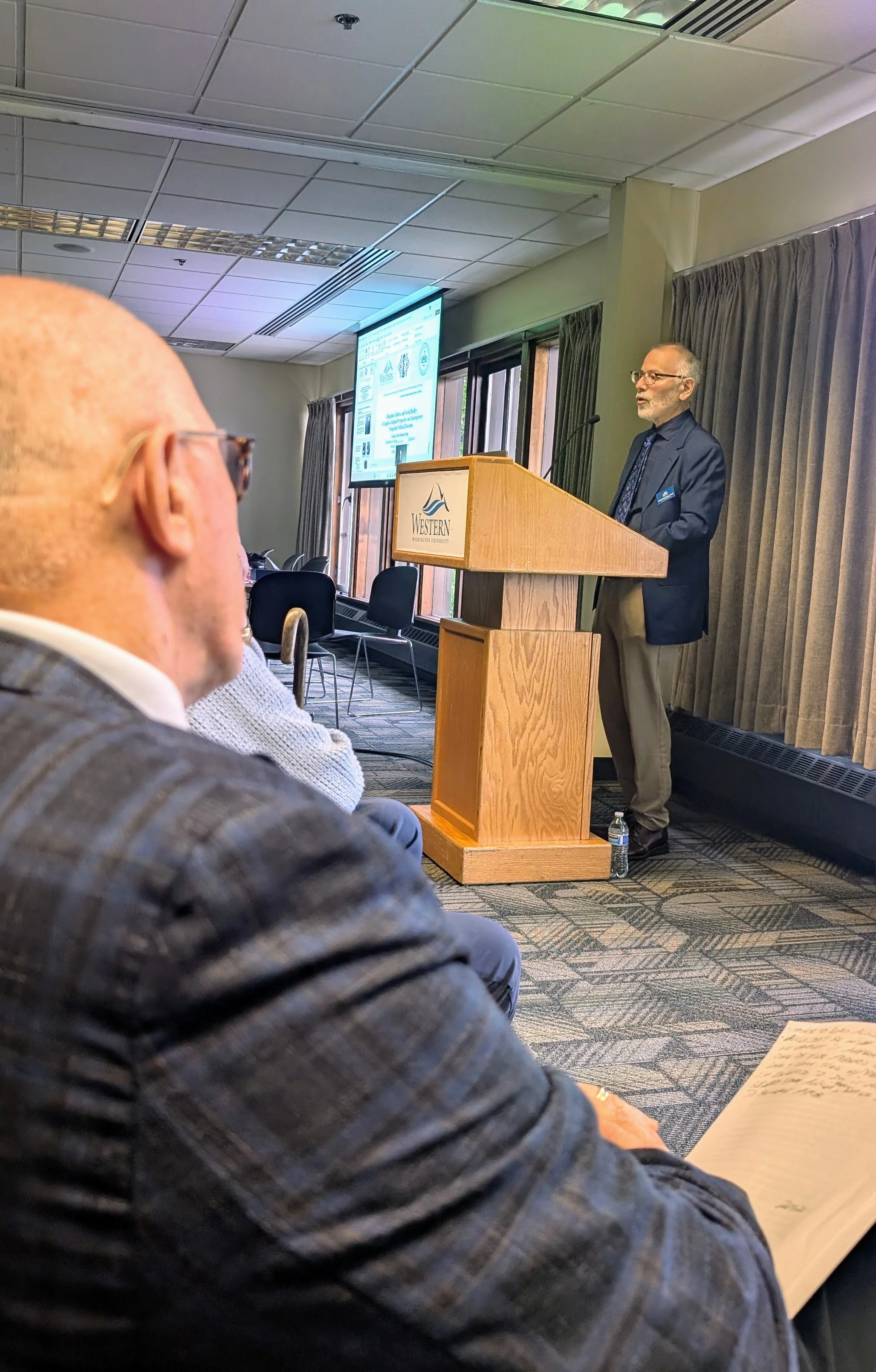
Dr. Mark Greenberg presenting a tribute to Dr. Henry G. Schwarz.
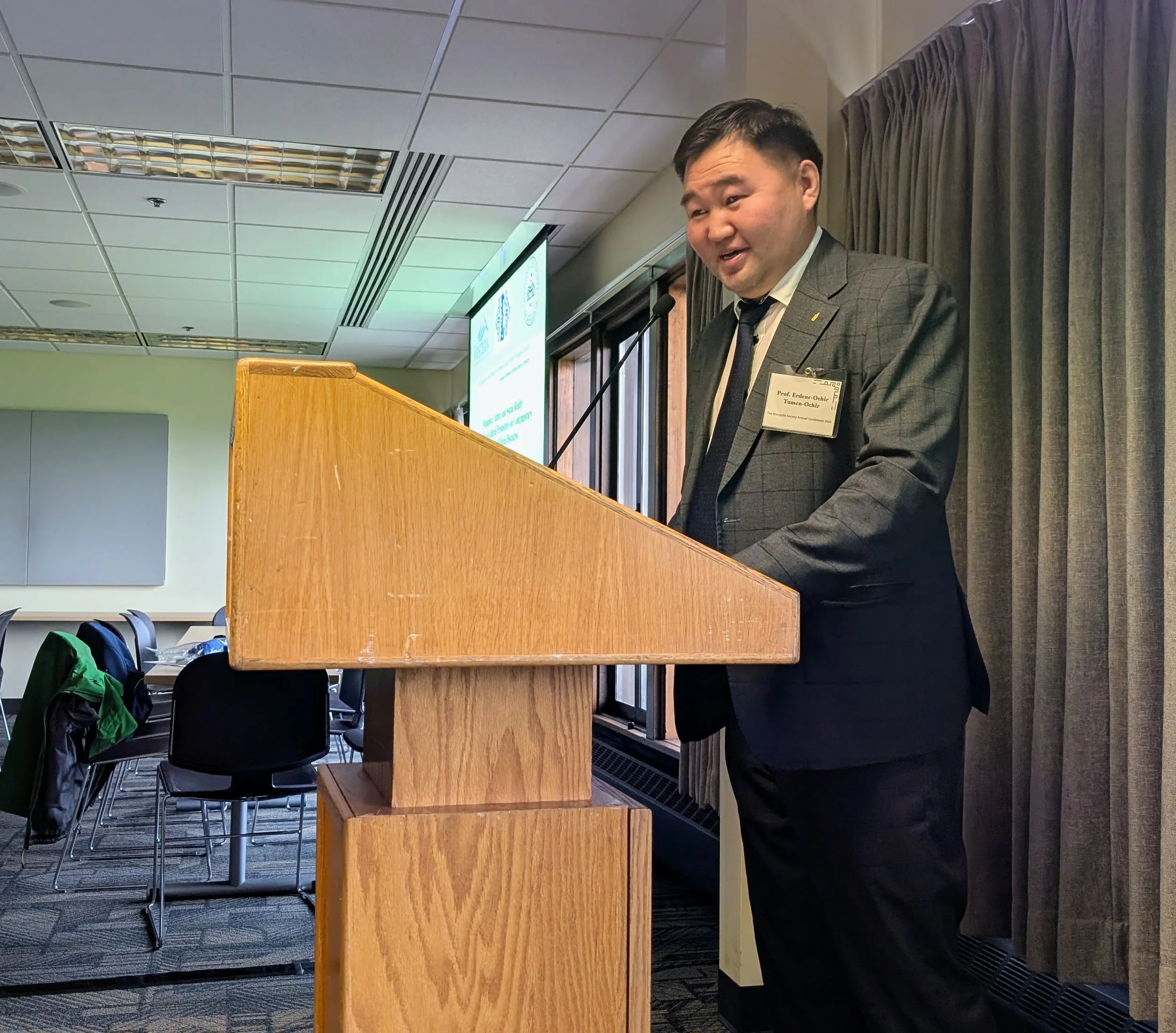
Prof. Dr. T. Erdene-Ochir of the National University of Mongolia presenting his tribute to Dr. Schwarz.
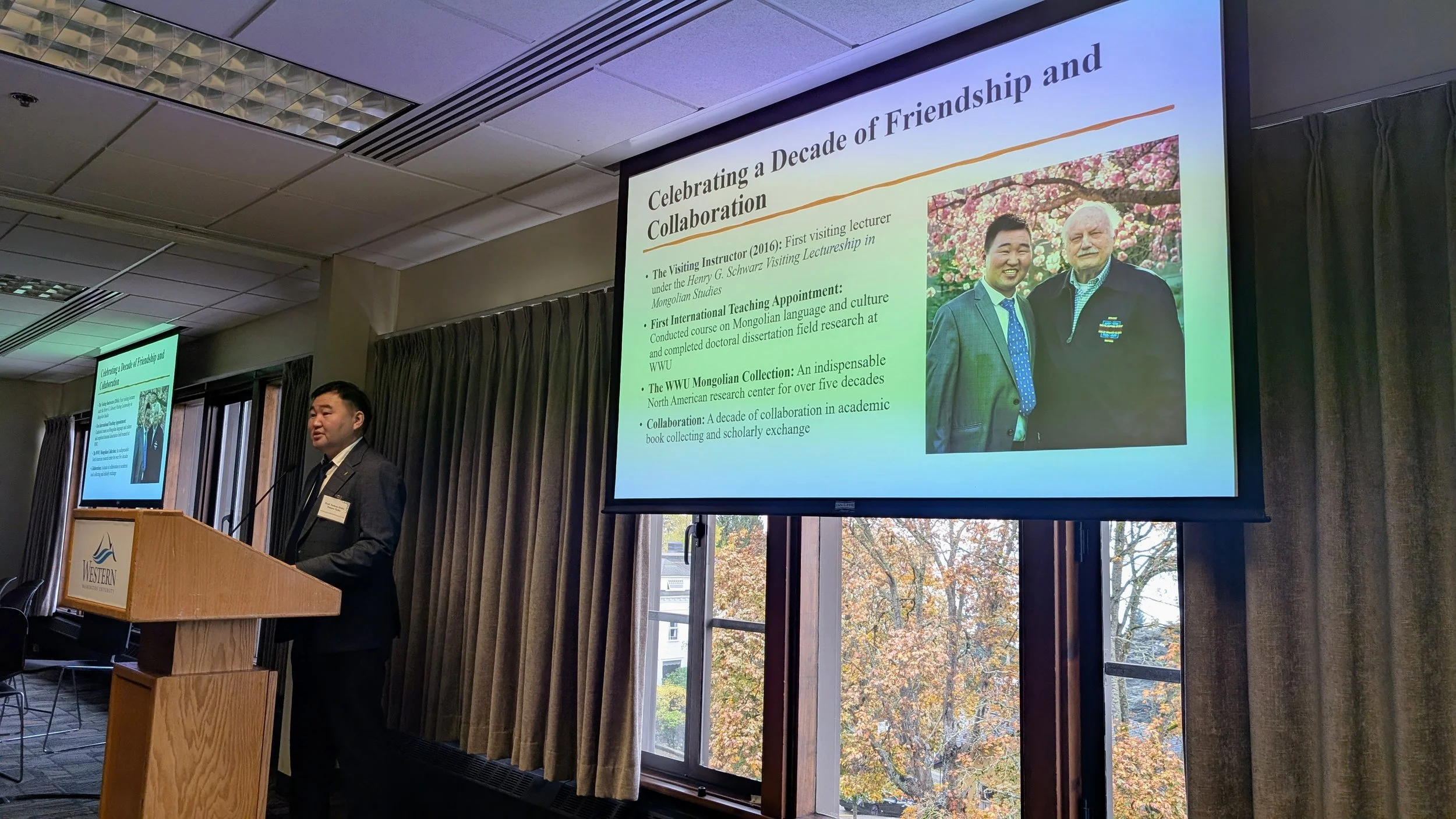
Prof. Dr. T. Erdene-Ochir of the National University of Mongolia presenting his tribute to Dr. Schwarz.
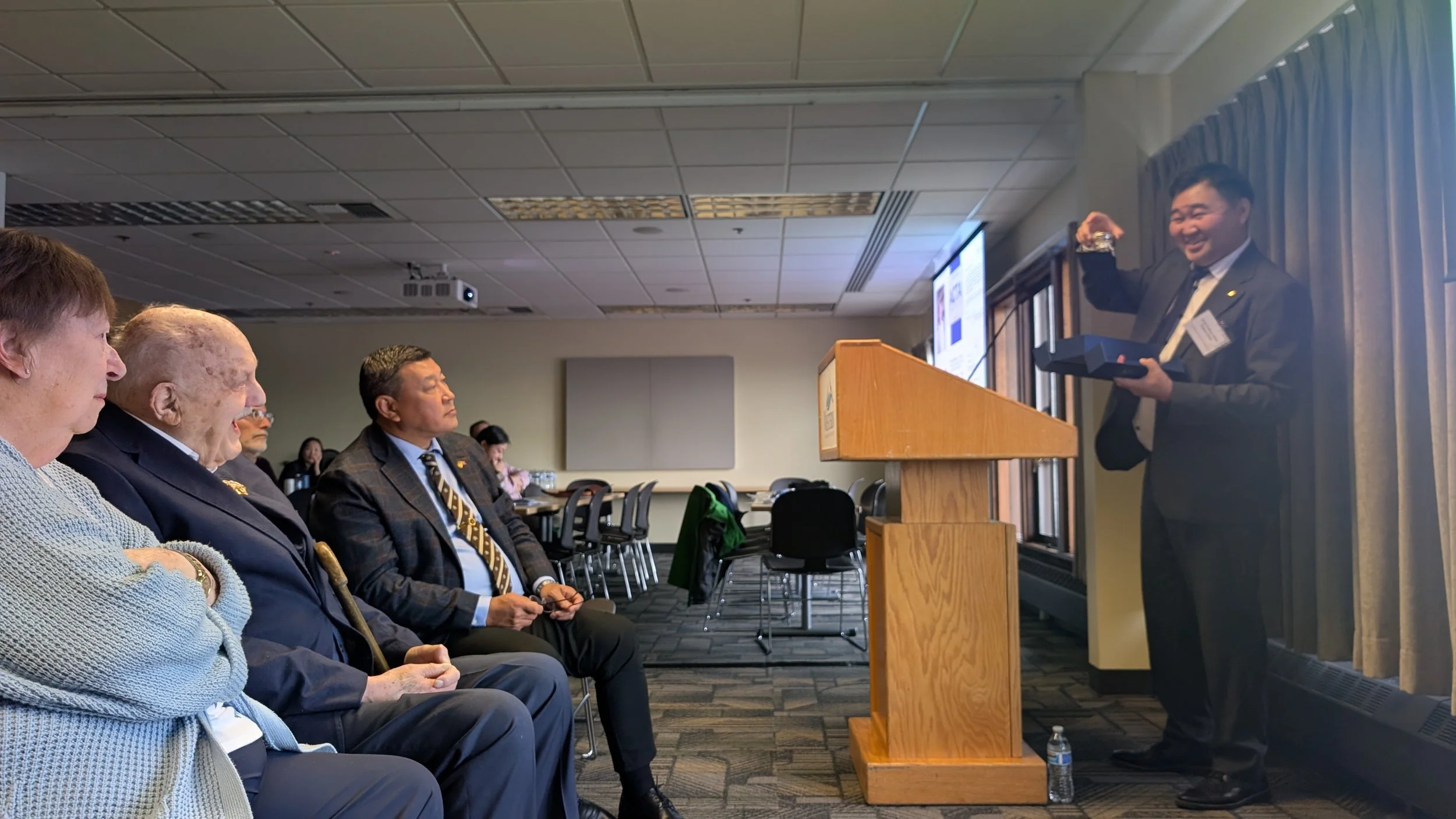
Prof. Dr. T. Erdene-Ochir of the National University of Mongolia presenting his tribute to Dr. Schwarz.
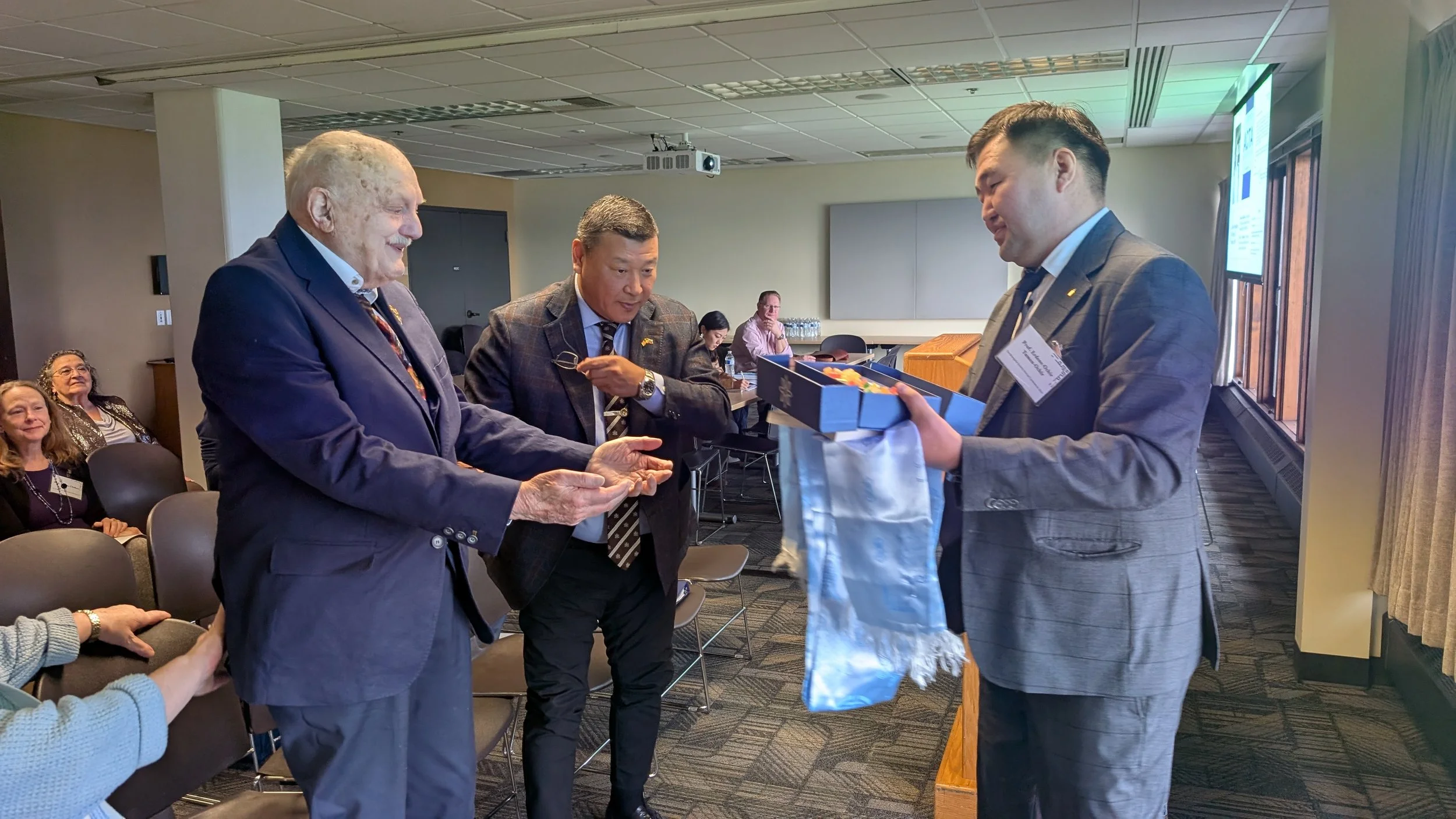
Prof. Dr. T. Erdene-Ochir of the National University of Mongolia presenting his tribute to Dr. Schwarz with Amb. Batbayar.
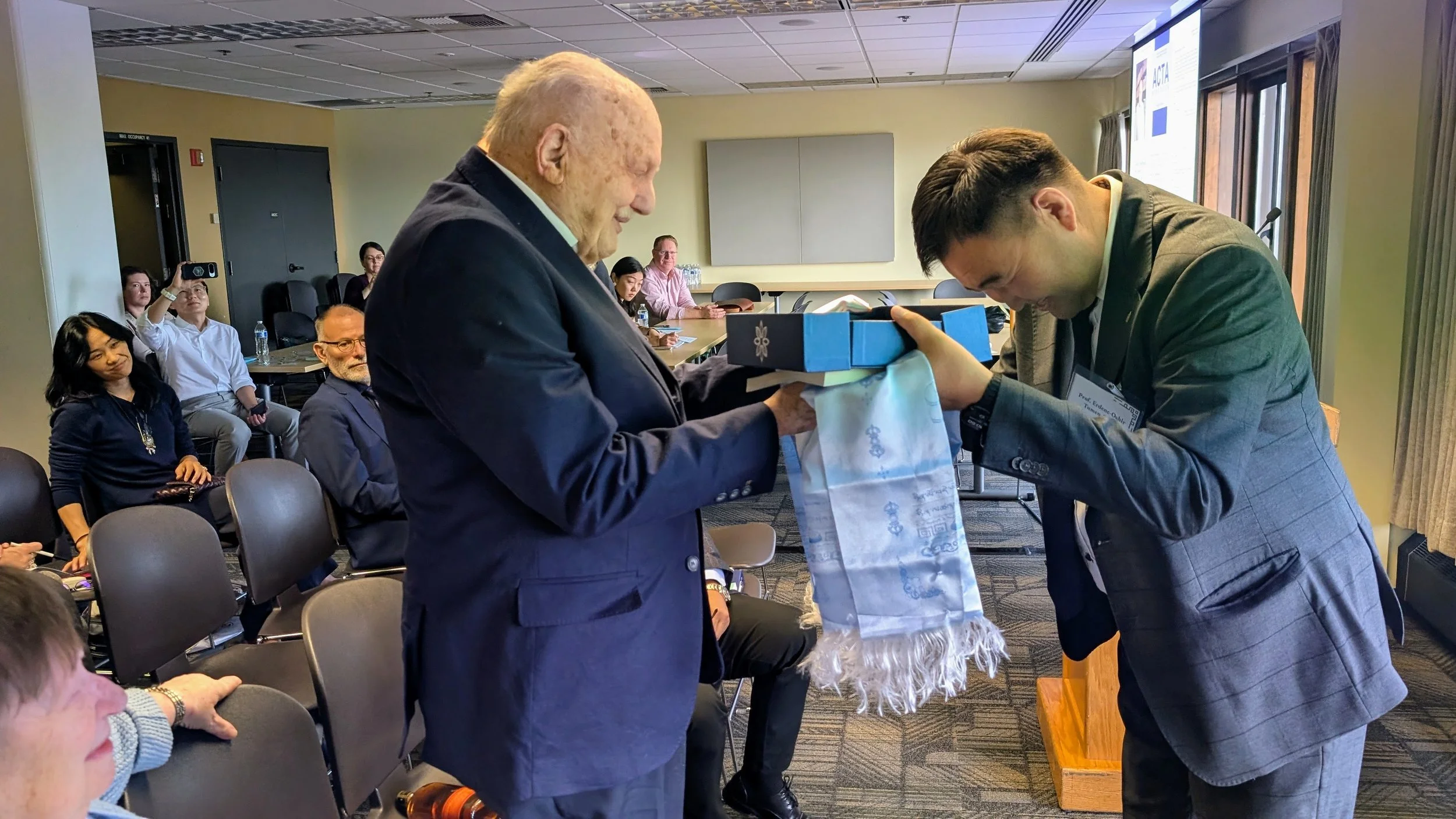
Prof. Dr. T. Erdene-Ochir of the National University of Mongolia presenting his tribute to Dr. Schwarz.
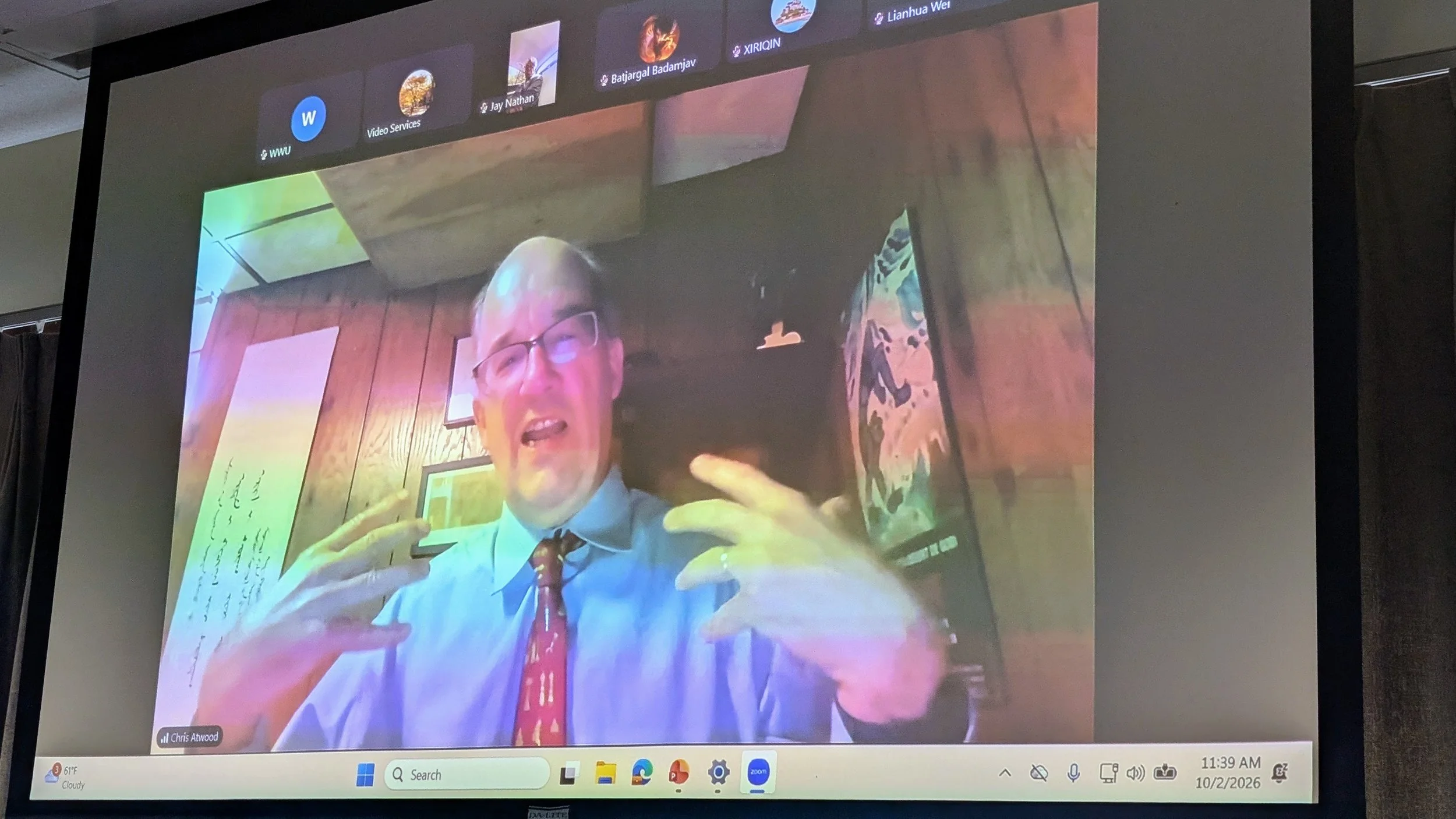
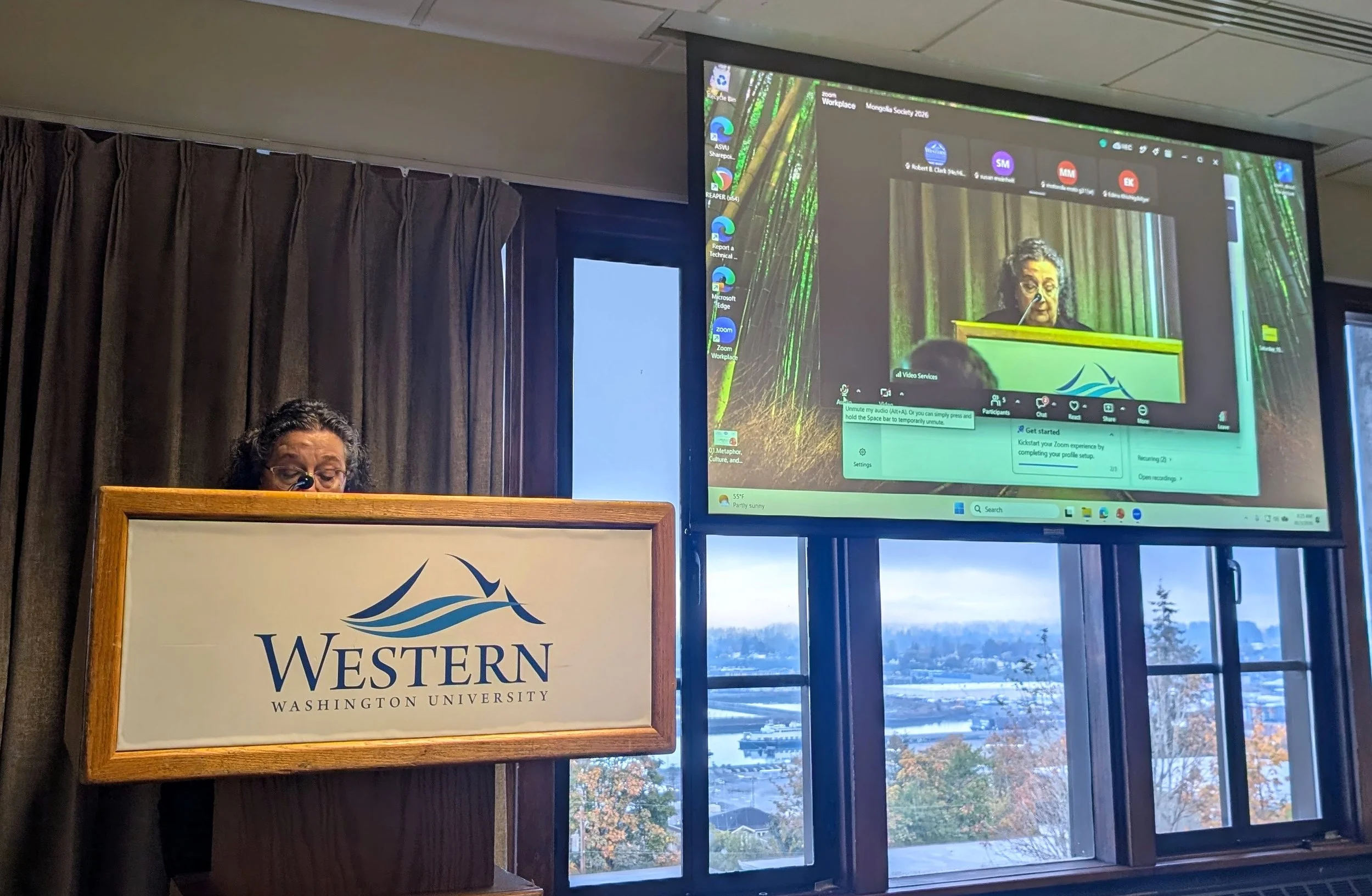
Dr. Chris Atwood, University of Pennsylvania, presenting his tribute to Dr. Schwarz via Zoom.
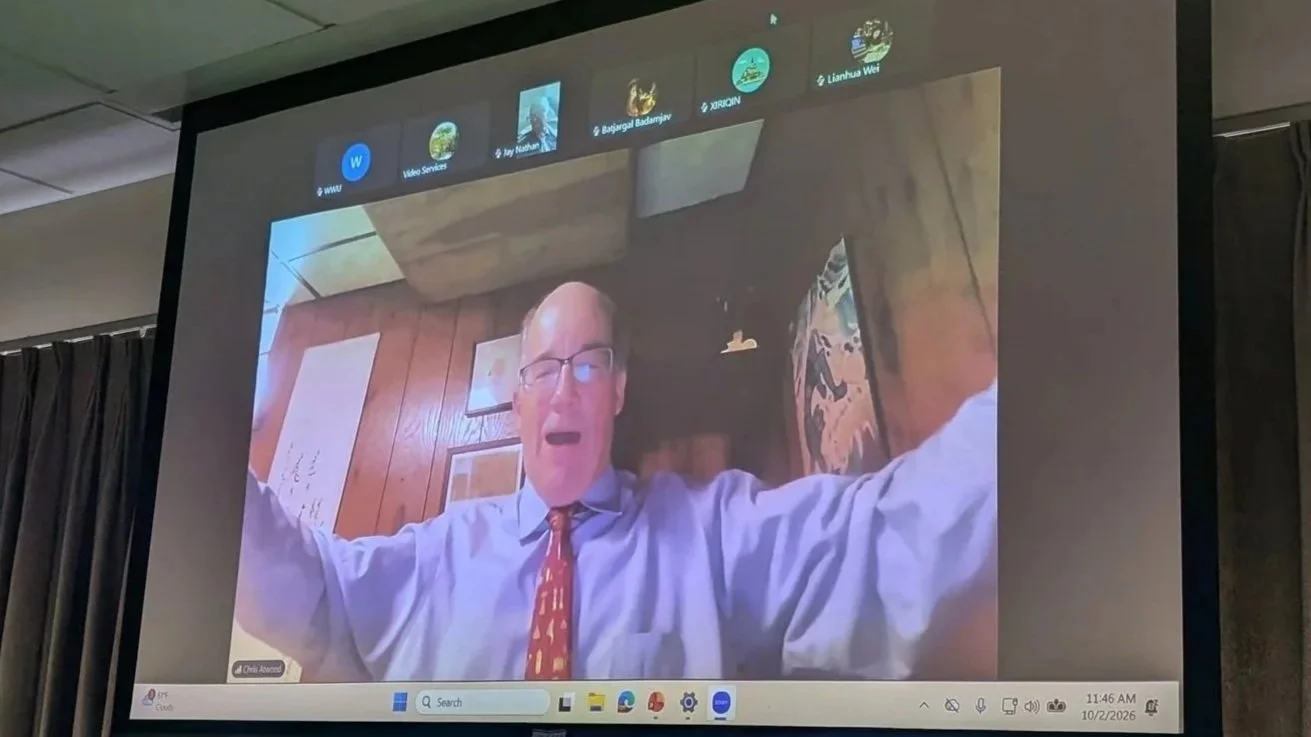
Dr. Chris Atwood, University of Pennsylvania, presenting his tribute to Dr. Schwarz via Zoom.
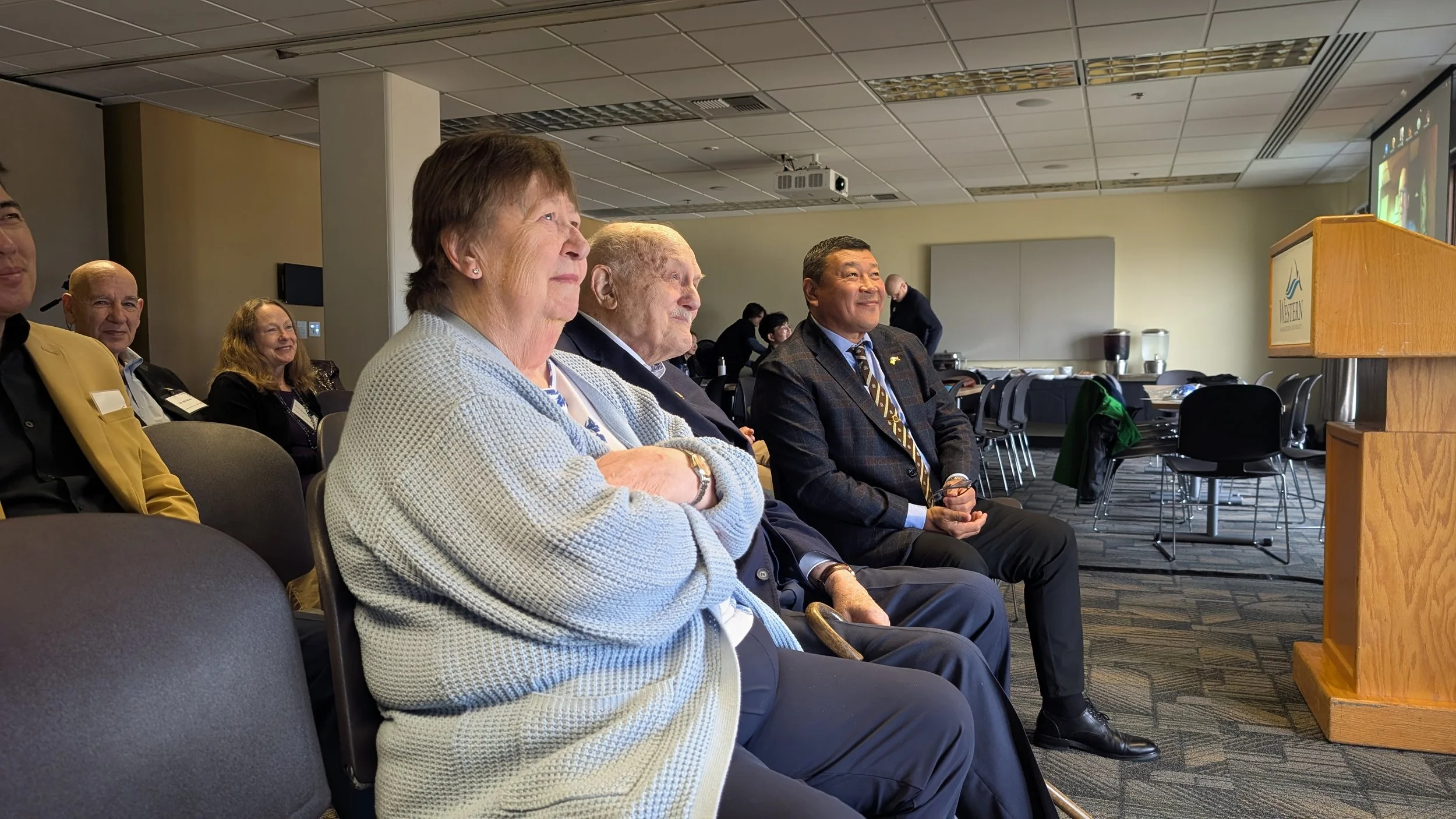
Mrs. Maggie Schwarz, Dr. Henry Schwarz, Amb. Batbayar and others reacting to Dr. Atwood's tribute.
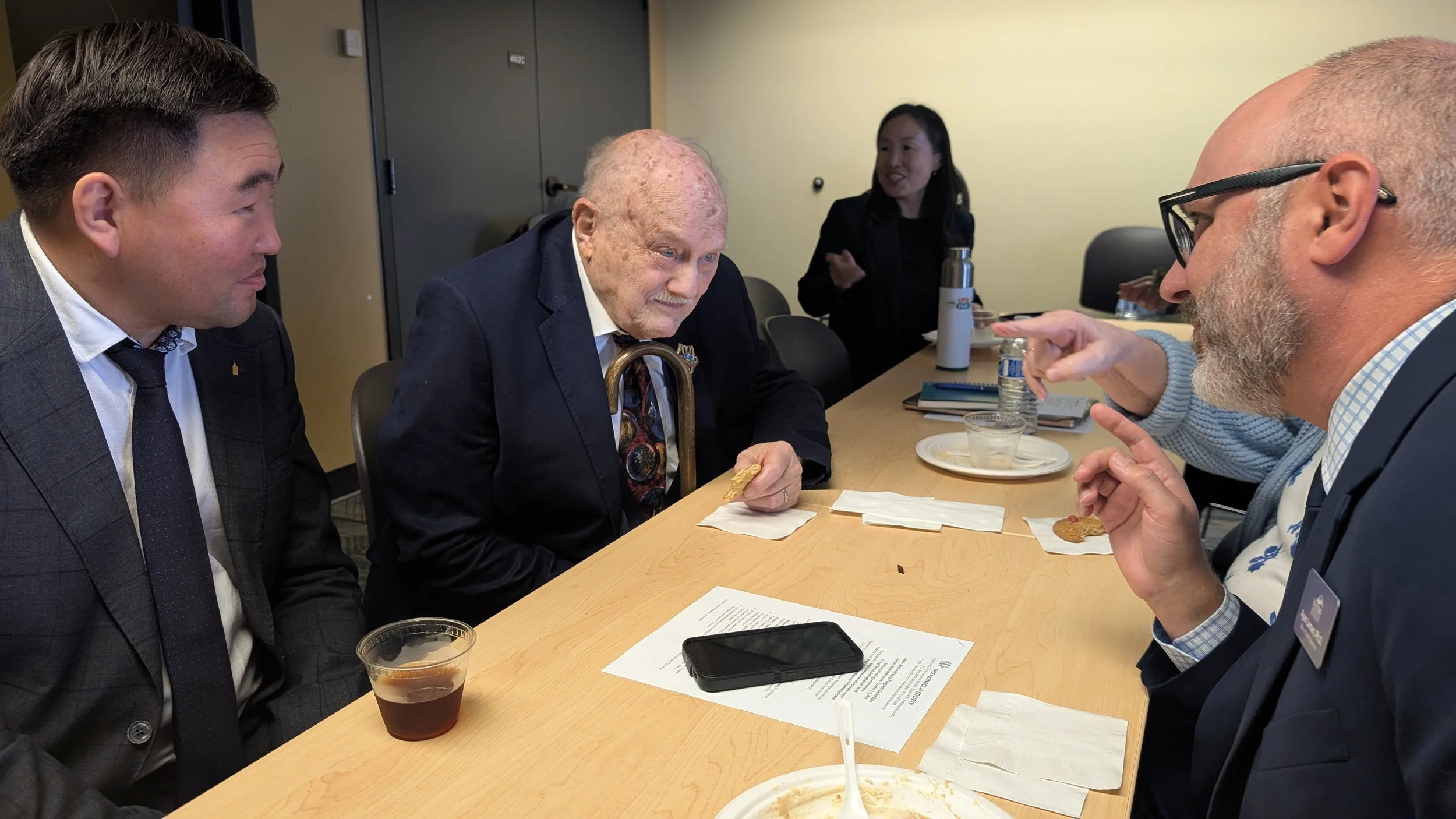
Dr. Schwarz in conversation with Dr. Greenberg and Dr. Erdene-Ochir.
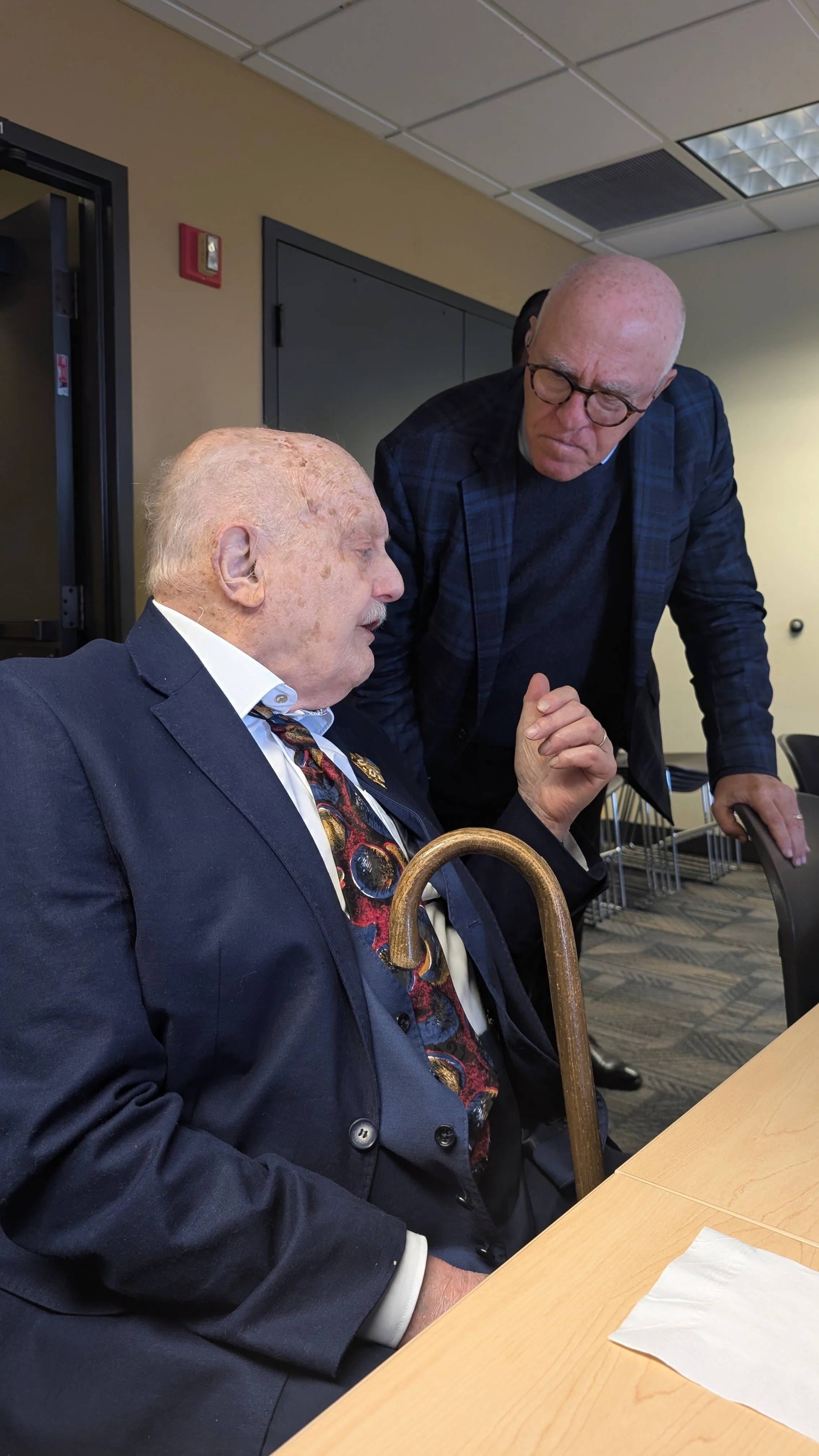
Dr. Schwarz speaking with Pres. Klecheski
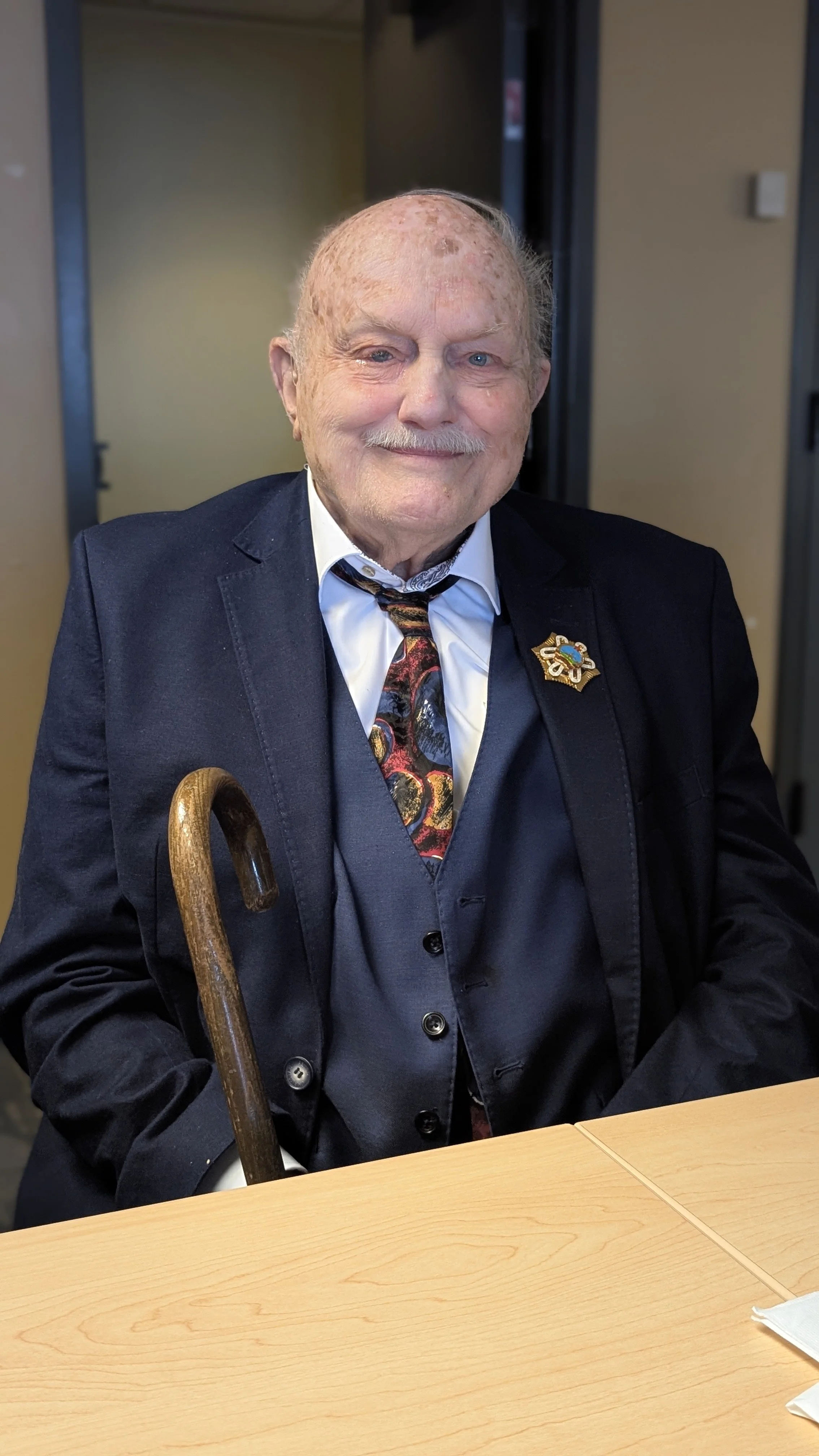
Dr. Henry Schwarz
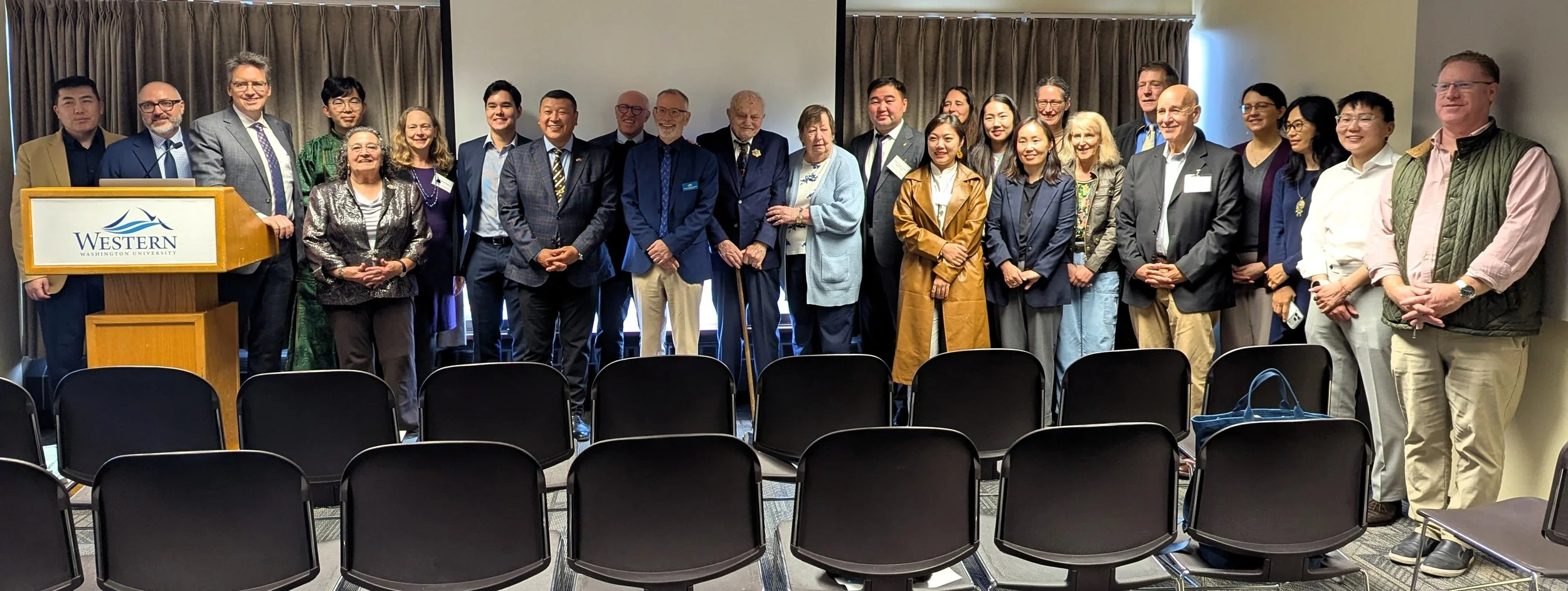
A group photo of all the participants and guests present for the opening session of the Annual Meeting.
Afternoon Sessions and Reception
Friday, October 2, 2026 | 1:00 p.m.–6:00 p.m.
Friday afternoon's sessions continued the tribute to Professor Henry G. Schwarz, exploring his scholarly legacy and its continuing influence on Mongolian Studies. The first panel, “Prof. Henry Schwarz and His Legacy as Bibliographer and Collection Builder,” chaired by Prof. Munkhchimeg Tserendorj of Western Washington University, featured presentations by David Bade, who joined virtually to discuss the significance of Schwarz’s Bibliotheca Mongolica in the history of bibliography, and Peter K. Marsh of California State University, East Bay, who examined Schwarz’s role in building scholarly connections through the Haslund-Christensen collections. The second panel, “Continuing the Schwarz Legacy in Mongolian Studies: Identity, History, and Education,” chaired by Prof. Melissa Chakars of St. Joseph’s University, featured virtual presentations by U. Ganzorig on Mongolian strategic traditions, Batueva Aryuna on women’s memory and Buryat-Mongolian borderland history, and L. Tserenchunt on the history of teaching Mongolian as a foreign language. The day concluded with a reception at Canada House on the WWU campus, featuring a performance by Seattle-based Mongolian morin khuur musician and teacher Urtnasan Gantulga.
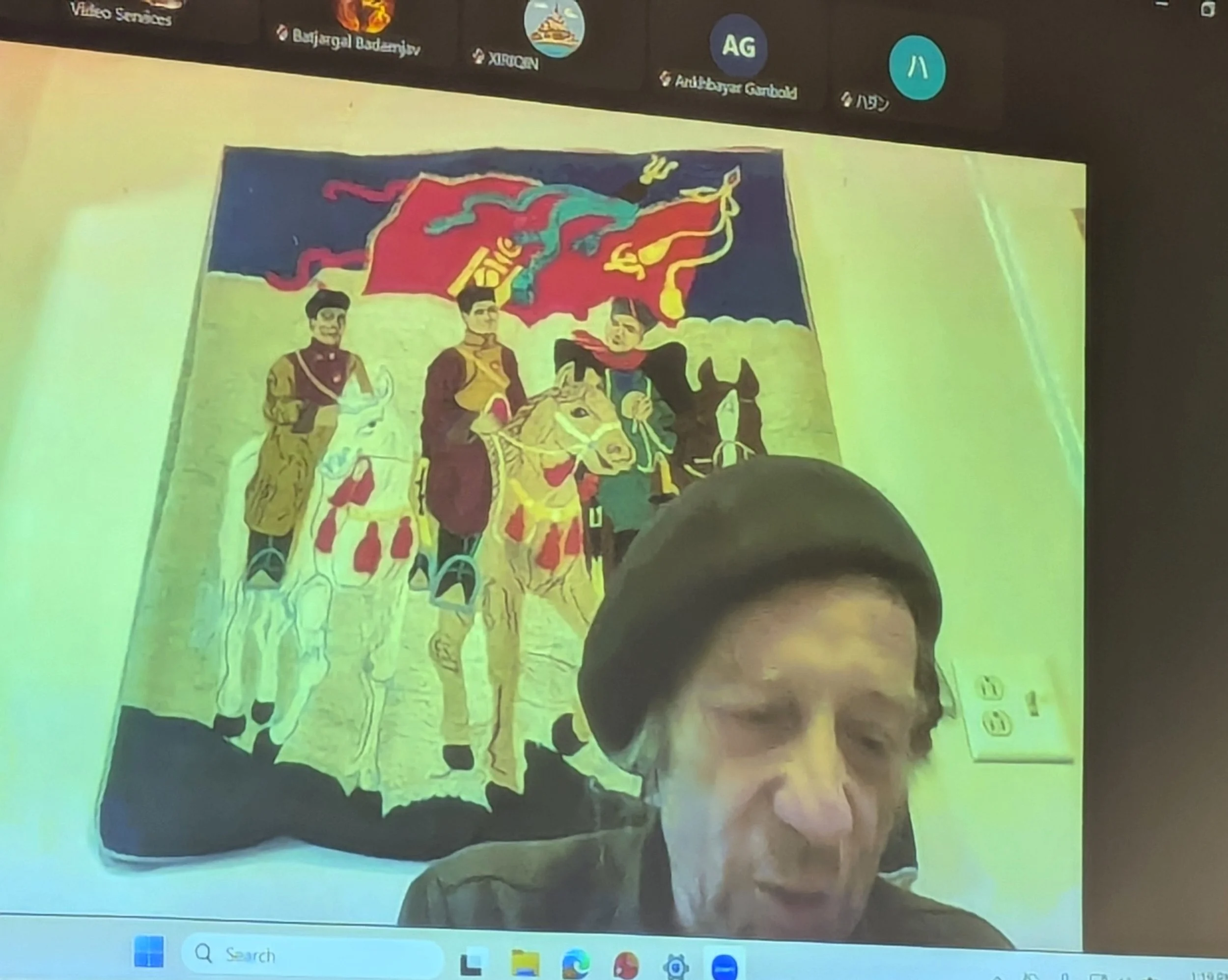
Mr. David Bade (Independent scholar) presenting his paper via Zoom.
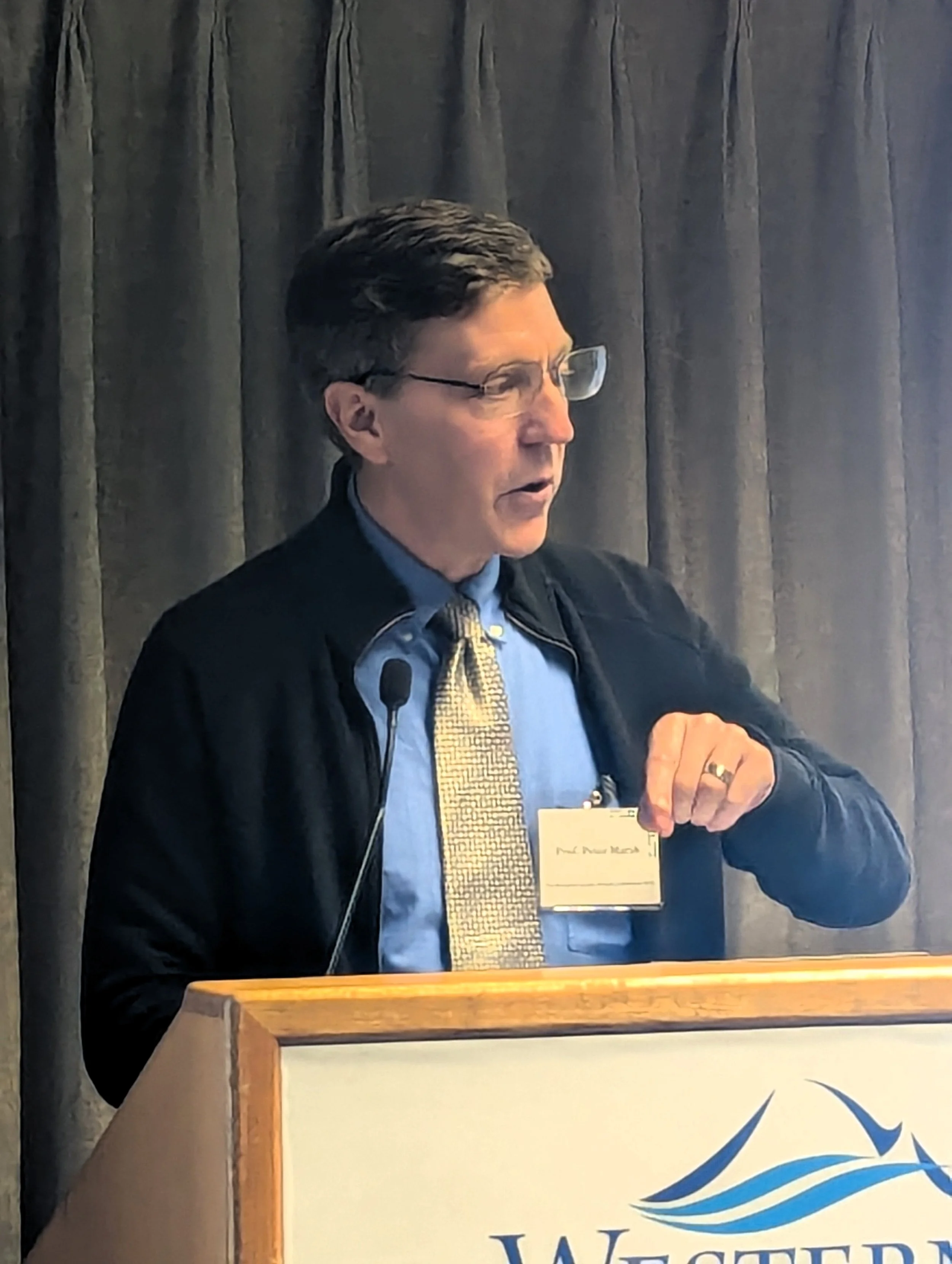
Peter K. Marsh (Cal State East Bay) presenting his paper.
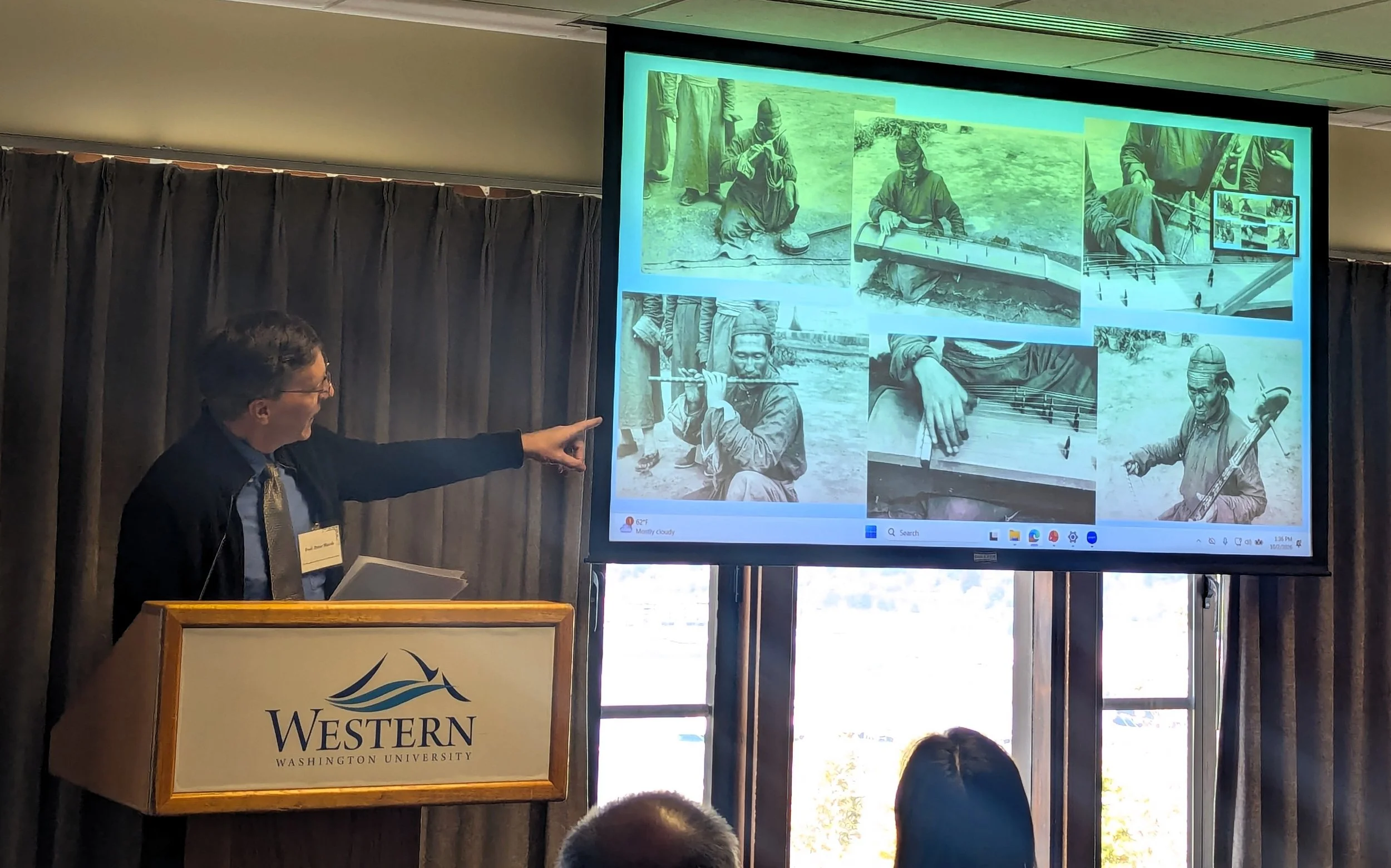
Peter K. Marsh (Cal State East Bay) presenting his paper.
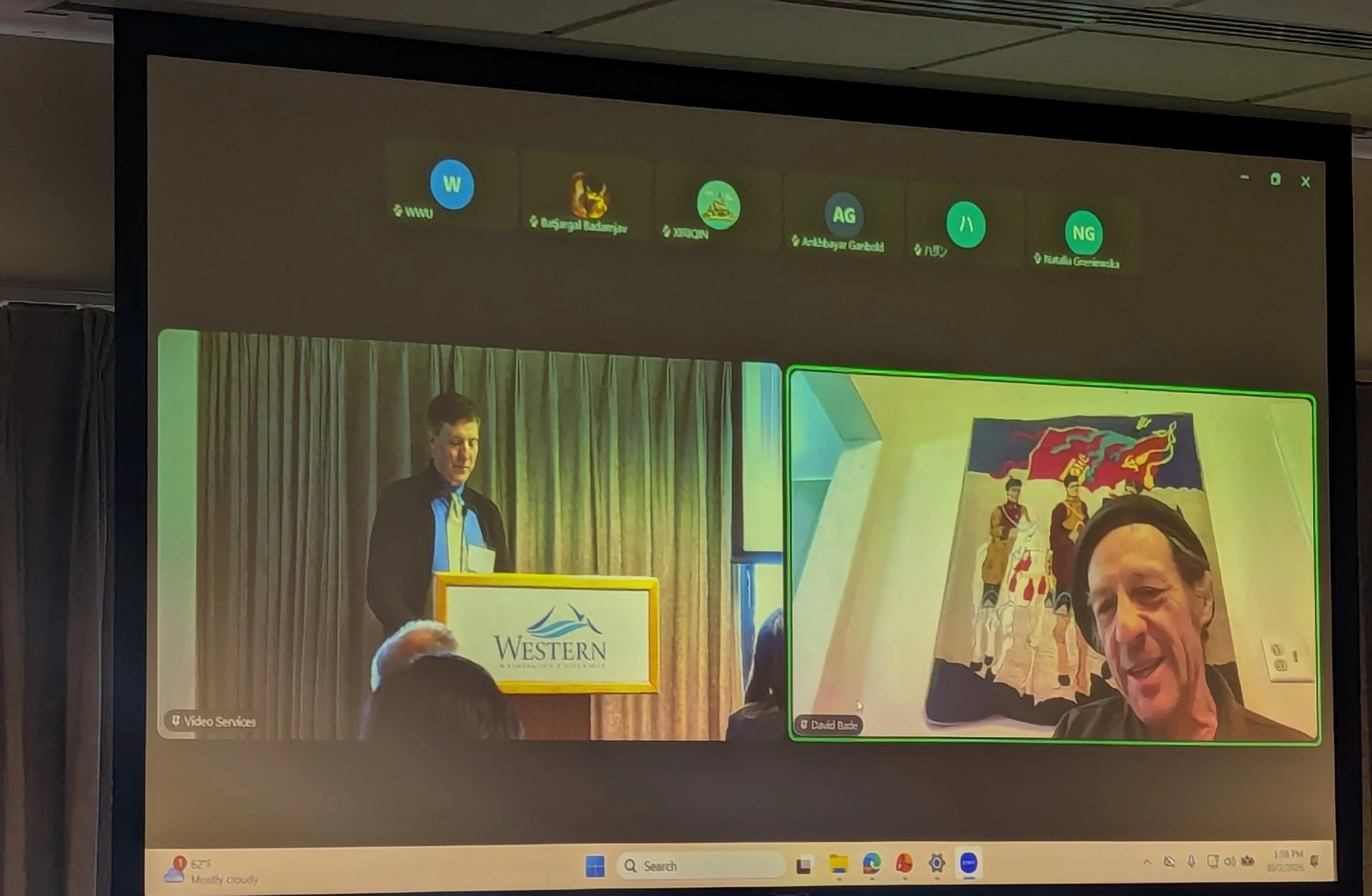
Zoom feed showing the discussion between in-person and Zoom participants.
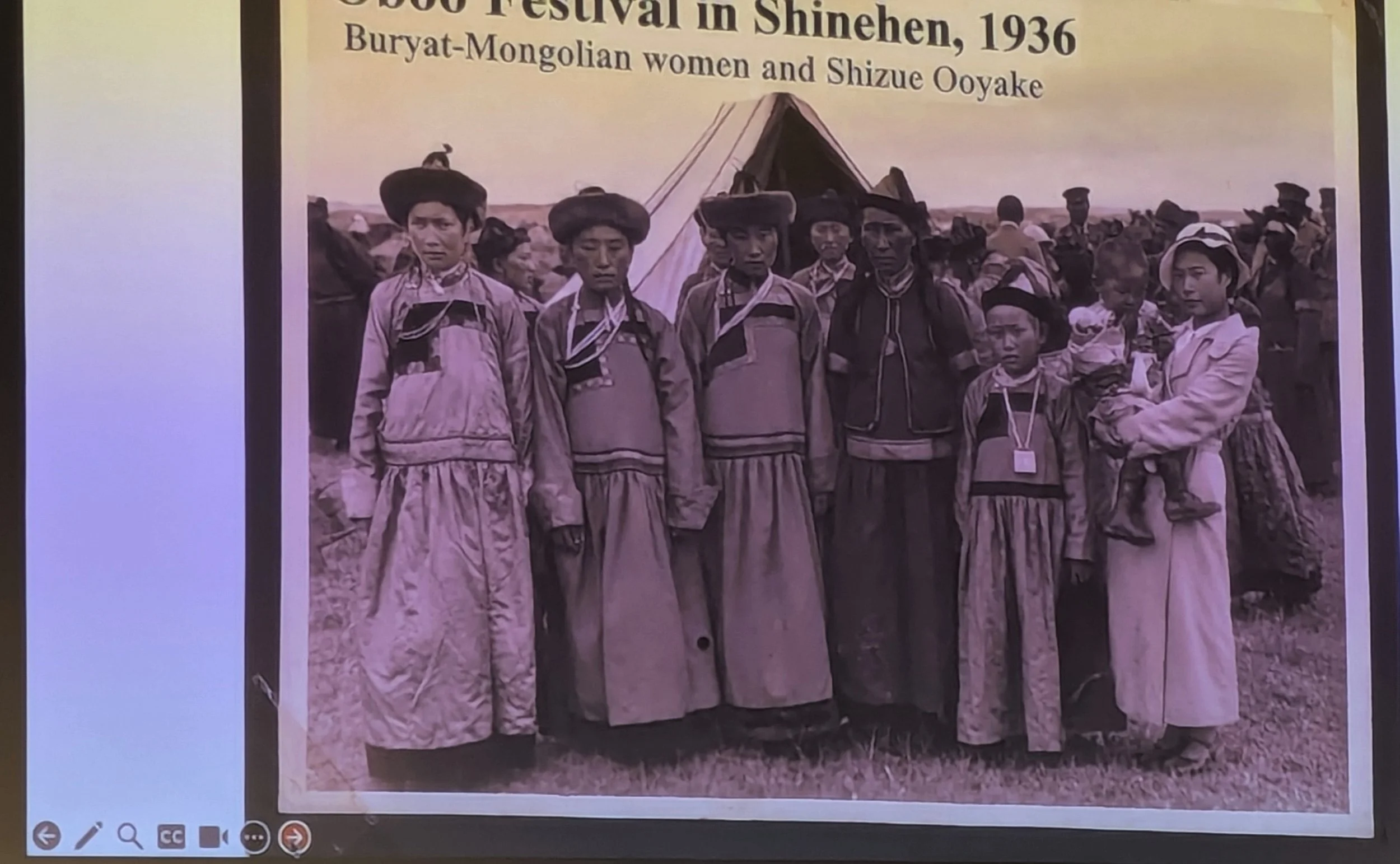
Opening slide from the presentation of Ms. Batueva Aryuna (Nutag Mongolian Language School, Japan).
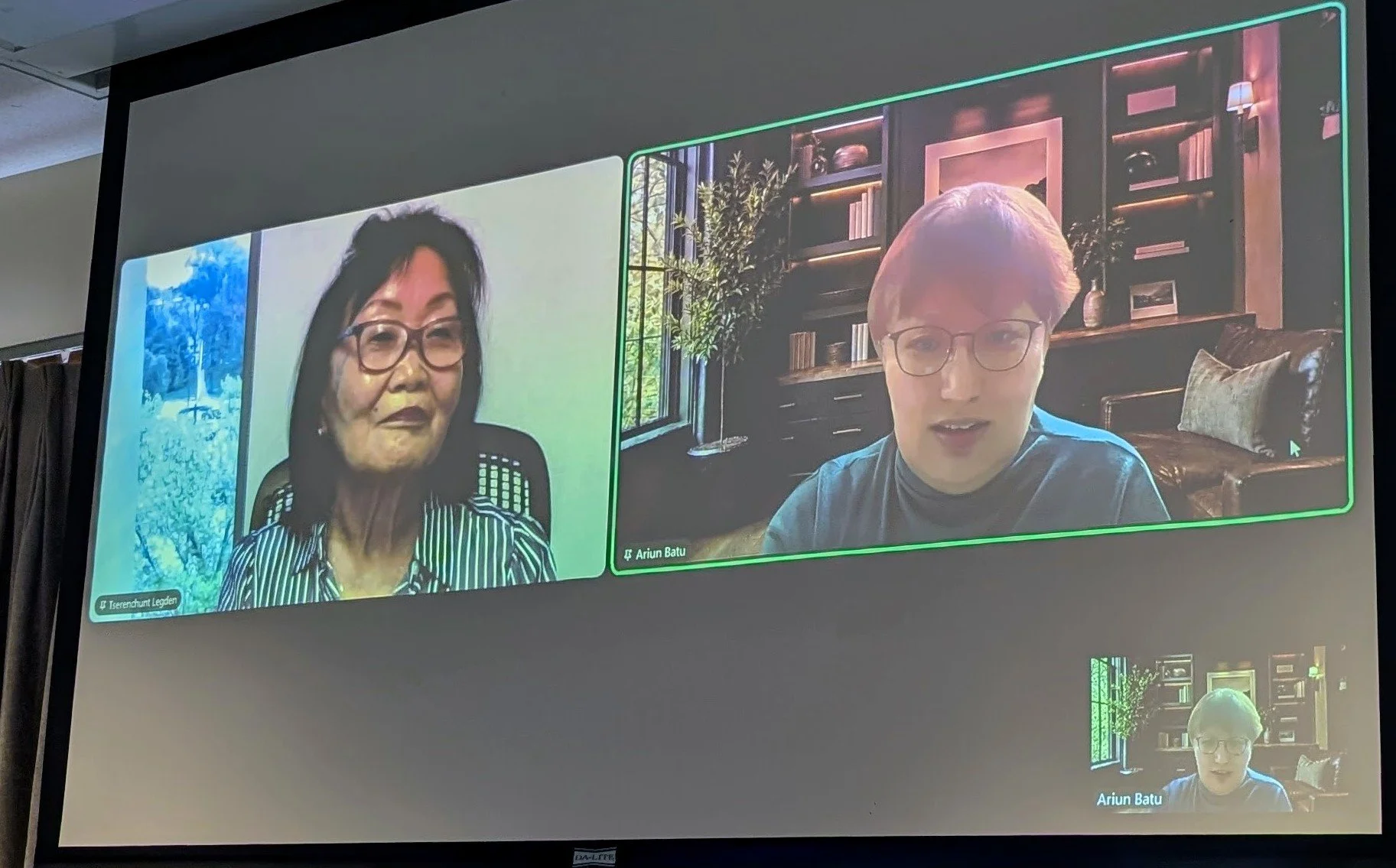
Zoom feed showing the discussion between Ms. L. Tserenchunt (Indiana University) and Ms. Batueva Aryuna.
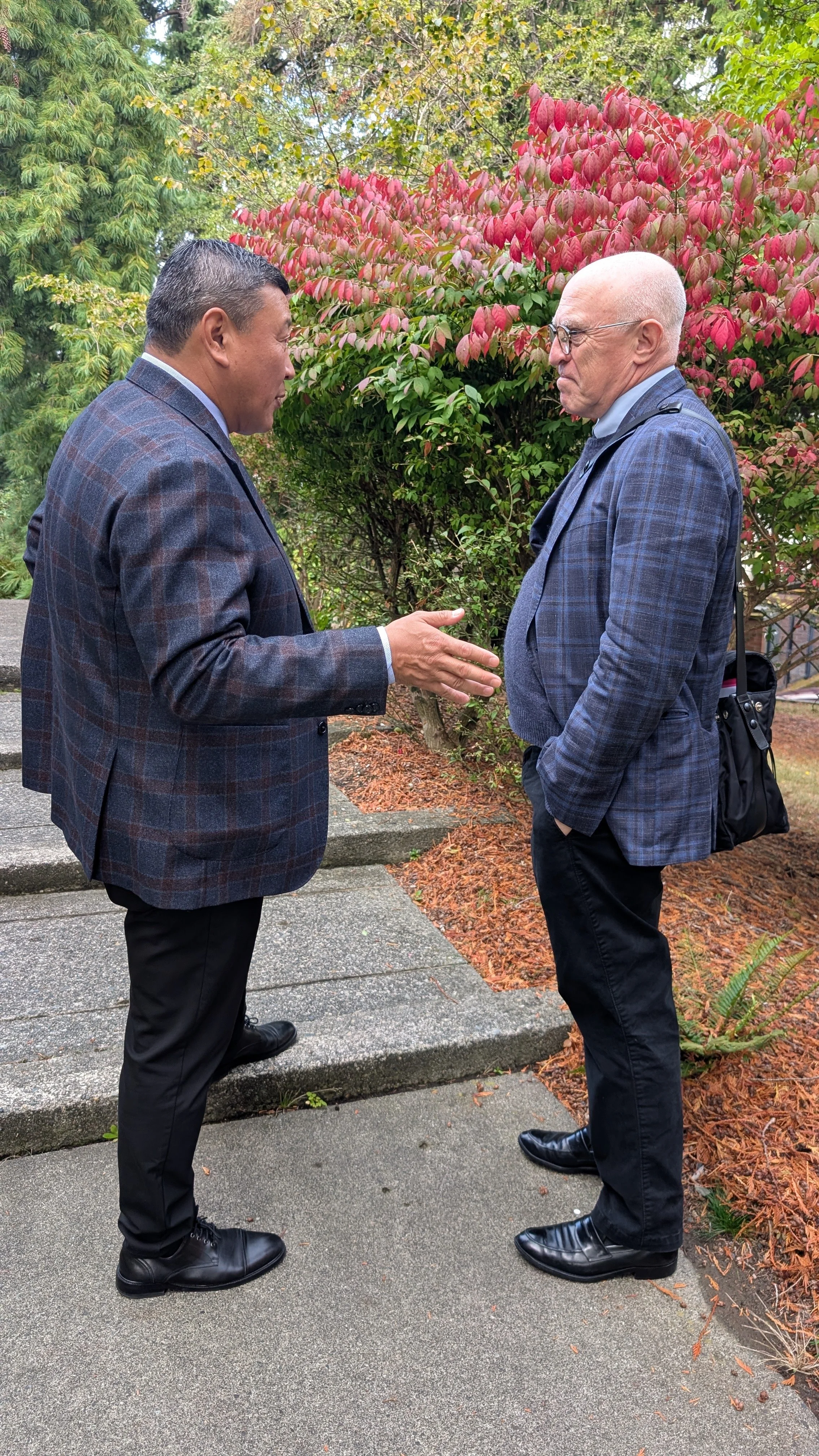
Amb. Batbayar and Pres. Klecheski outside the reception at the Canada House on the WWU campus.
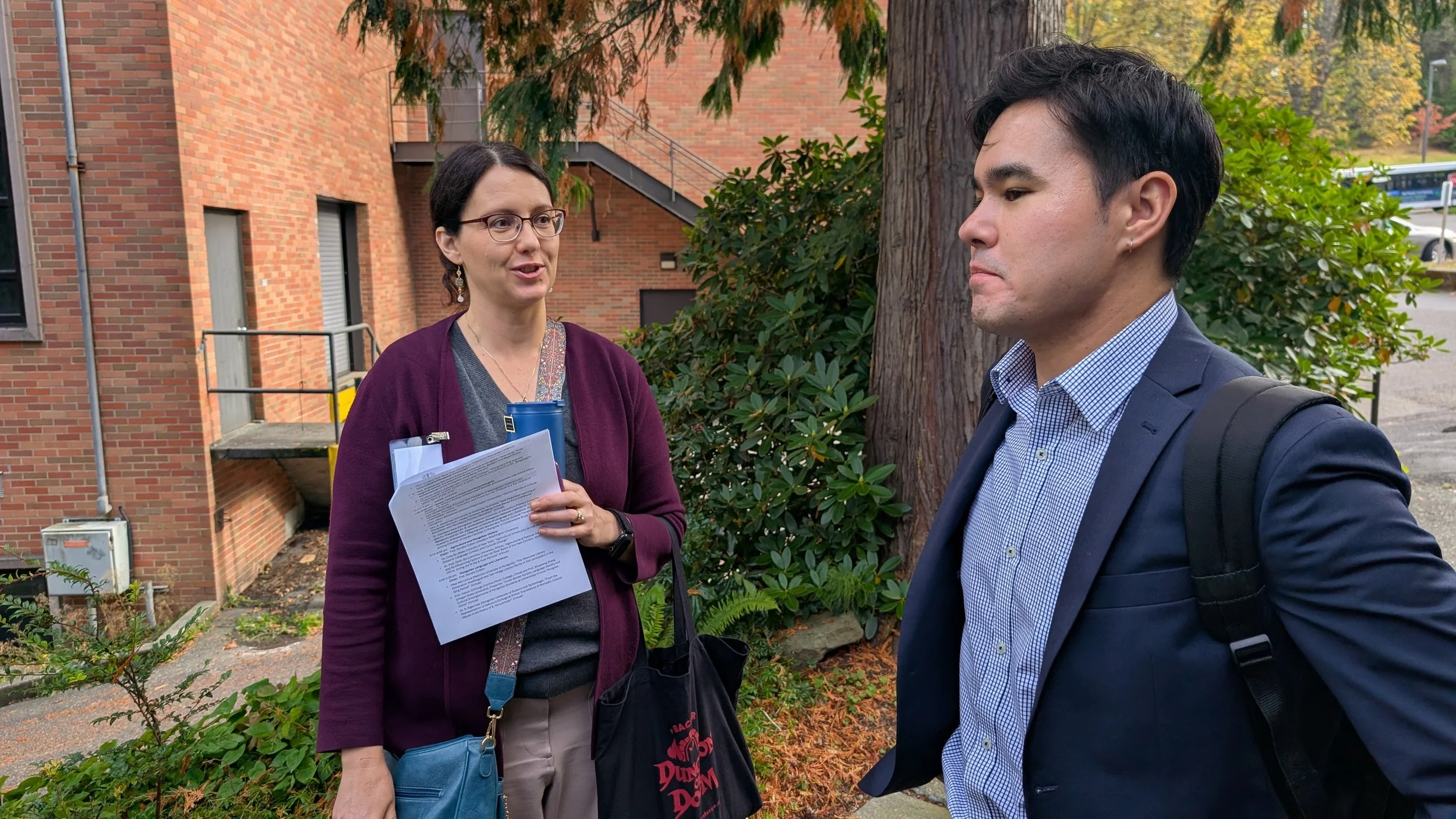
Dr. Charlotte D'Evelyn (Skidmore College) and Dr. Victor Avila-Luvsangenden (Concordia College) outside the reception at the Canada House on the WWU campus.
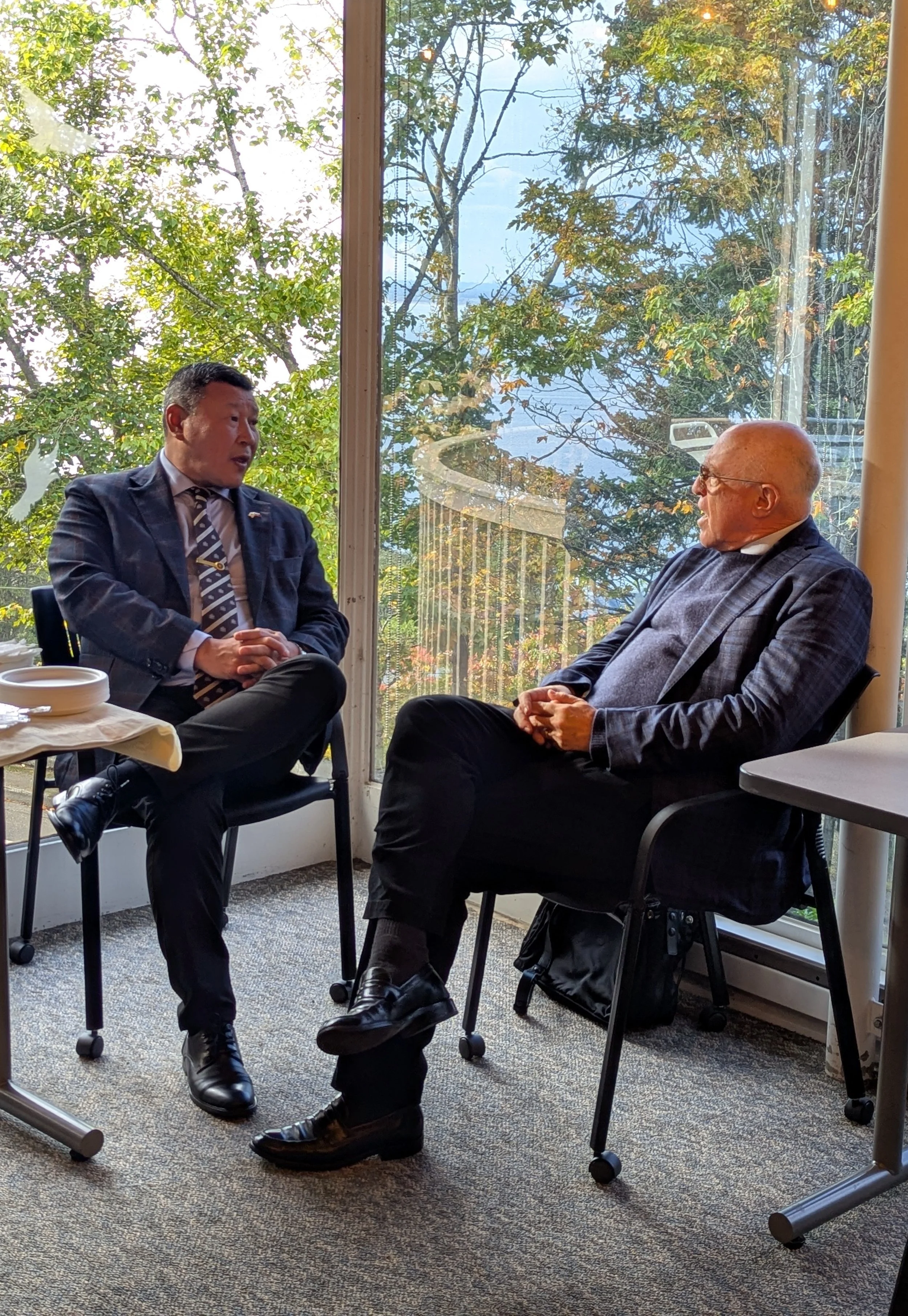
Amb. Batbayar and Pres. Klecheski at the reception in Canada House.
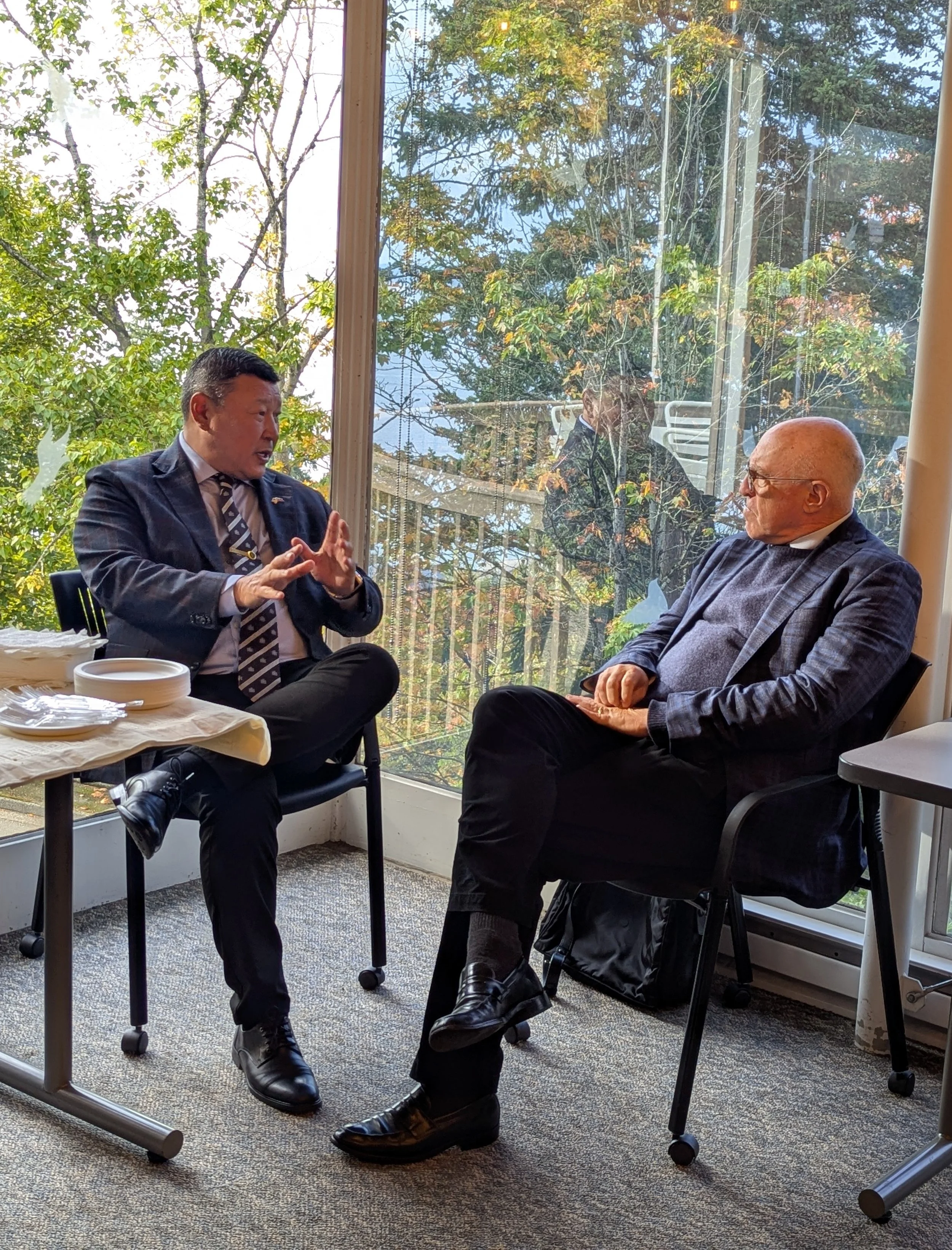
Amb. Batbayar and Pres. Klecheski at the reception in Canada House.
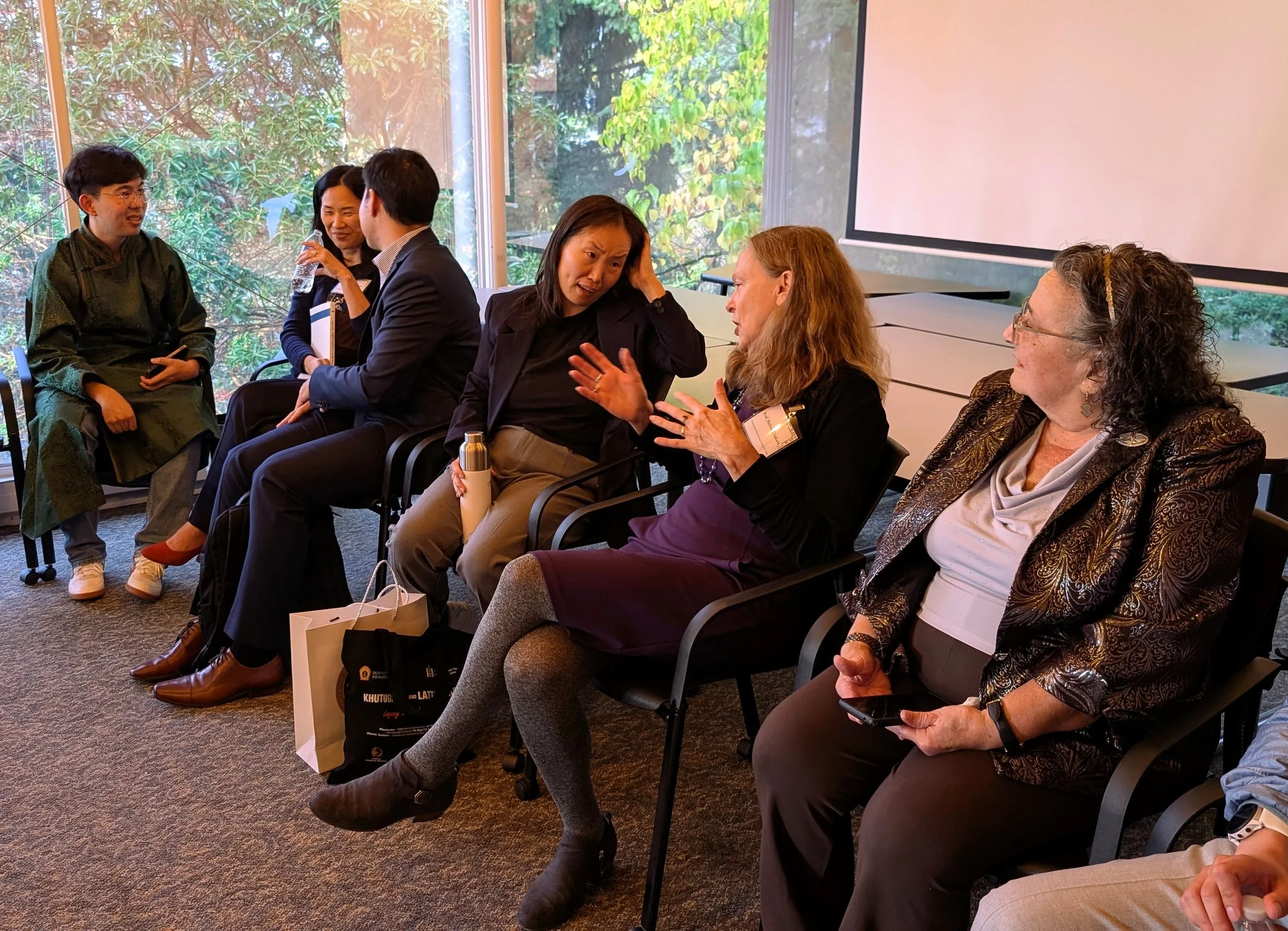
Reception participants.
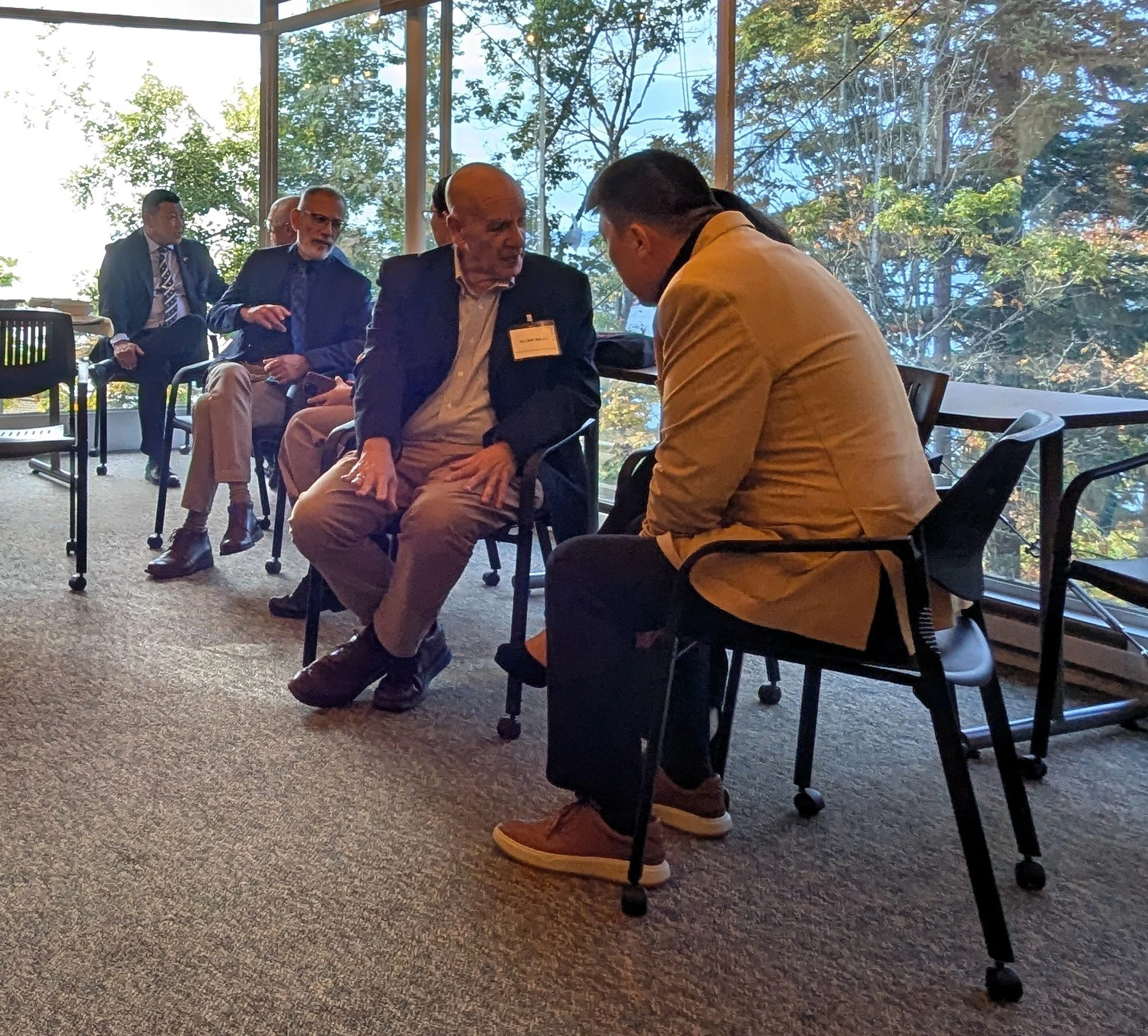
Reception participants.
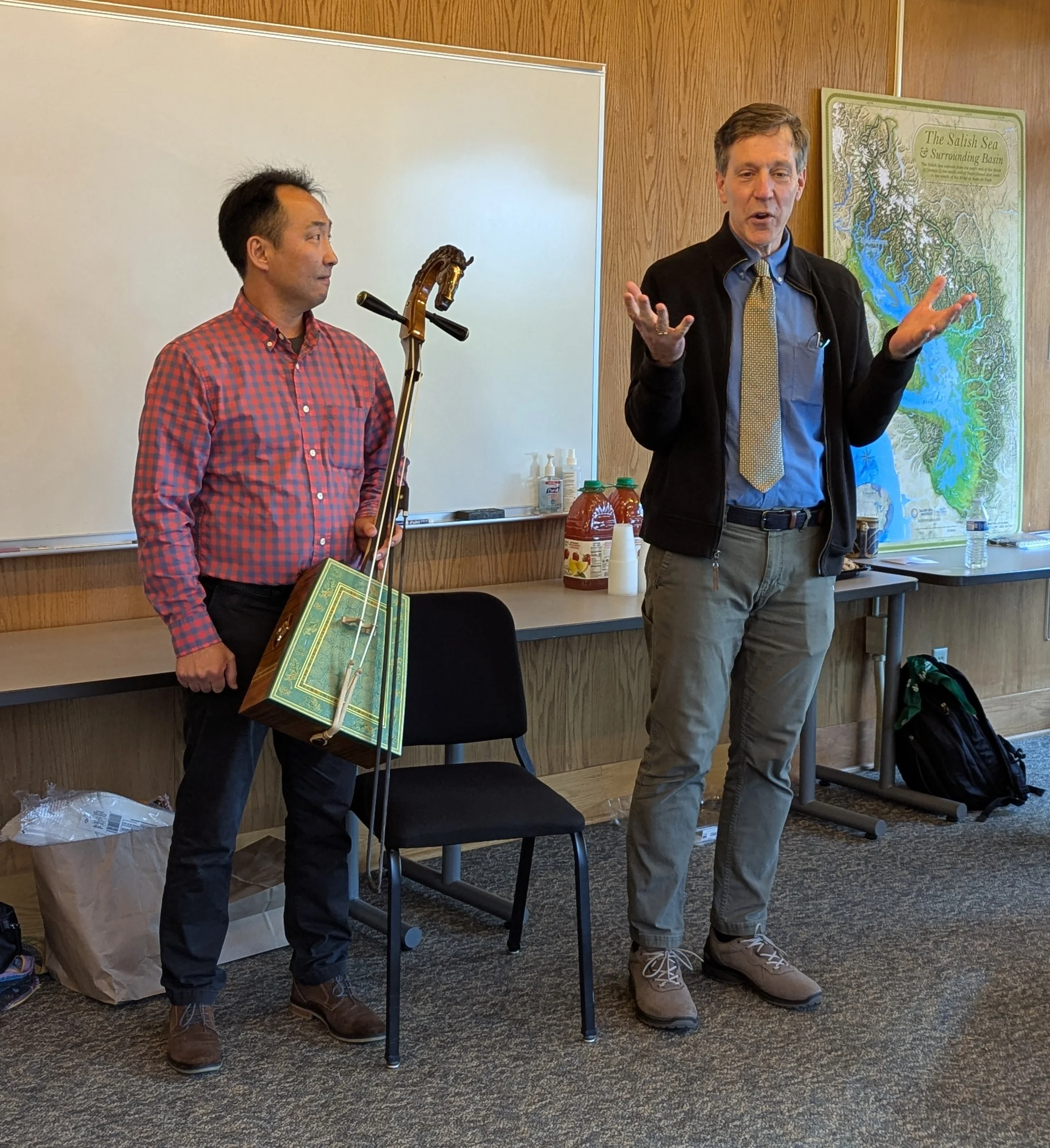
Dr. Peter Marsh introducing Seattle-based Mongolian morin khuur musician and teacher Mr. Urtnasan Gantulga.
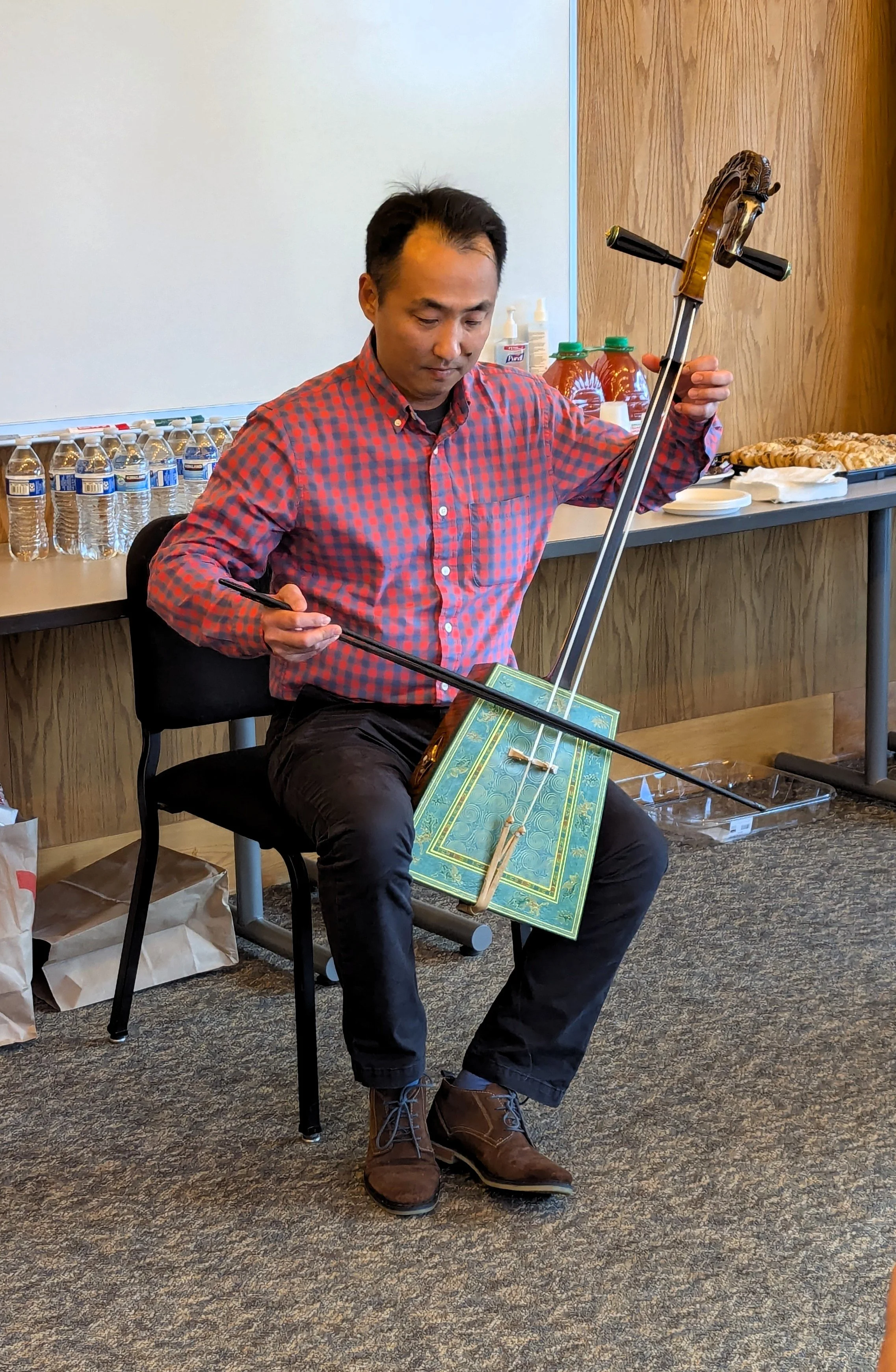
Mr. Urtnasan Gantulga performing at the reception.
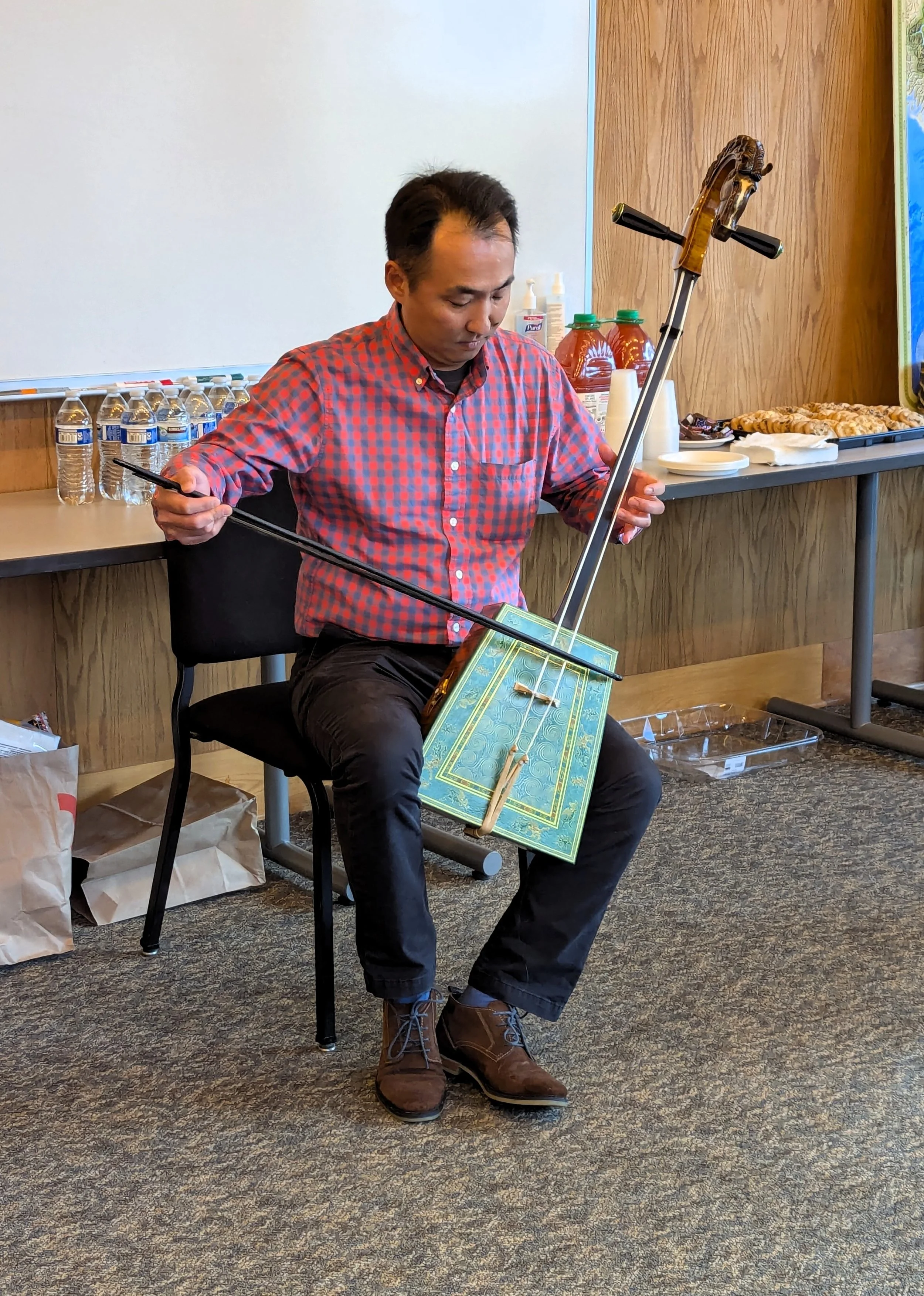
Mr. Urtnasan Gantulga performing at the reception.
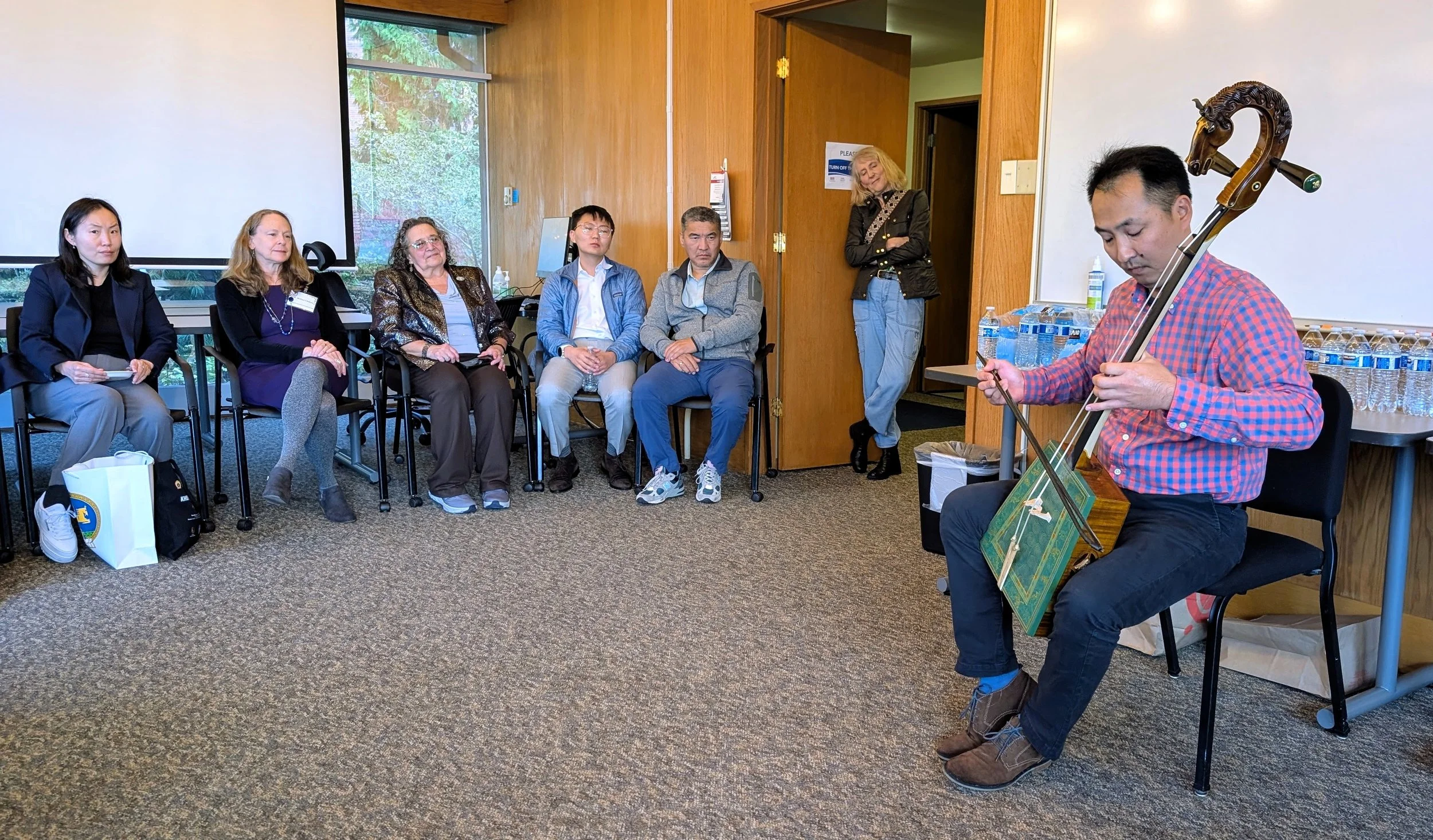
Mr. Urtnasan Gantulga performing at the reception.
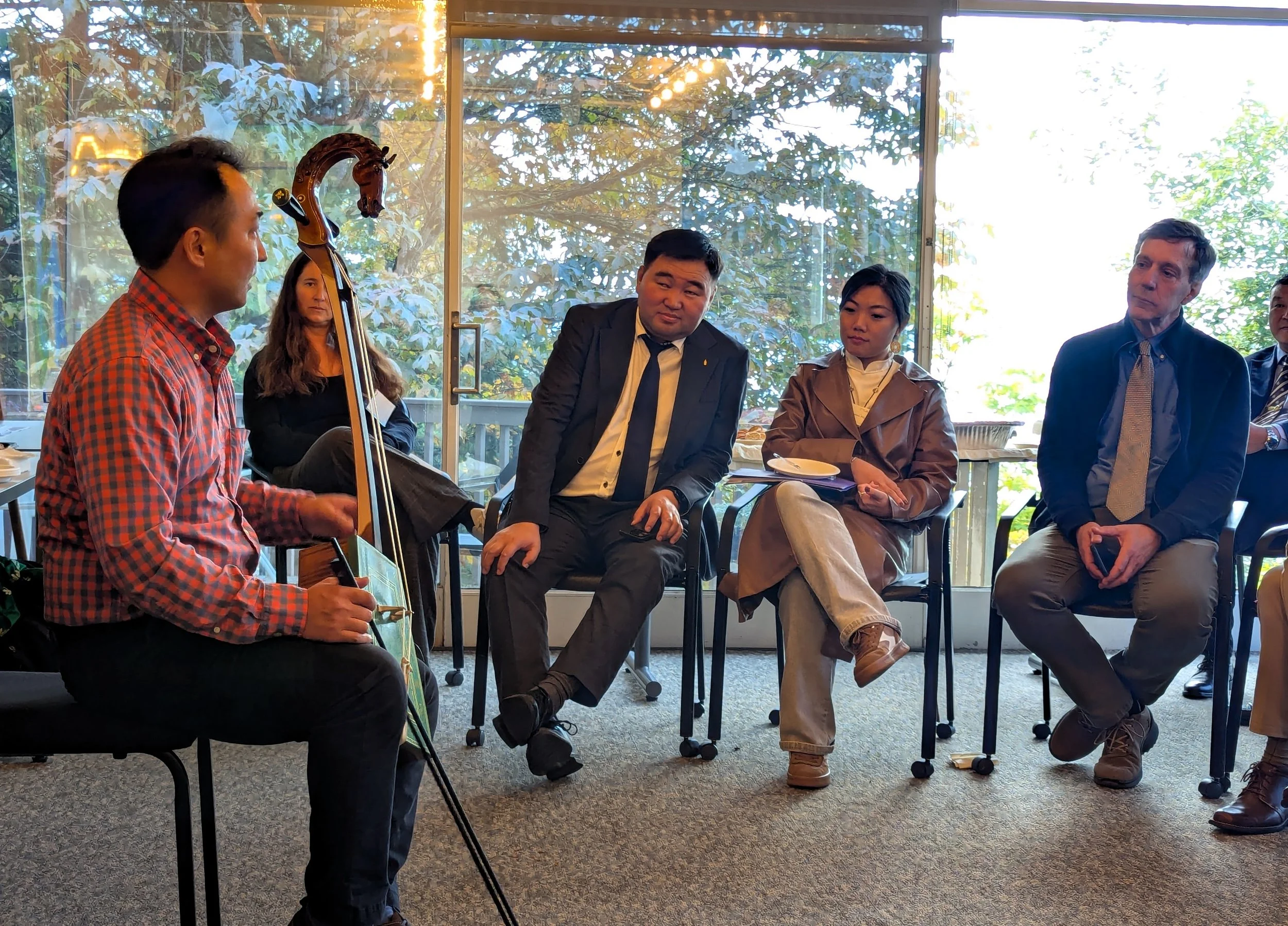
Mr. Urtnasan Gantulga talking with participants at the reception.
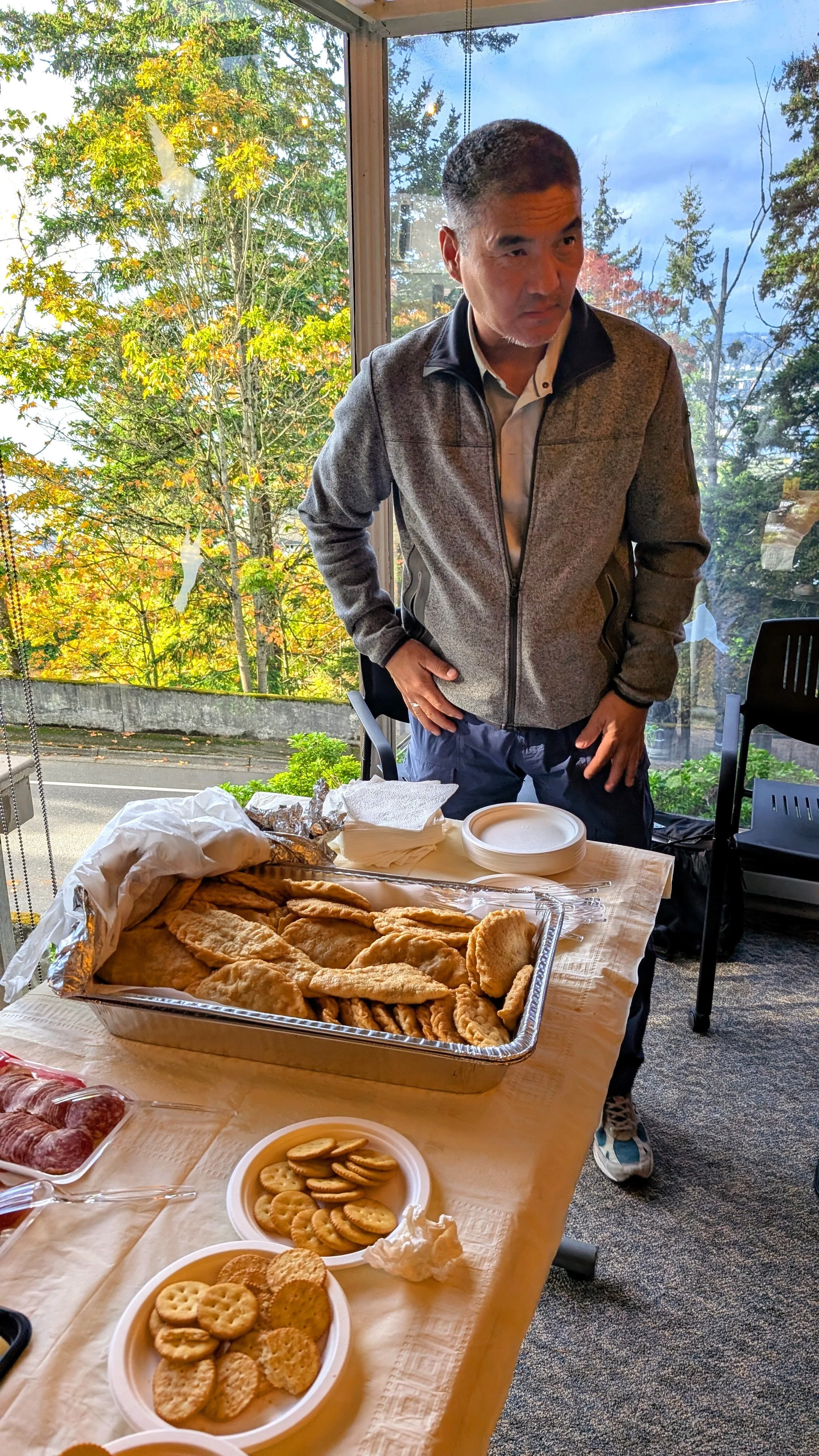
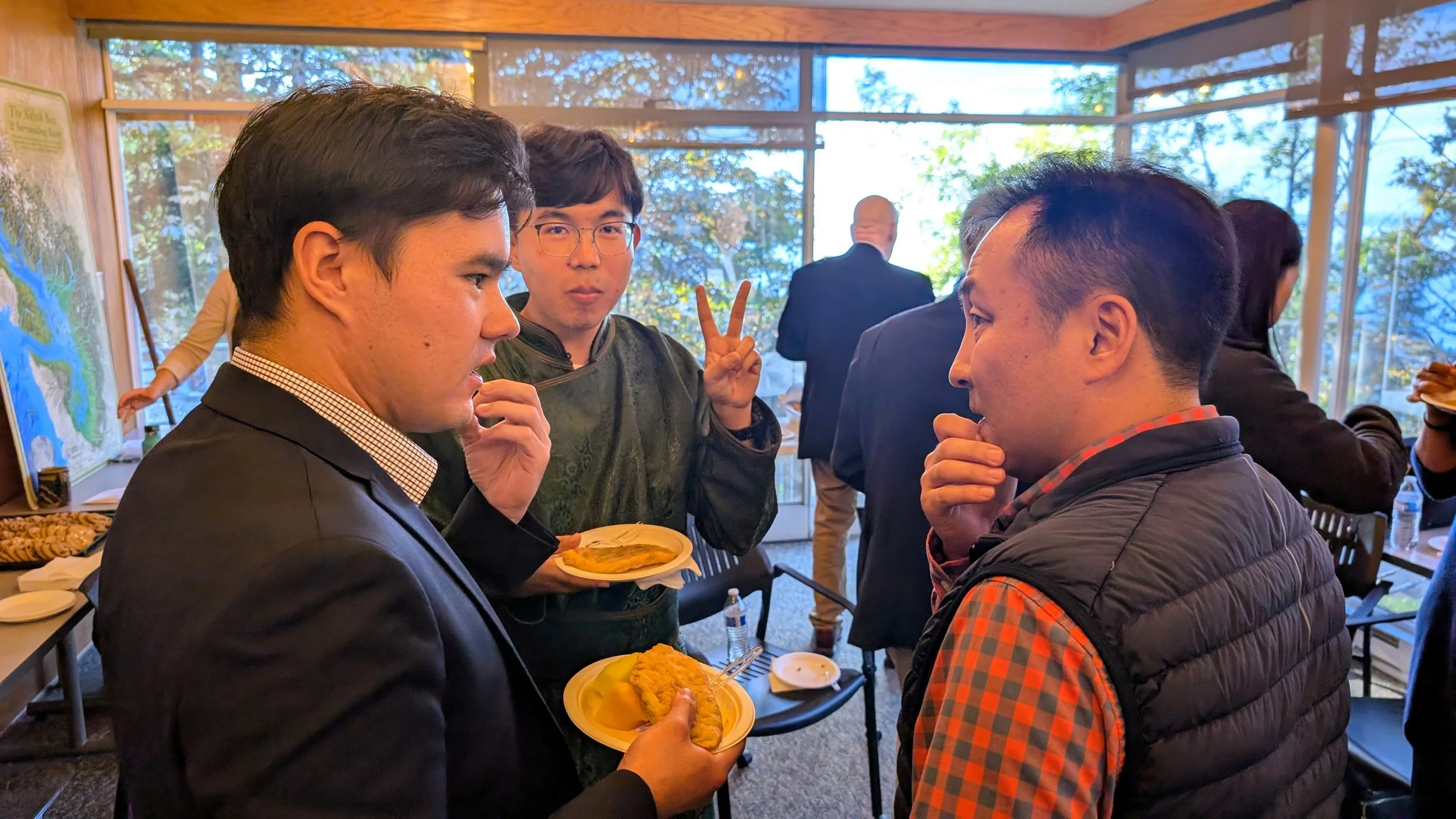
Mr. Andryei Dashnamjil near the food table at the reception.
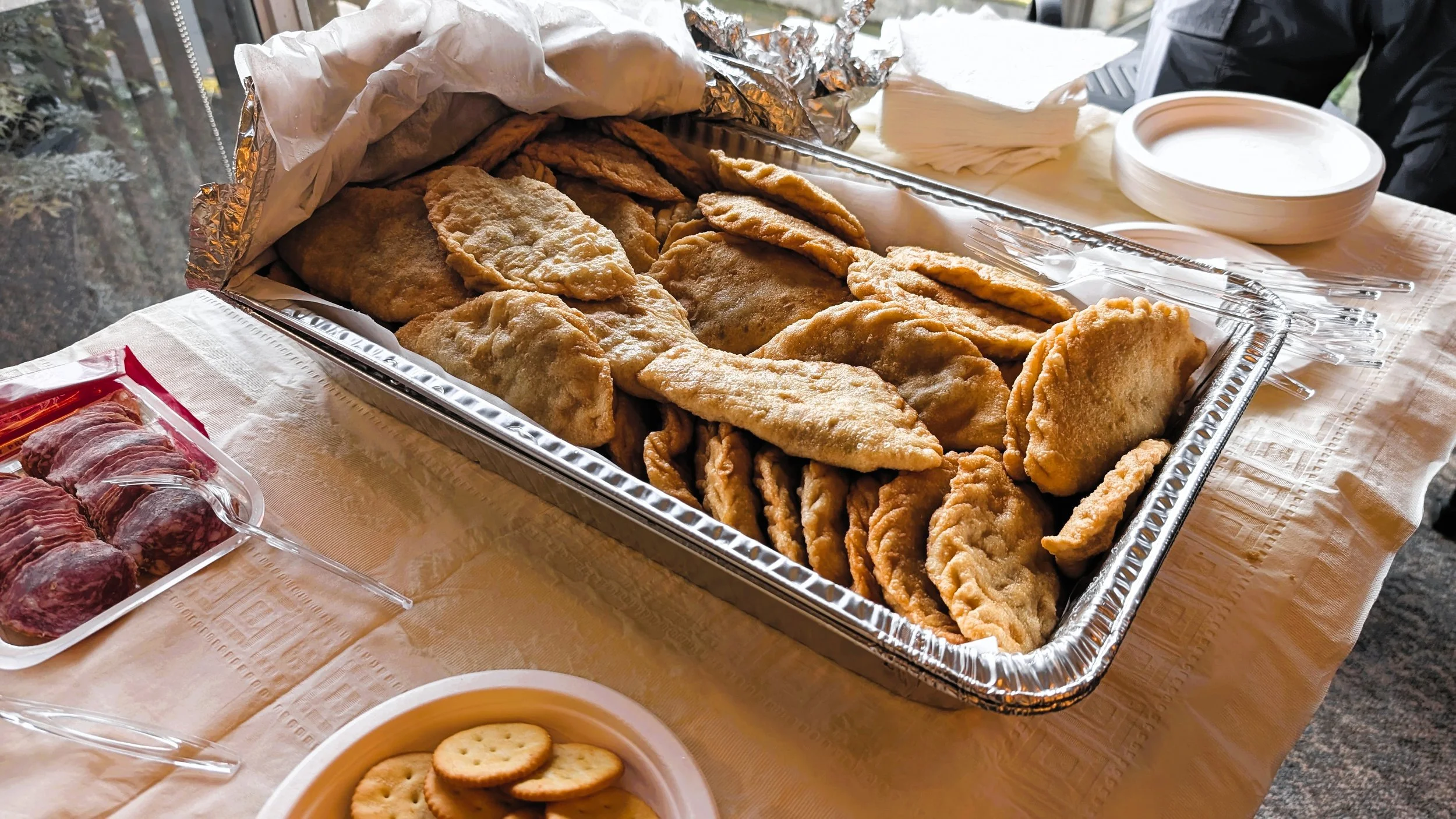
Deliciious Mongolian food prepared for the reception by a member of the local Mongolian American community.
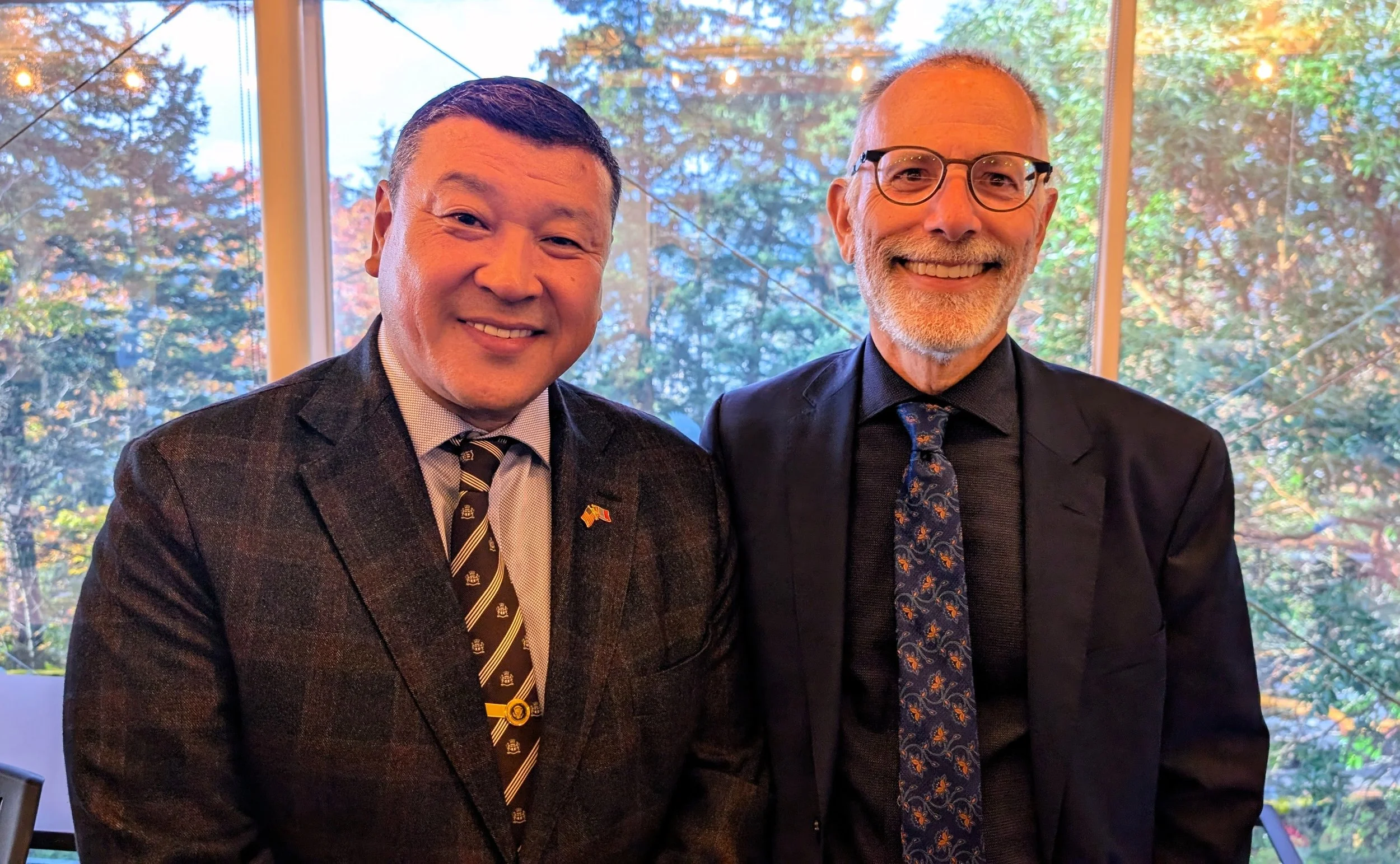
Amb. Batbayar and Dr. Mark Greenberg.
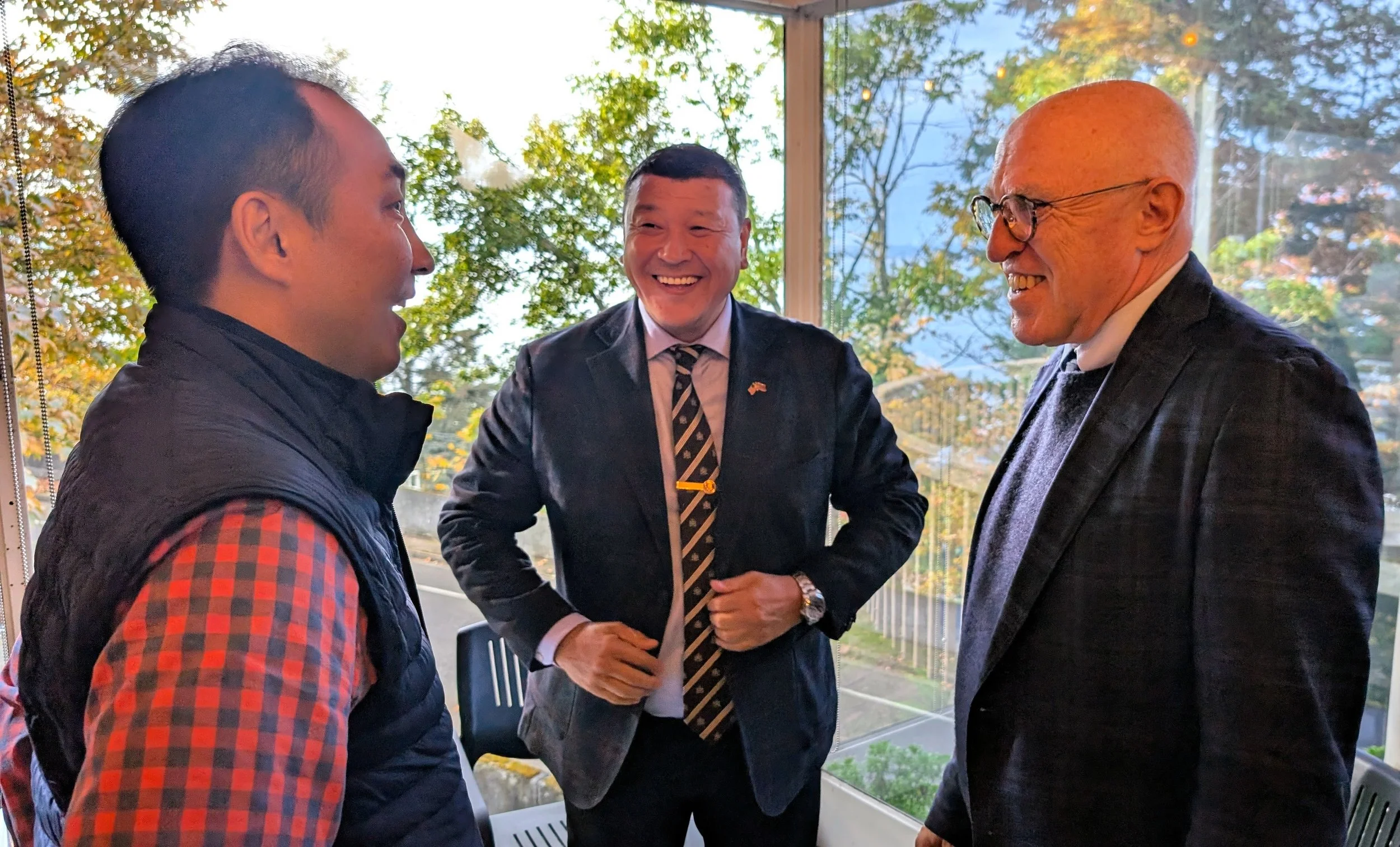
Mr. Urtnasan Gantulga speaking with Amb. Batbayar and Pres. Klecheski.
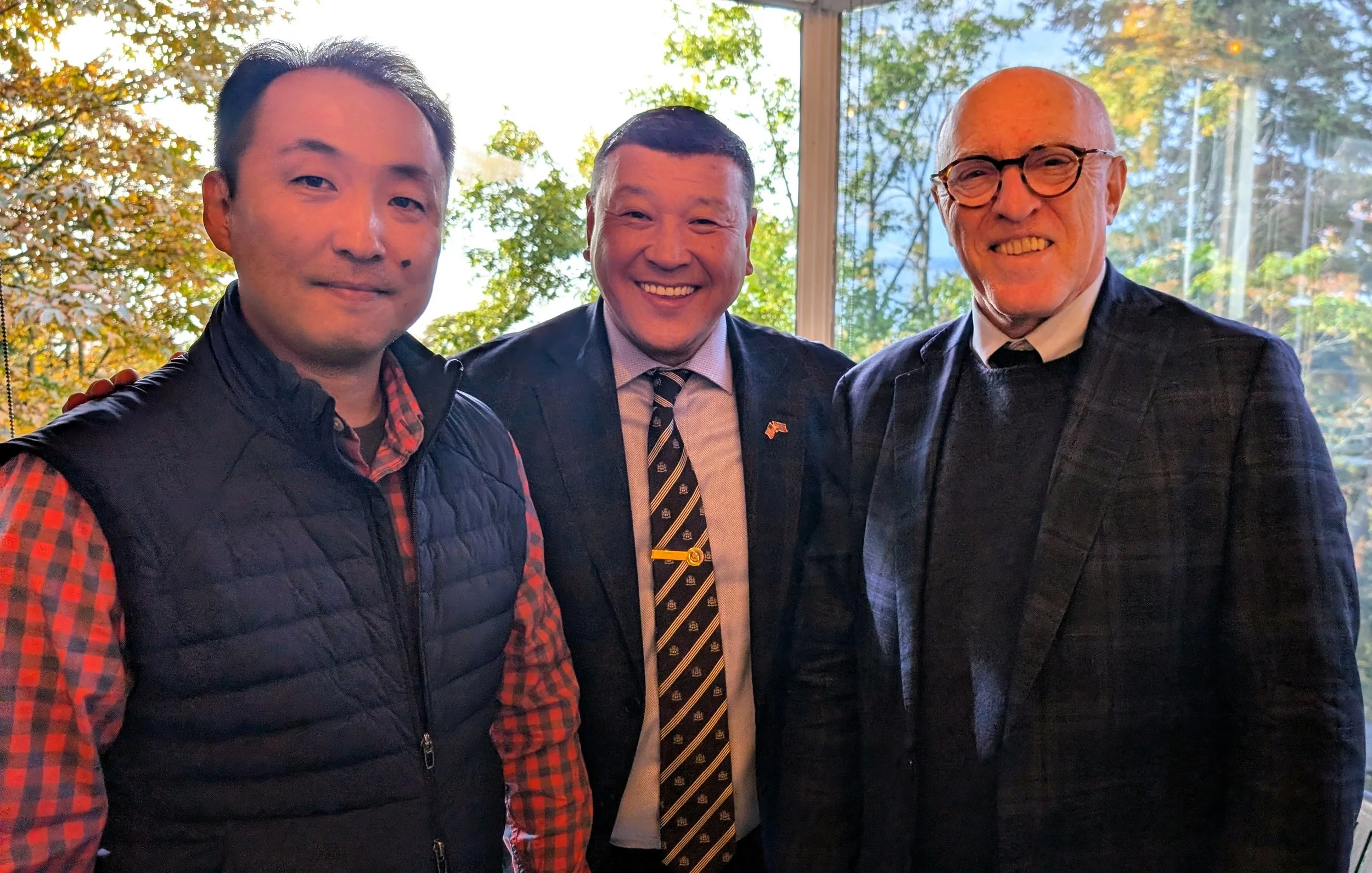
Mr. Urtnasan Gantulga with Amb. Batbayar and Pres. Klecheski.
Dr. Avila-Luvsangenden and Mr. Chao Bo (State University of New York) with Mr. Gantulga.
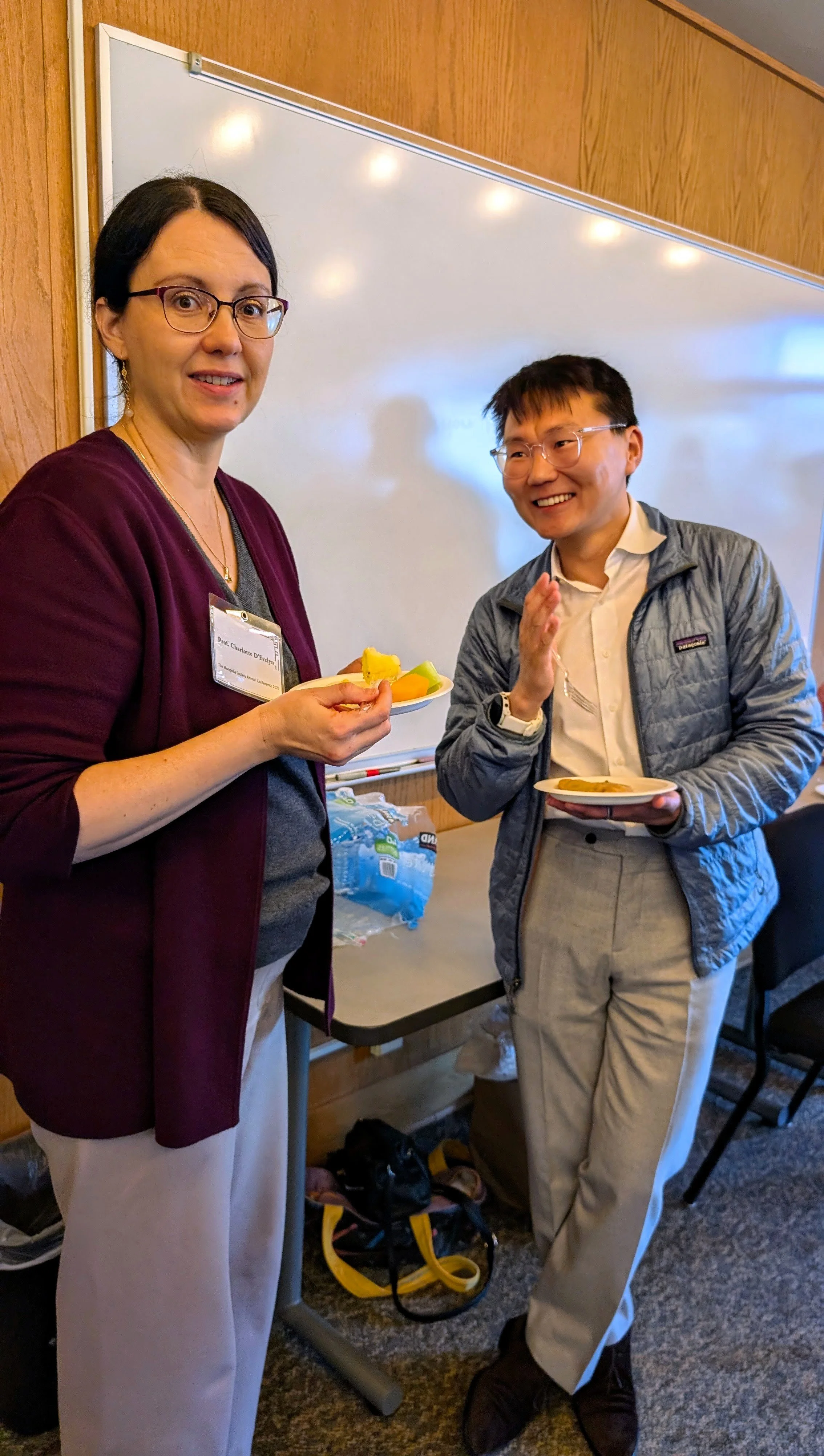
Dr. Charlotte D'Evelyn and Mr. Batorgil Batjargal.
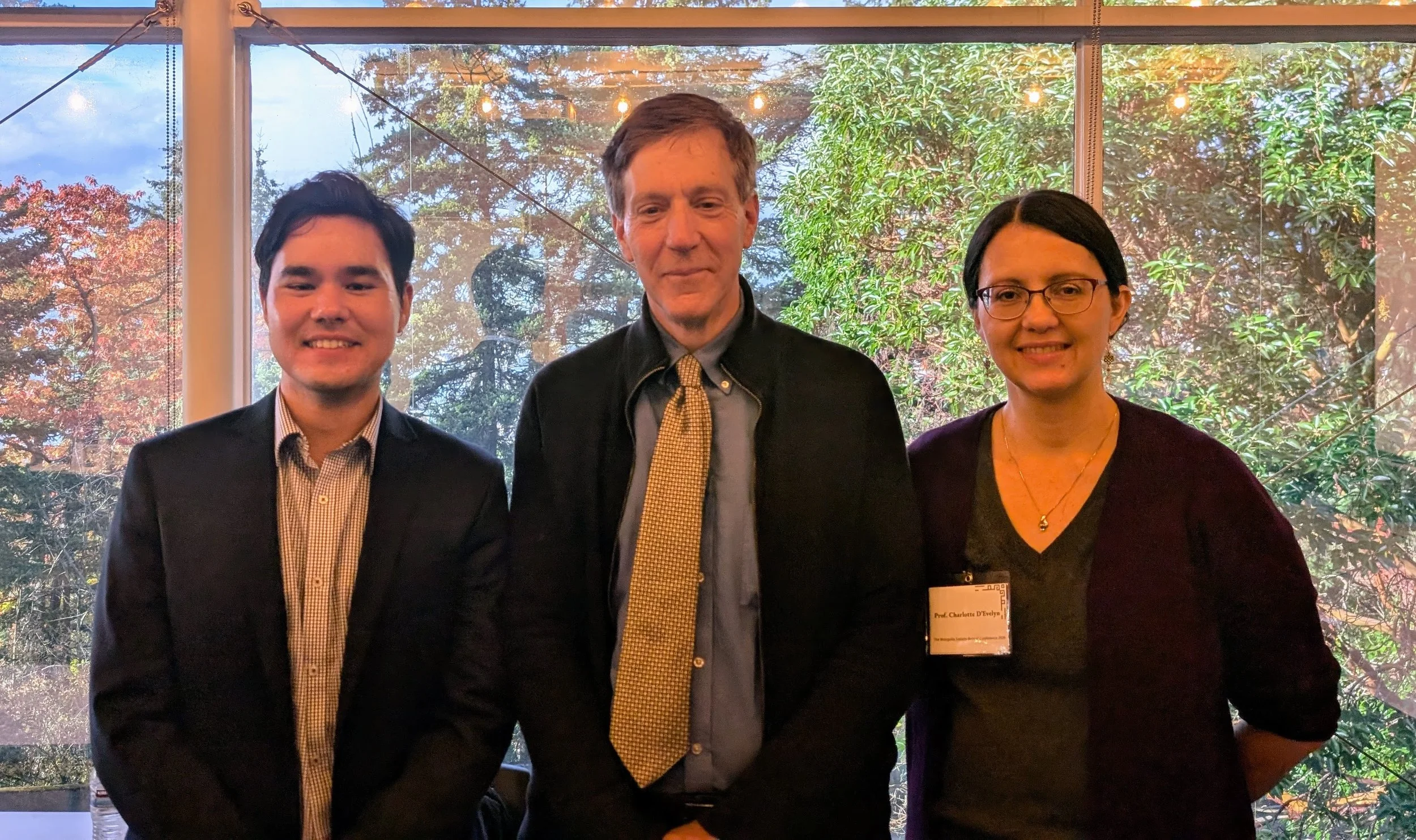
Dr. Avila-Luvsangenden, Dr. Peter Marsh, and Dr. Charlotte D'Evelyn.
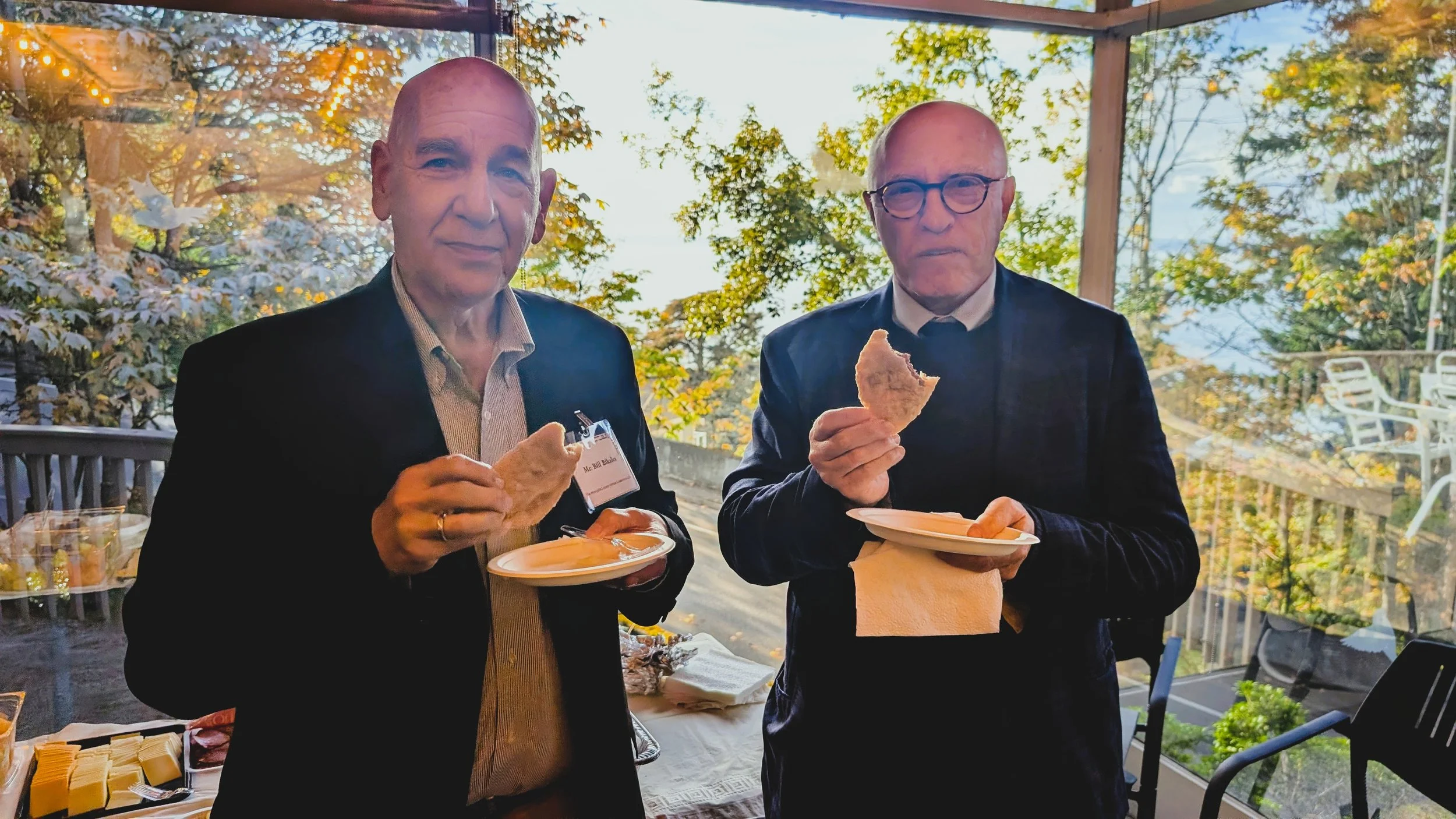
Mr. William Bikeles (Independent Scholar) witih Pres. Kleckeski.
Annual Business Meeting and Scholarly Panels
Saturday, October 3, 2026 | 8:00 a.m.–5:30 p.m.
The second day of the Mongolia Society’s 65th Anniversary Annual Meeting began with the Society’s annual business meeting, presided over by President Ambassador (Ret.) Michael Klecheski. Interim Dean David Bosco of Indiana University’s Hamilton Lugar School of Global and International Studies delivered opening remarks virtually. The morning session also included a presentation of books to the Western Washington University Library.
The scholarly program began with a panel on “Reinterpreting Mongolian Epics,” chaired by Prof. Charlotte D’Evelyn of Skidmore College. Two virtual presentations explored new approaches to Mongolian epic traditions: L. Erdenechimeg examined the epic King Bodigalav from an Anthropocene perspective, while Xiriqin investigated sacred female power and ritual agency in the epic Khankharangui. The following panel, “Mongolian Music Today,” chaired by Prof. Peter K. Marsh, featured four presentations exploring contemporary khöömii (throat singing) in Inner Mongolia, gender and the adaptation of Mongolian folk songs in China, regional variations in Mongolian long-song performance, and musical analysis of Kh. Bilegjargal’s opera Tears of the Lama.
The afternoon sessions addressed a wide range of contemporary and historical issues. “Social Issues in Urban and Rural Mongolia,” chaired by William Bikales, brought together presentations on education and child protection in Ulaanbaatar’s ger districts, reproductive health in rural Mongolia, early childhood education among nomadic herders, and traditional games as a means of cultural transmission. Two concluding panels, both chaired by Prof. Sondra Cuban of Western Washington University, explored agriculture, history, language, and literature. Presentations examined agricultural vocabulary across Mongolian dialects, historical agricultural and pastoral development in northwestern China, multilingual literary traditions of the Qing period, language identity among Mongolian students in Inner Mongolia, and ecological values in the poetry of B. Yavuukhulan.
Together, Saturday’s presentations demonstrated the breadth of contemporary Mongolian Studies, bringing scholars from Mongolia, China, Japan, Australia, Europe, and North America into conversation across disciplines and geographical boundaries.
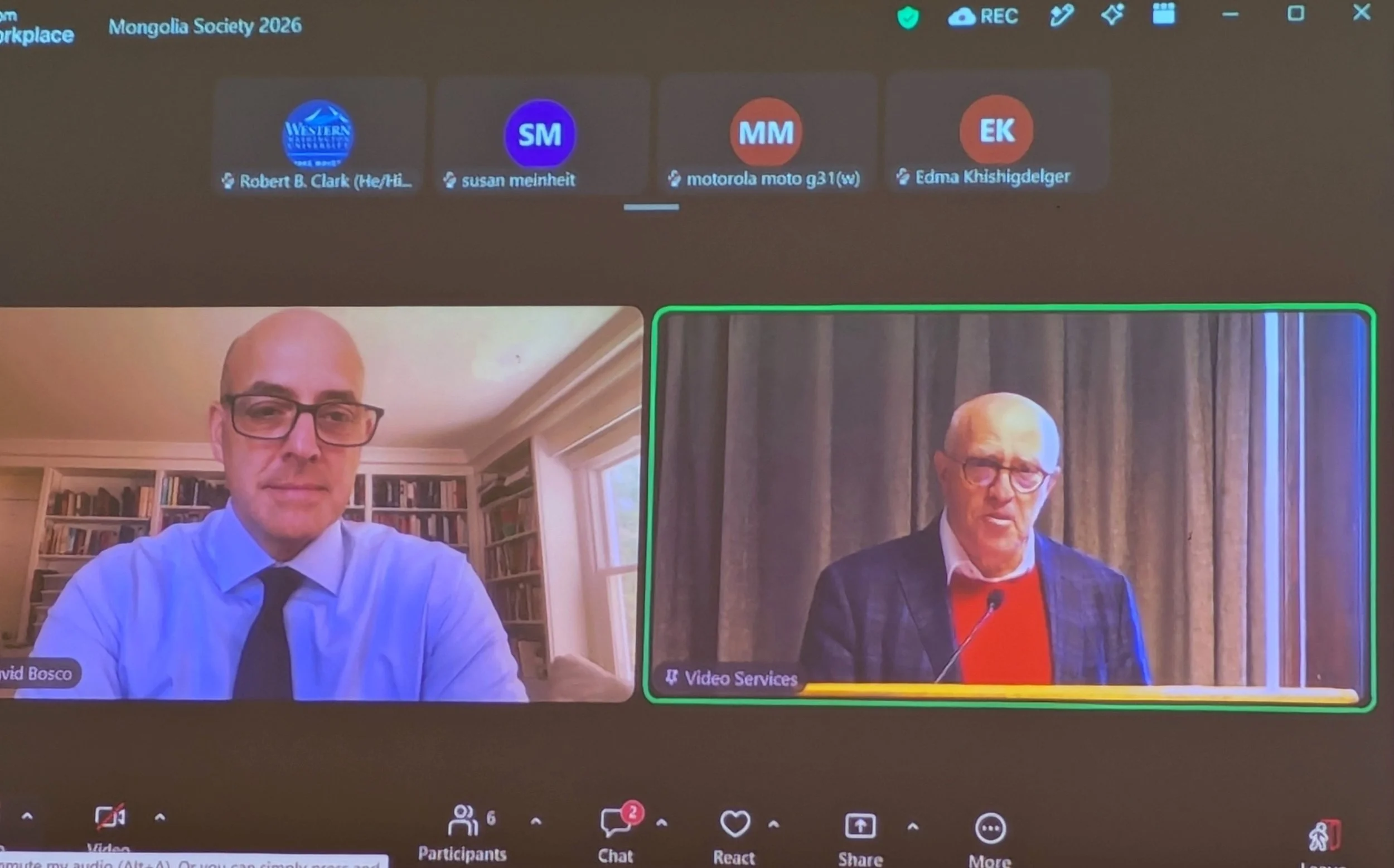
Pres. Klecheski introducing Interim Dean David Bosco, Hamilton Lugar School of Global and International Studies (Indiana University).
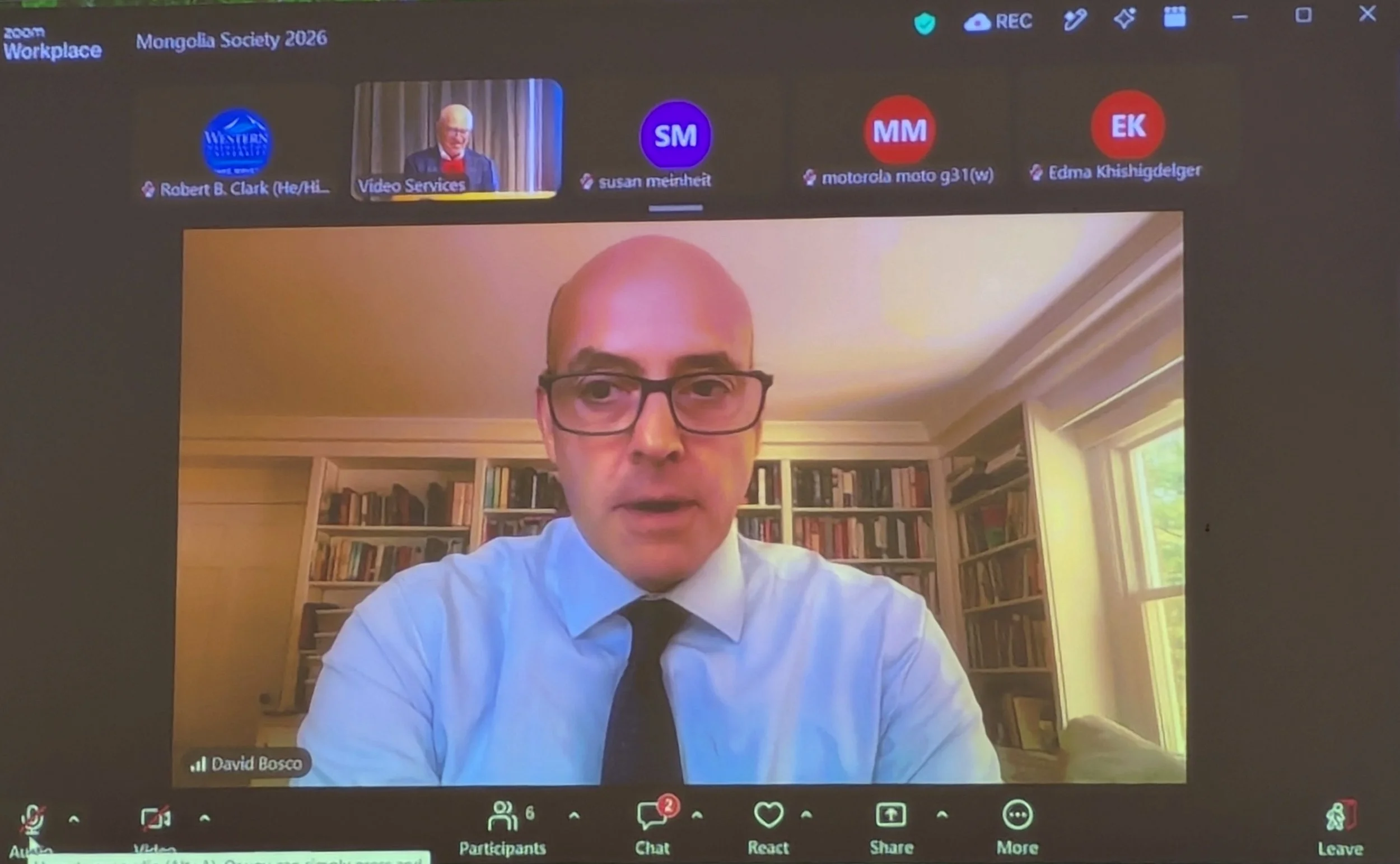
In his remarks, Interim Dean David Bosco (Indiana University) highlighted the long-standing importance to IU of Mongolian Studies and The Mongolia Society office being located at the school.
Ms. Susie Drost, Executive Director of the Mongolia Society, presenting her annual financial report.
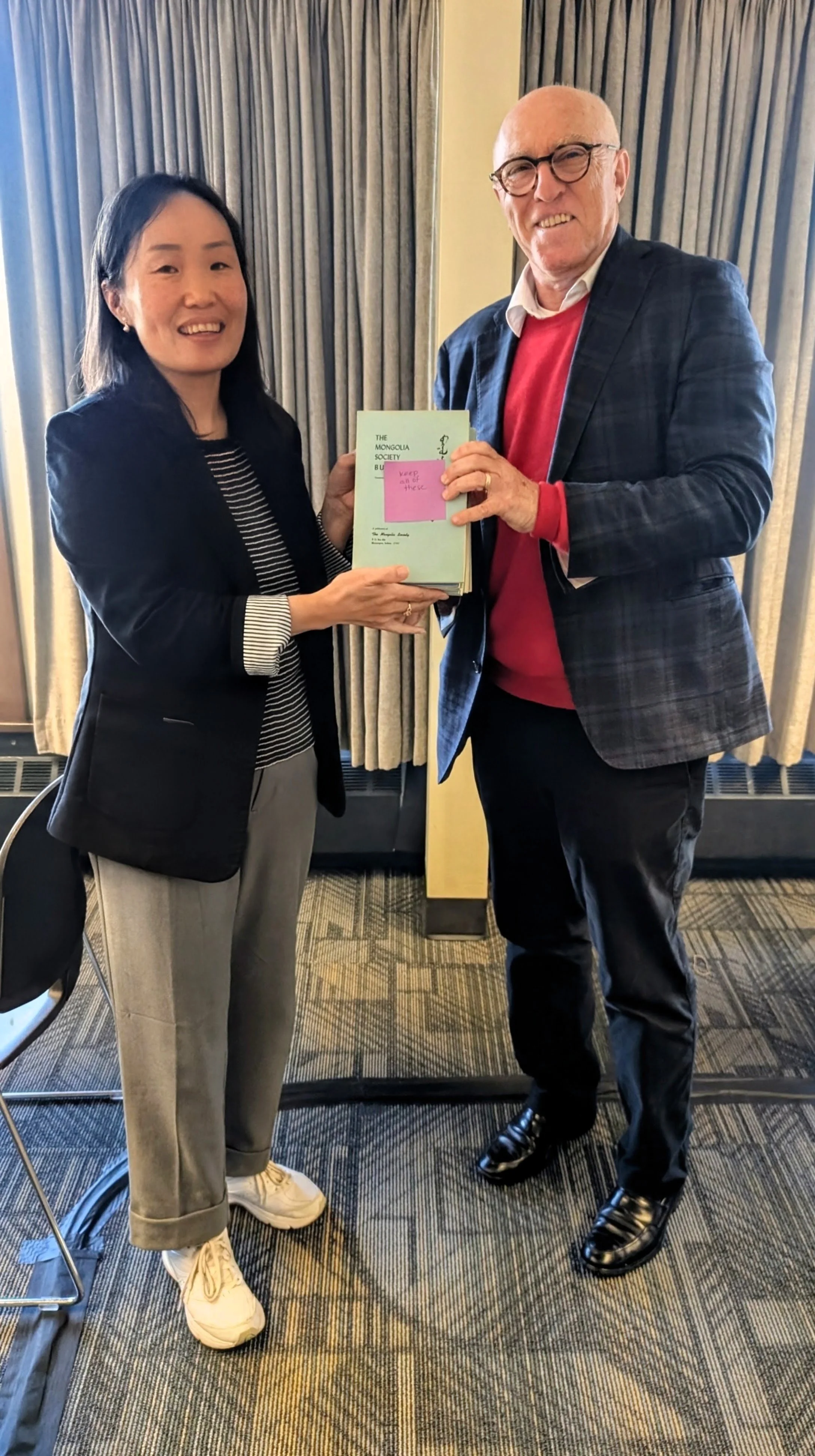
Pres. Klecheski presenting Mongolia Society publications to Dr. Tserendorj (Western Washington University).
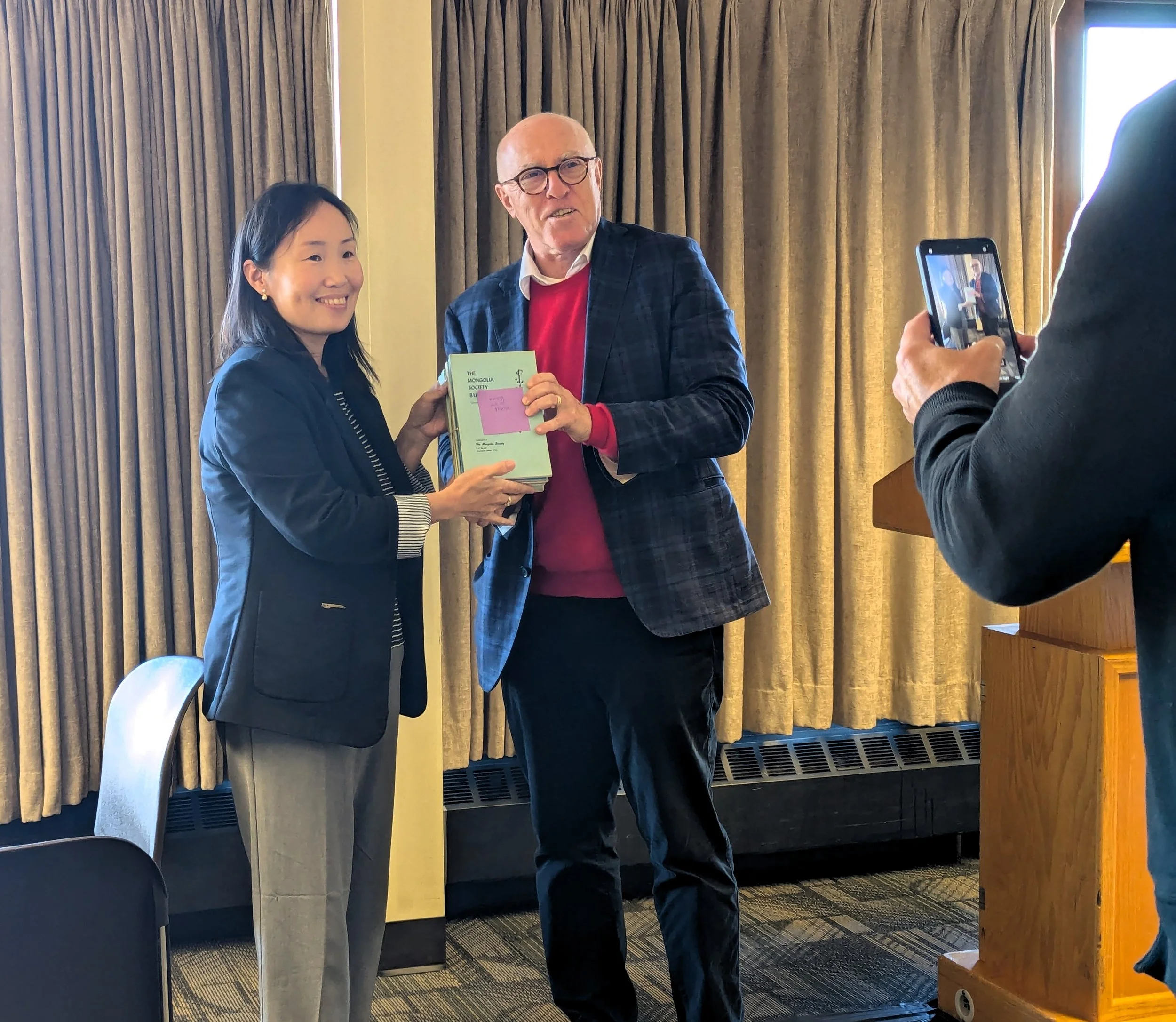
Pres. Klecheski presenting Mongolia Society publications to Dr. Tserendorj (Western Washington University).
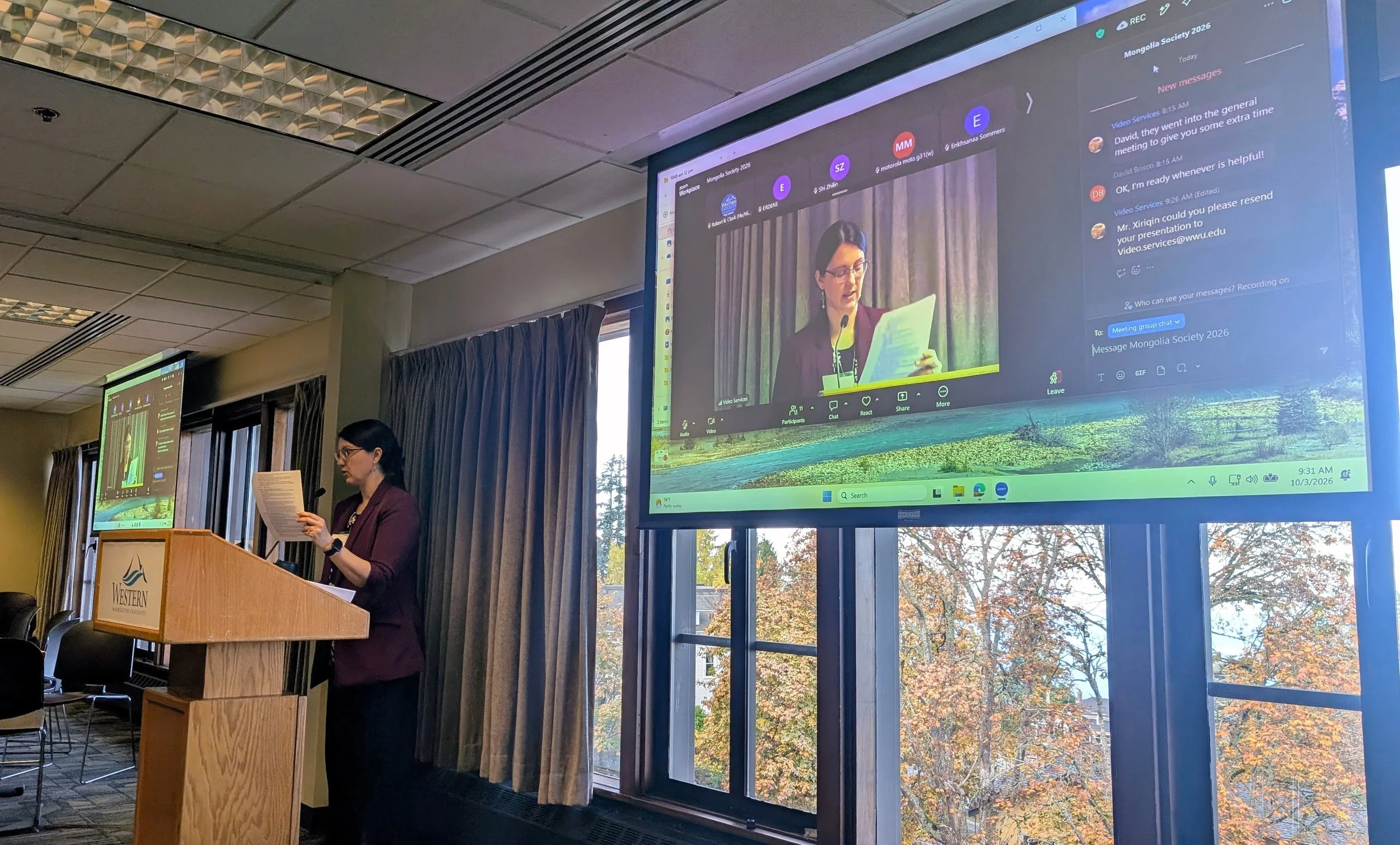
Dr. Charlotte D'Evelyn introducing the presenters in the "Reinterpreting Mongolian Epics" panel.
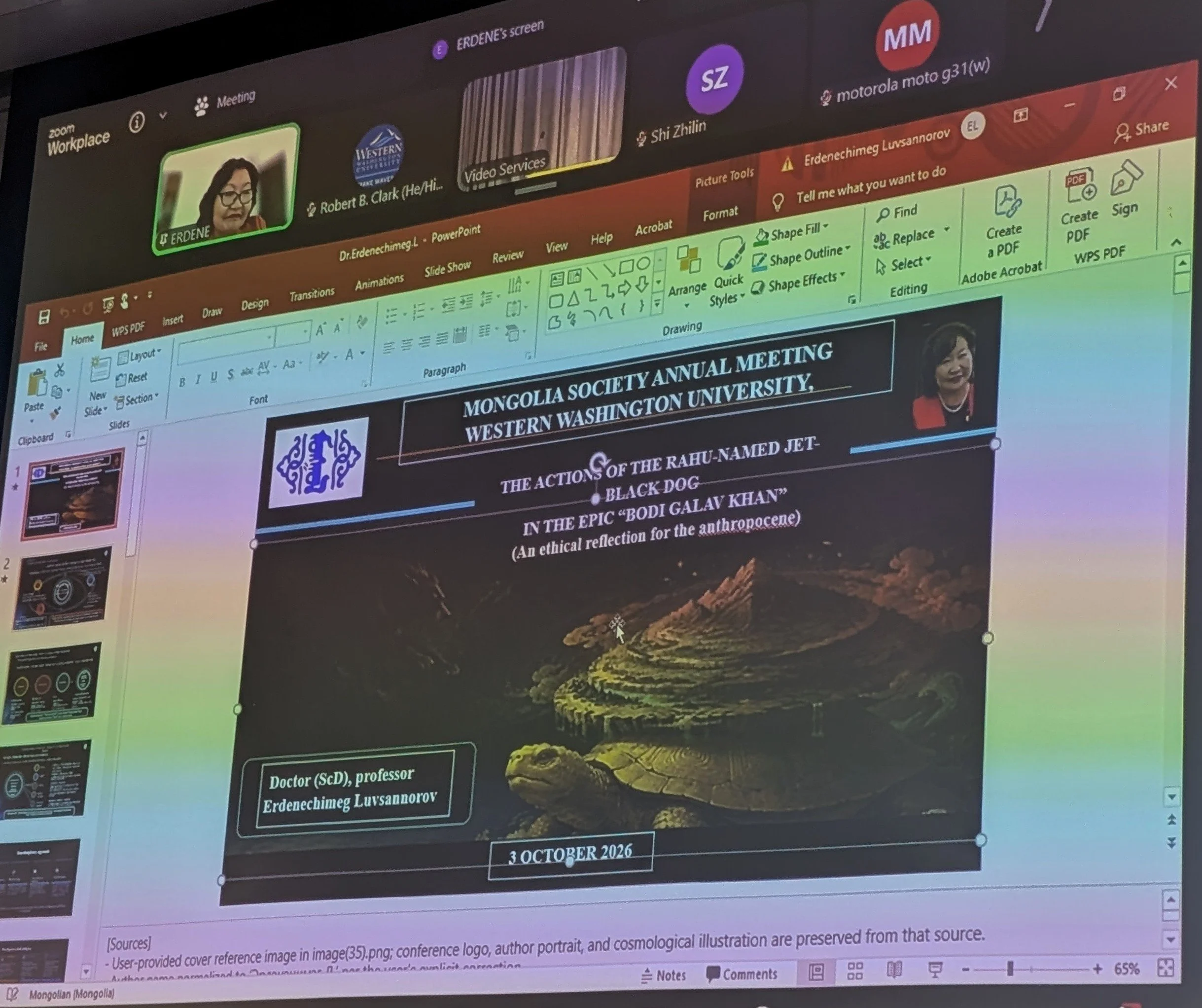
Dr. L. Erdenechimeg (Institute of Mongolian Studies, Mongolian Academy of Social Sciences) presenting her paper via Zoom.
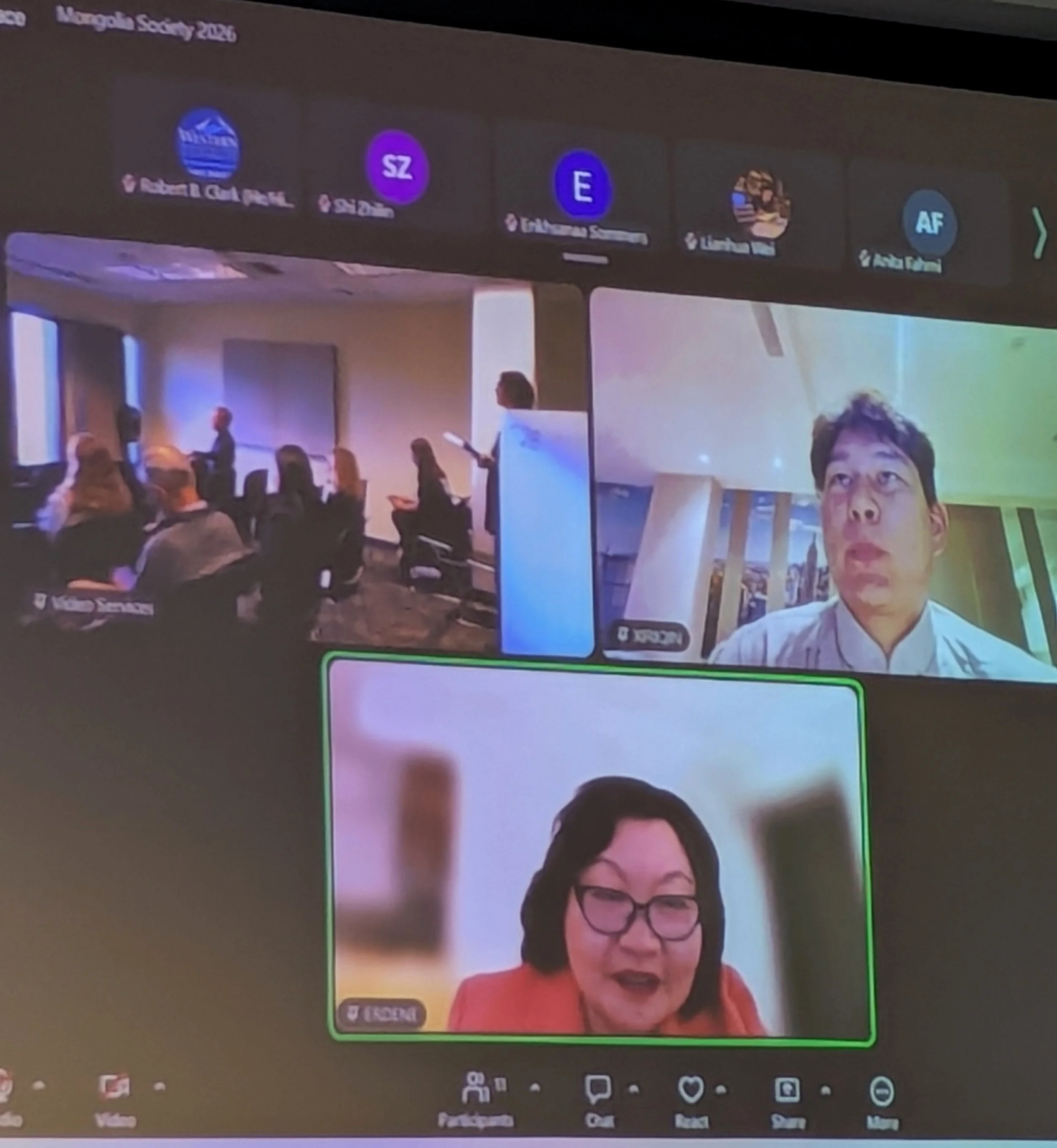
Lively discussions between participants at the conference with presenters on Zoom.
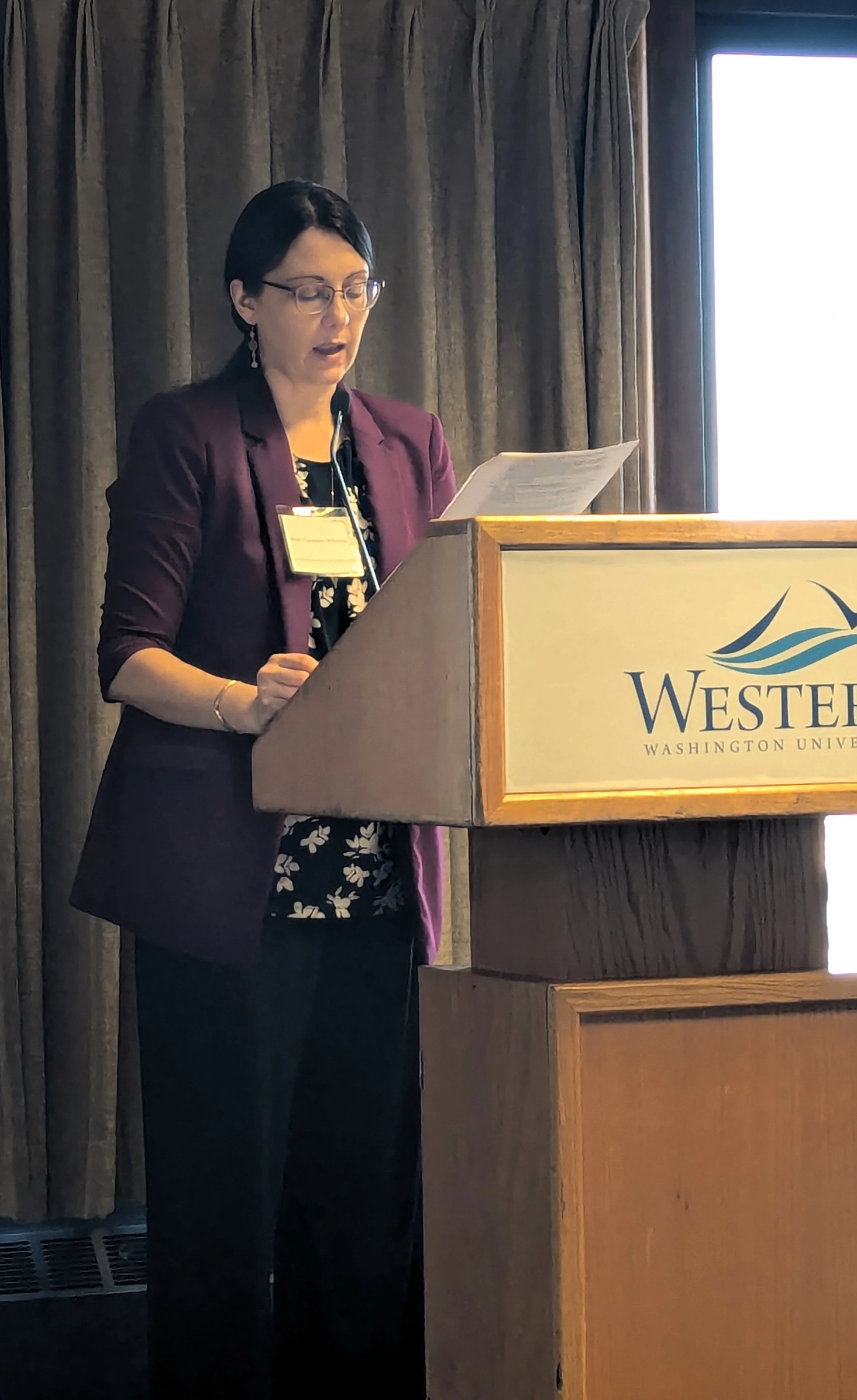
Dr. Charlotte D'Evelyn (Skidmore College) presenting her paper.
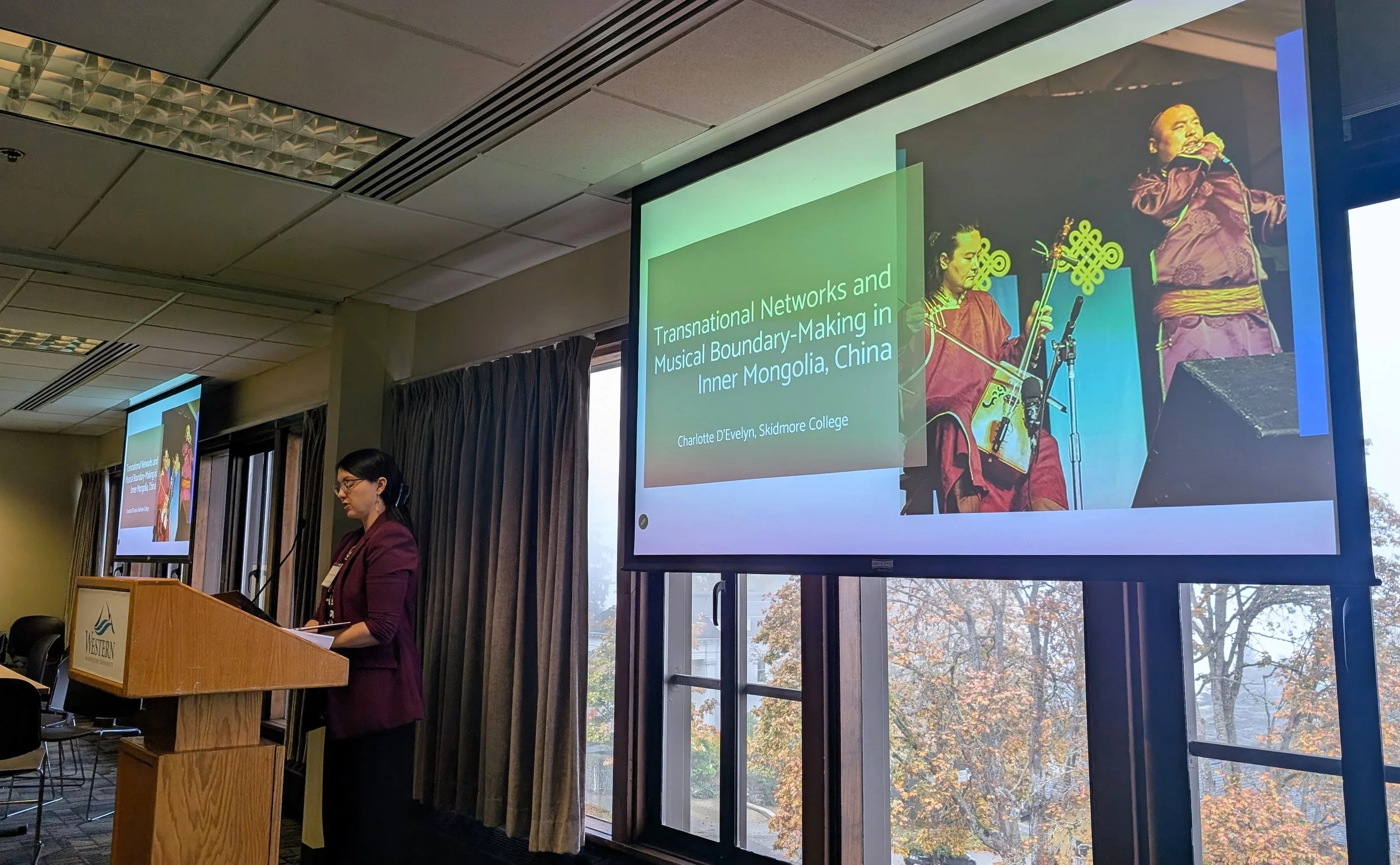
Dr. D'Evelyn presenting her paper.
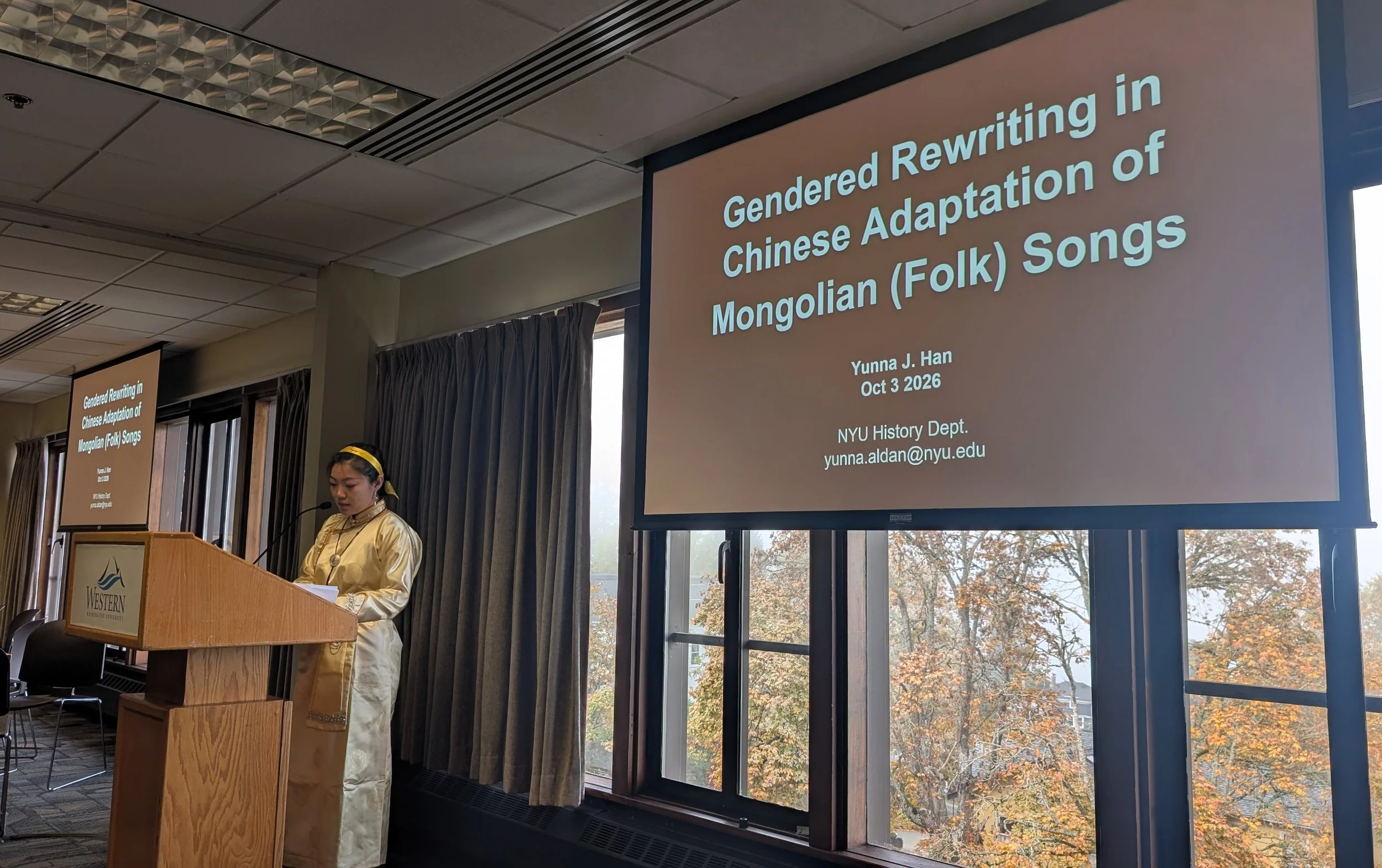
Ms. Yunna J. Han (New York University) presenting her paper.
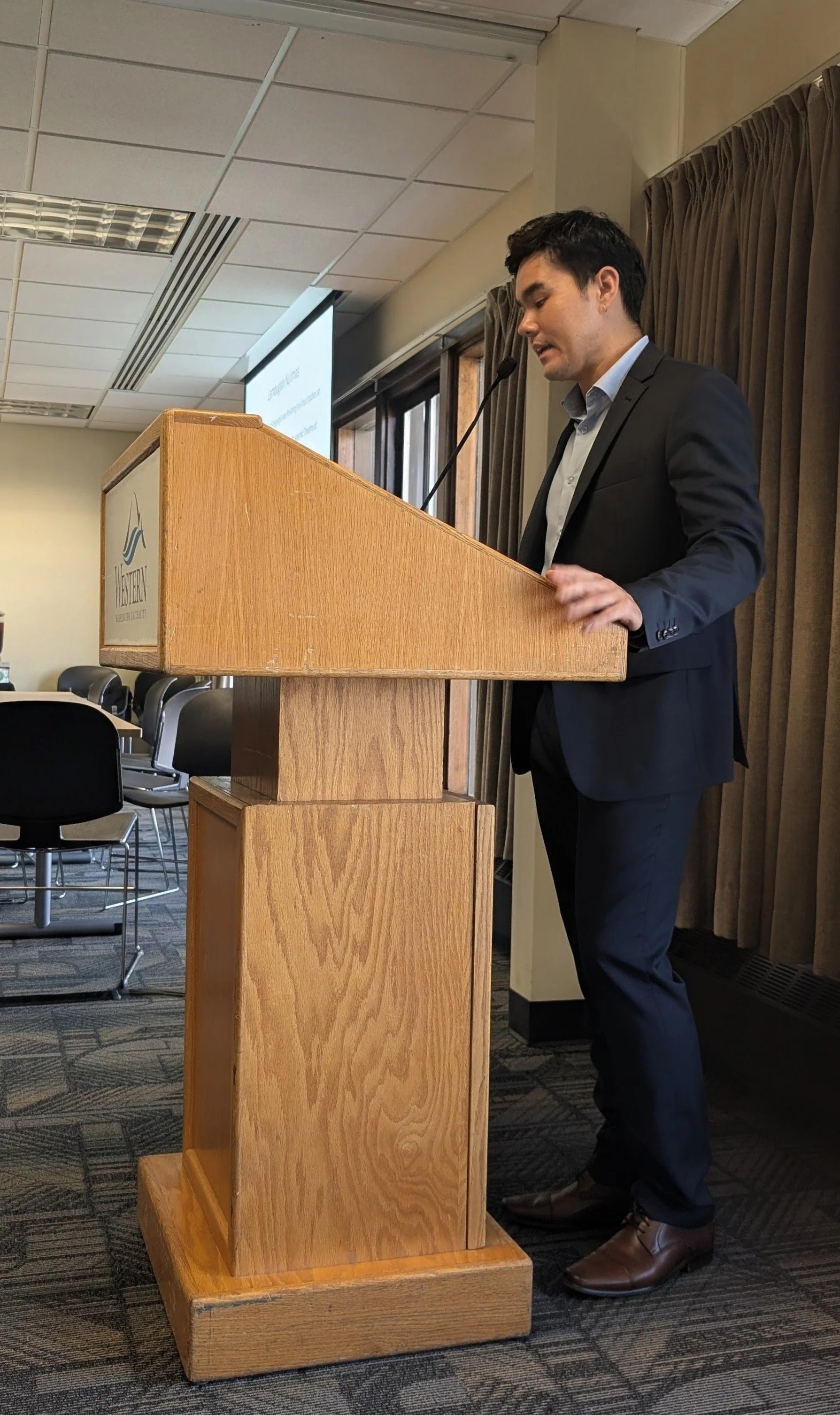
Dr. Victor Avila-Luvsangenden (Concordia College) presenting his paper.
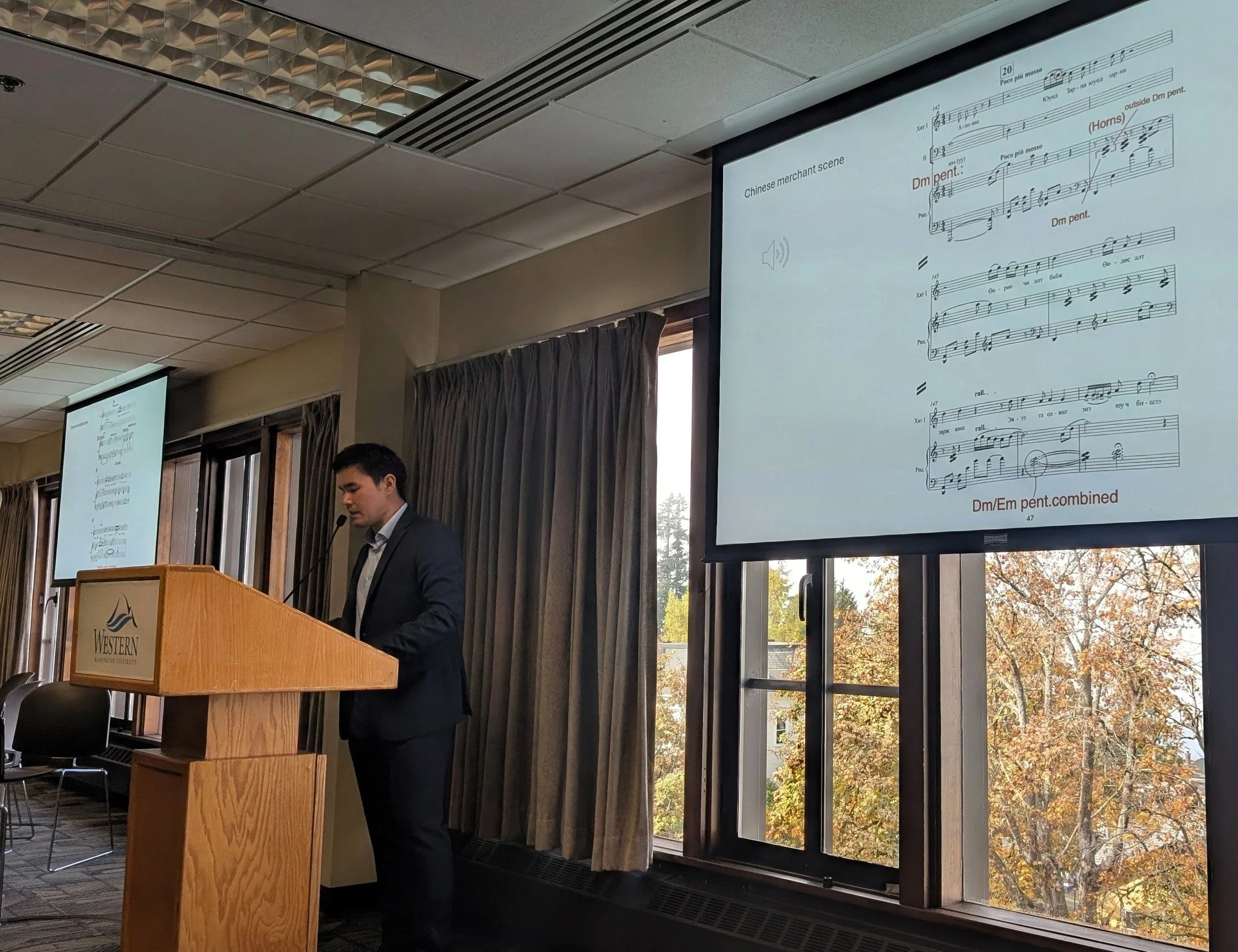
Dr. Avila-Luvsangenden presenting his paper.
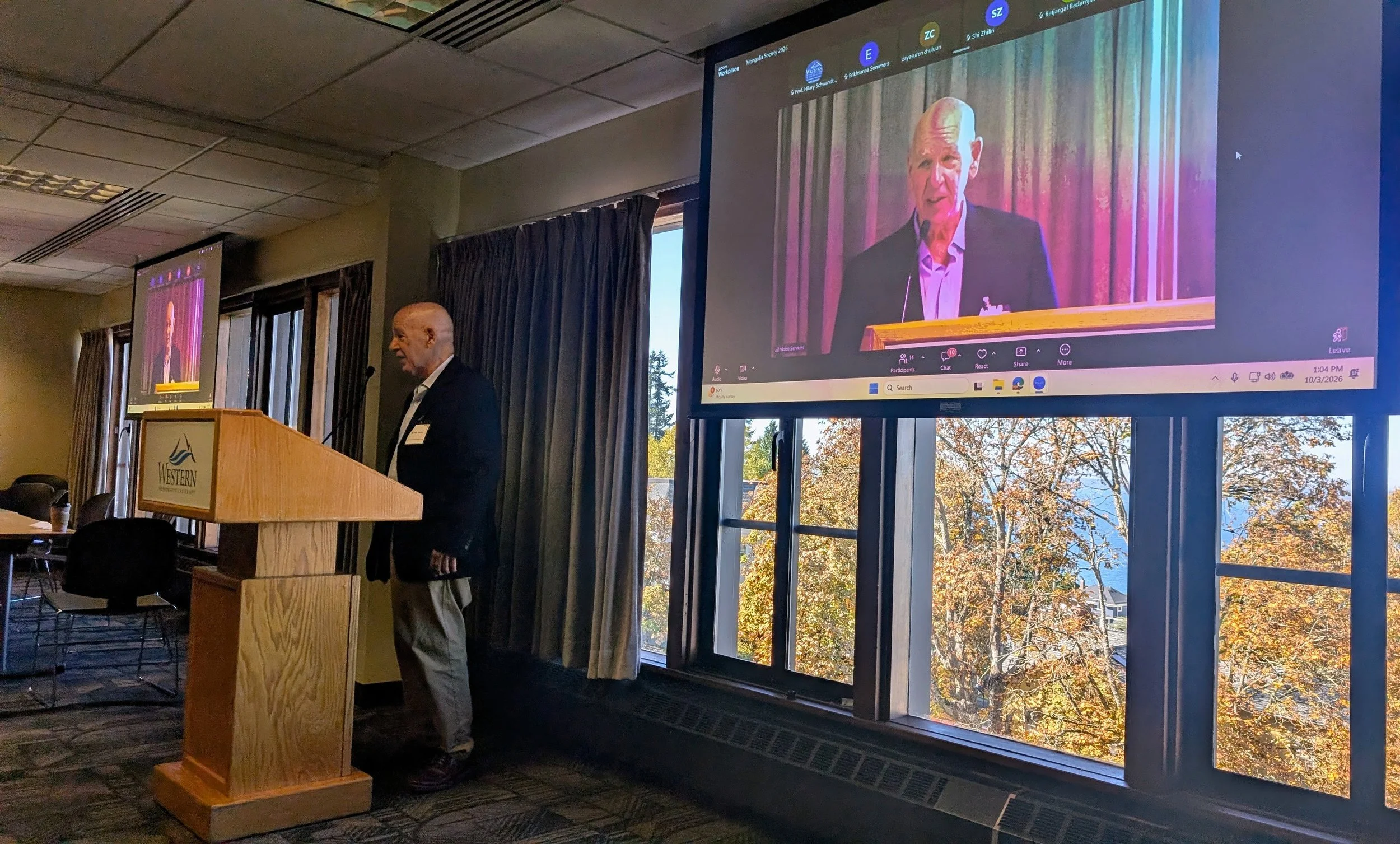
Mr. William Bikales (Independent Scholar and Associate, LSE IDEAS China Foresight Project) introducing the speakers in the panel "Social Issues in Urban and Rural Mongolia."
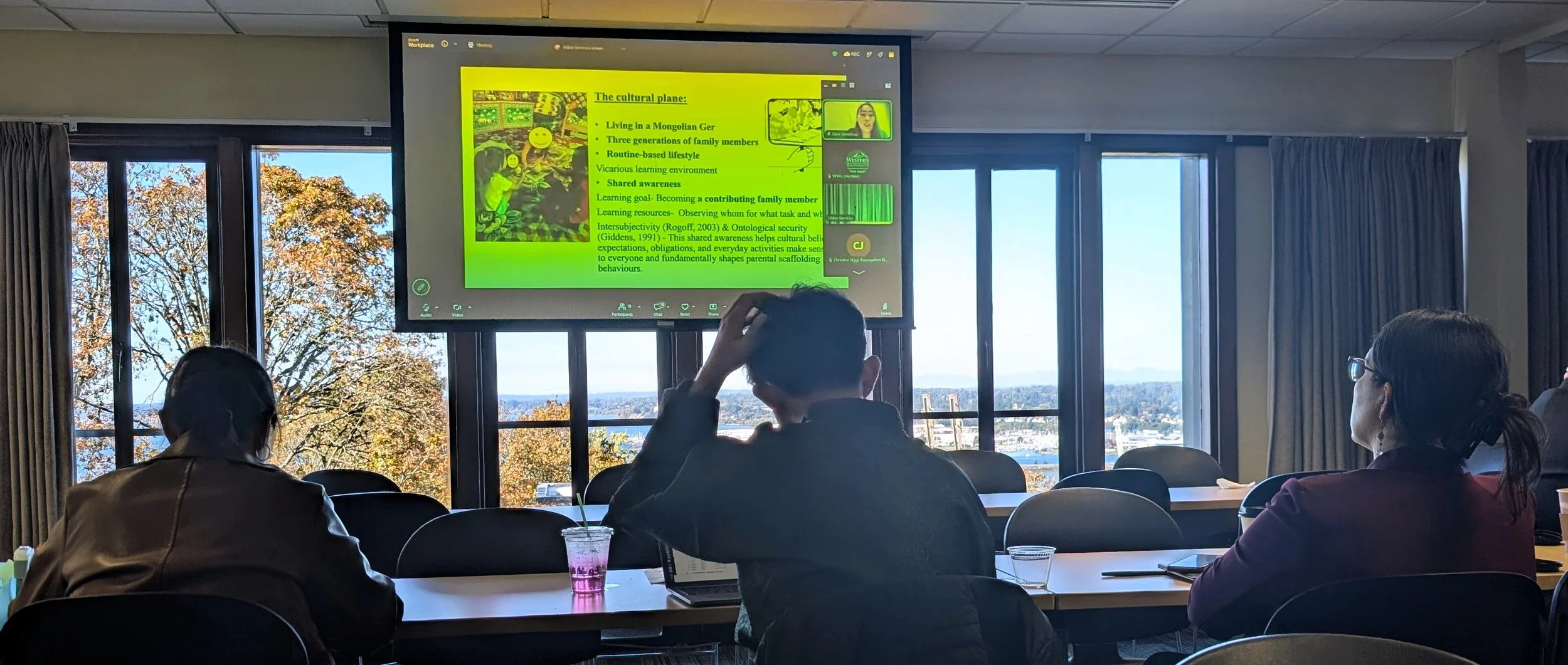
Conference participants listening to a presentation.
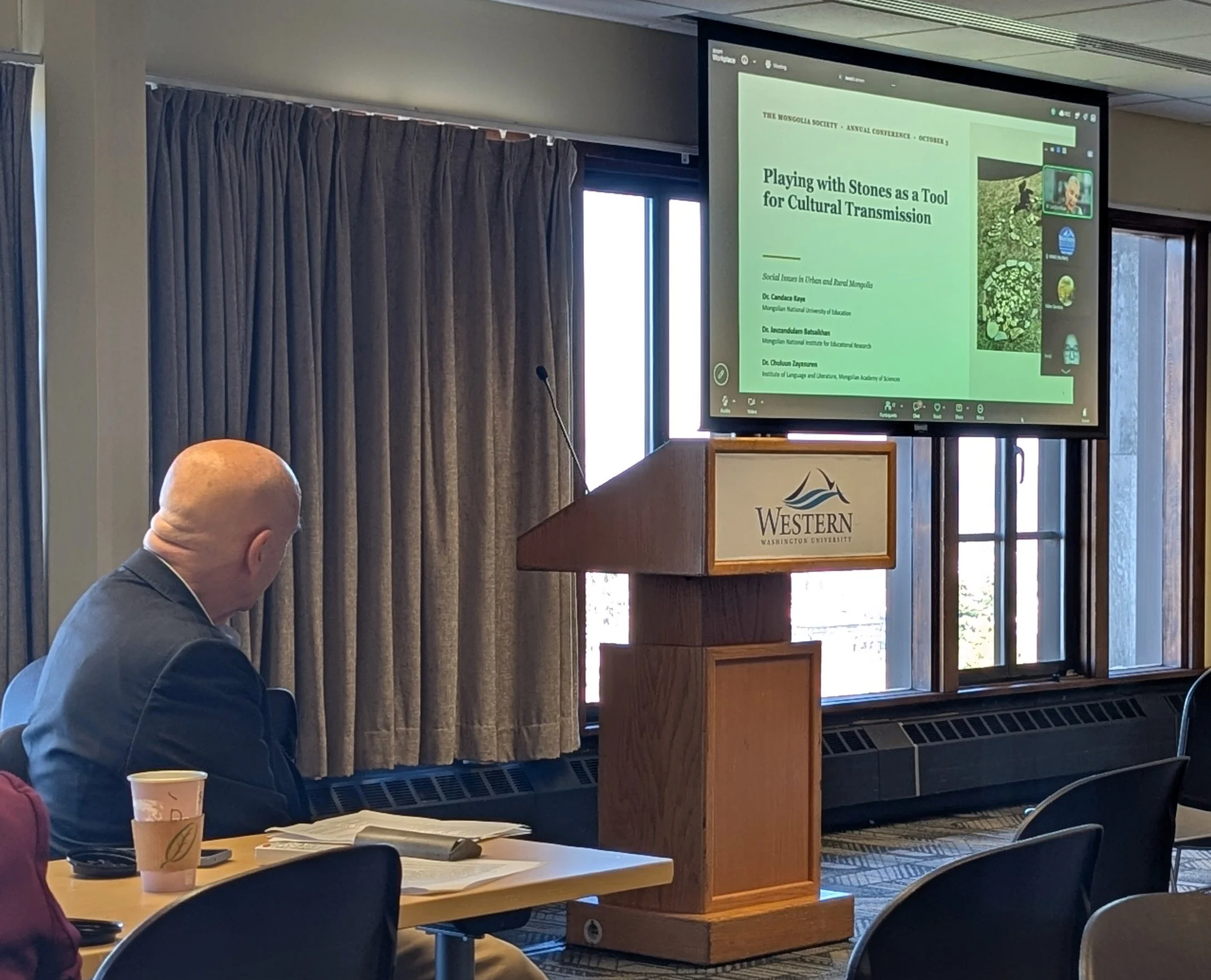
Mr. Bikales listening to a presentation.
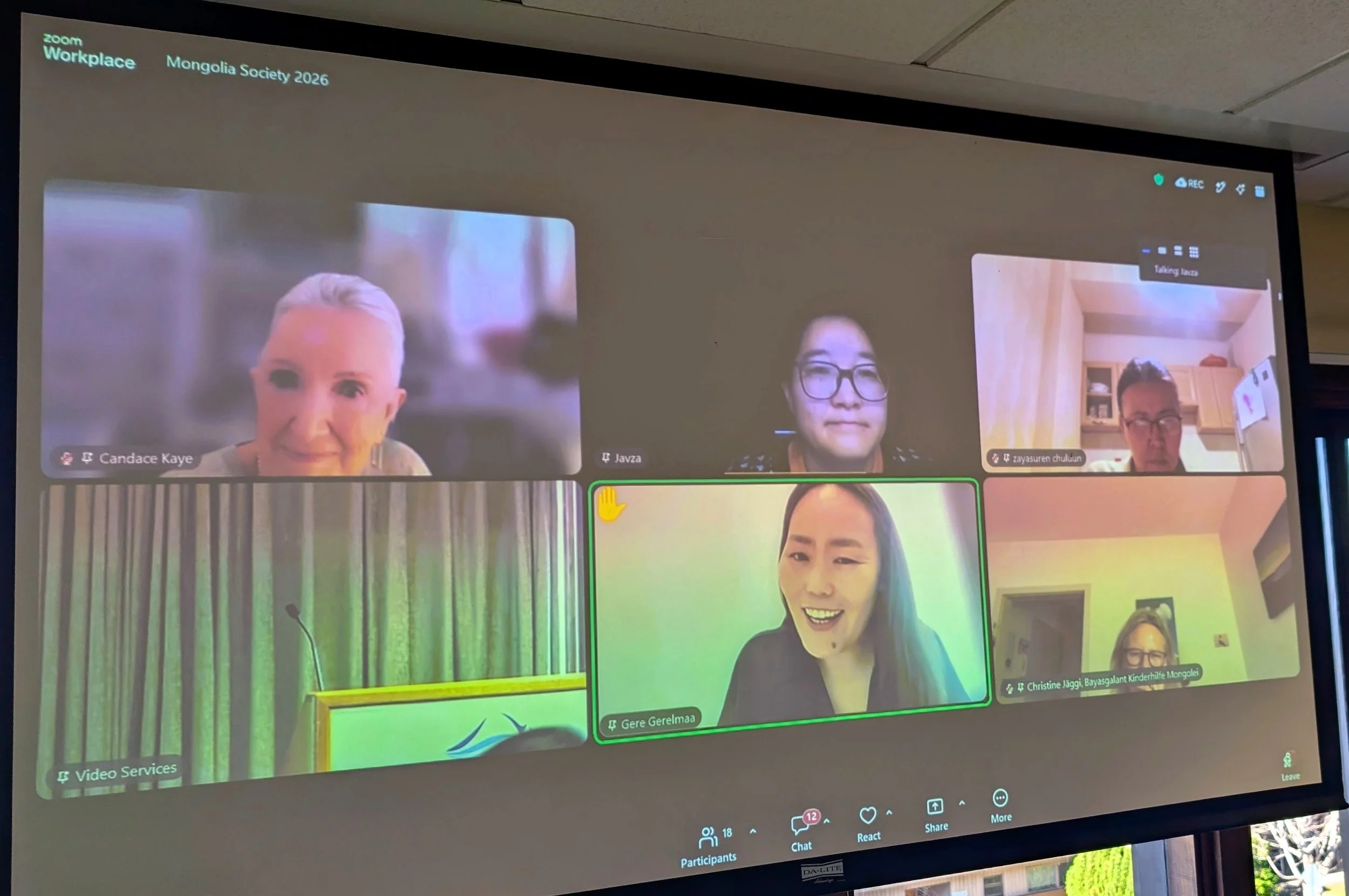
Lively discussions of issues raised in the "Social Issues in Urban and Rural Mongolia" panel. Included in this image are (top row): Dr. Candace Kaye (Mongolian National University of Education), Ms. A. Gerelmaa (University of Canberra, Australia), Dr. B. Javzandulam (Mongolian National Institute for Educational Research); and (bottom row): Dr. Ch. Zayasuren (Institute of Language and Literature, Mongolian Academy of Sciences), and Ms. Christine Jäggi (Founder and President of Bayasgalant Children’s Aid Mongolia).
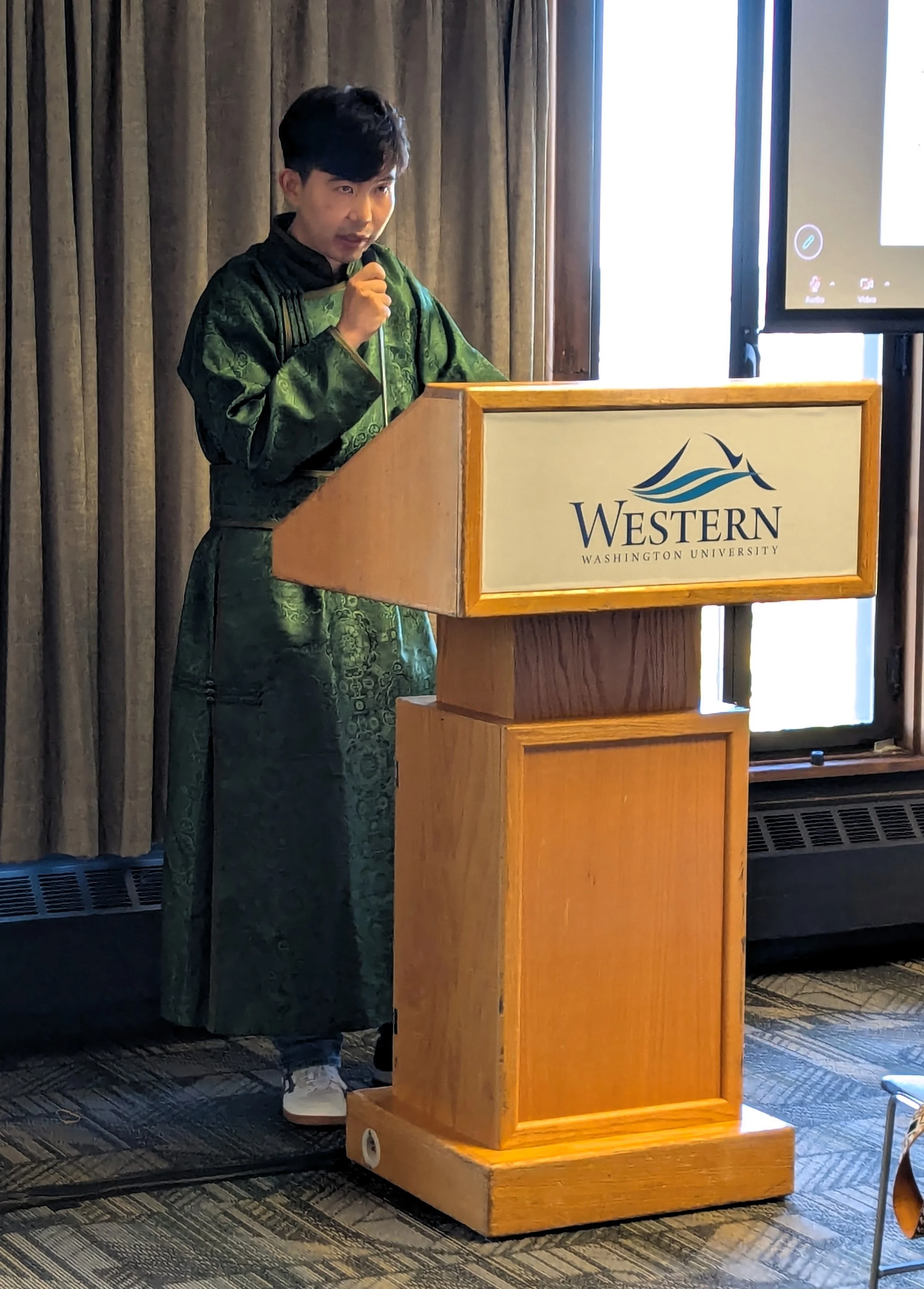
Mr. Chao Bo (State University of New York) presenting his paper.
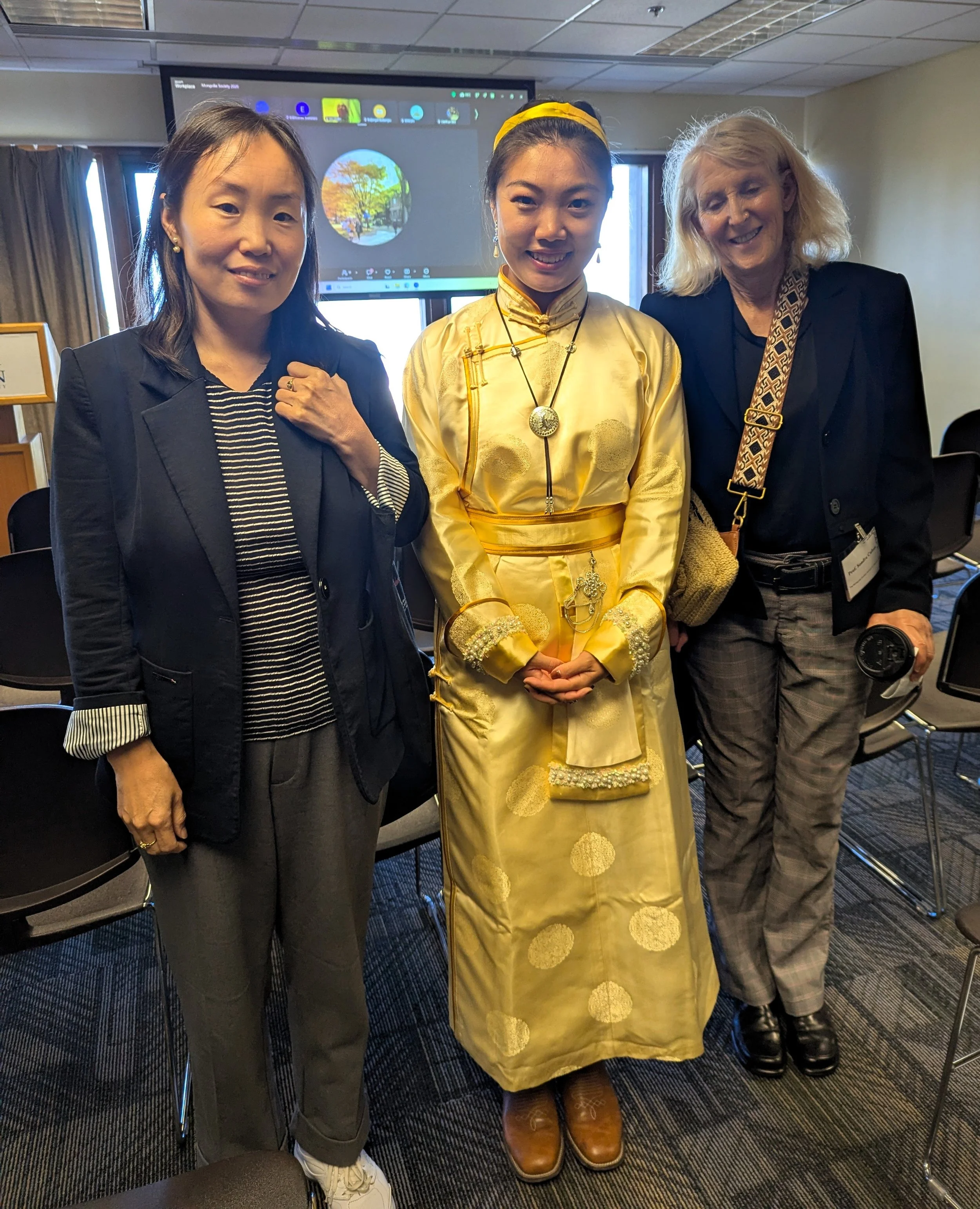
Dr. Tserendorj, Ms. Yunna Han, and Prof. Sondra Cuban (Western Washington University)
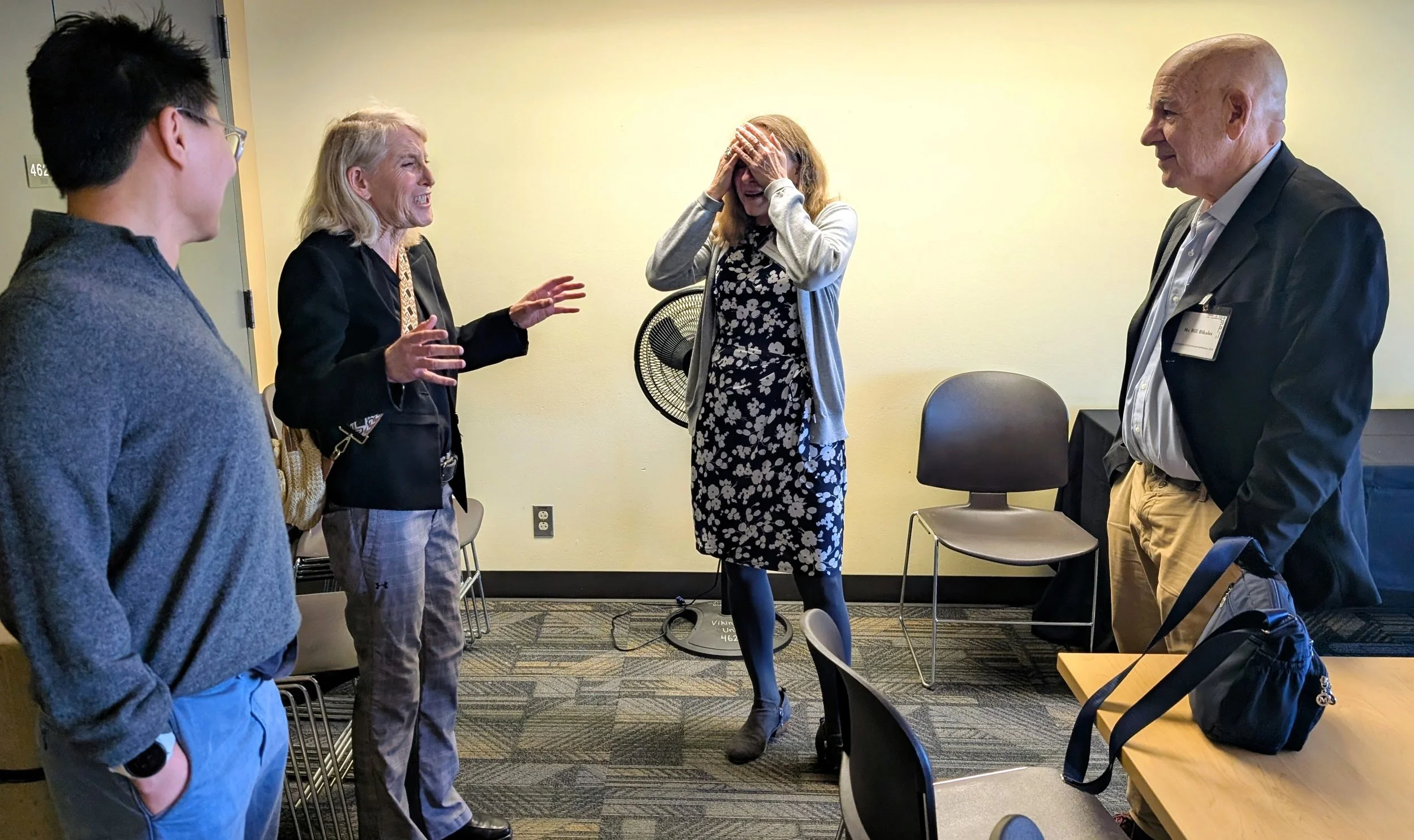
(Left to right): Mr. Batjargal, Dr. Cuban, Dr. Chakars, and Mr. Bikeles.
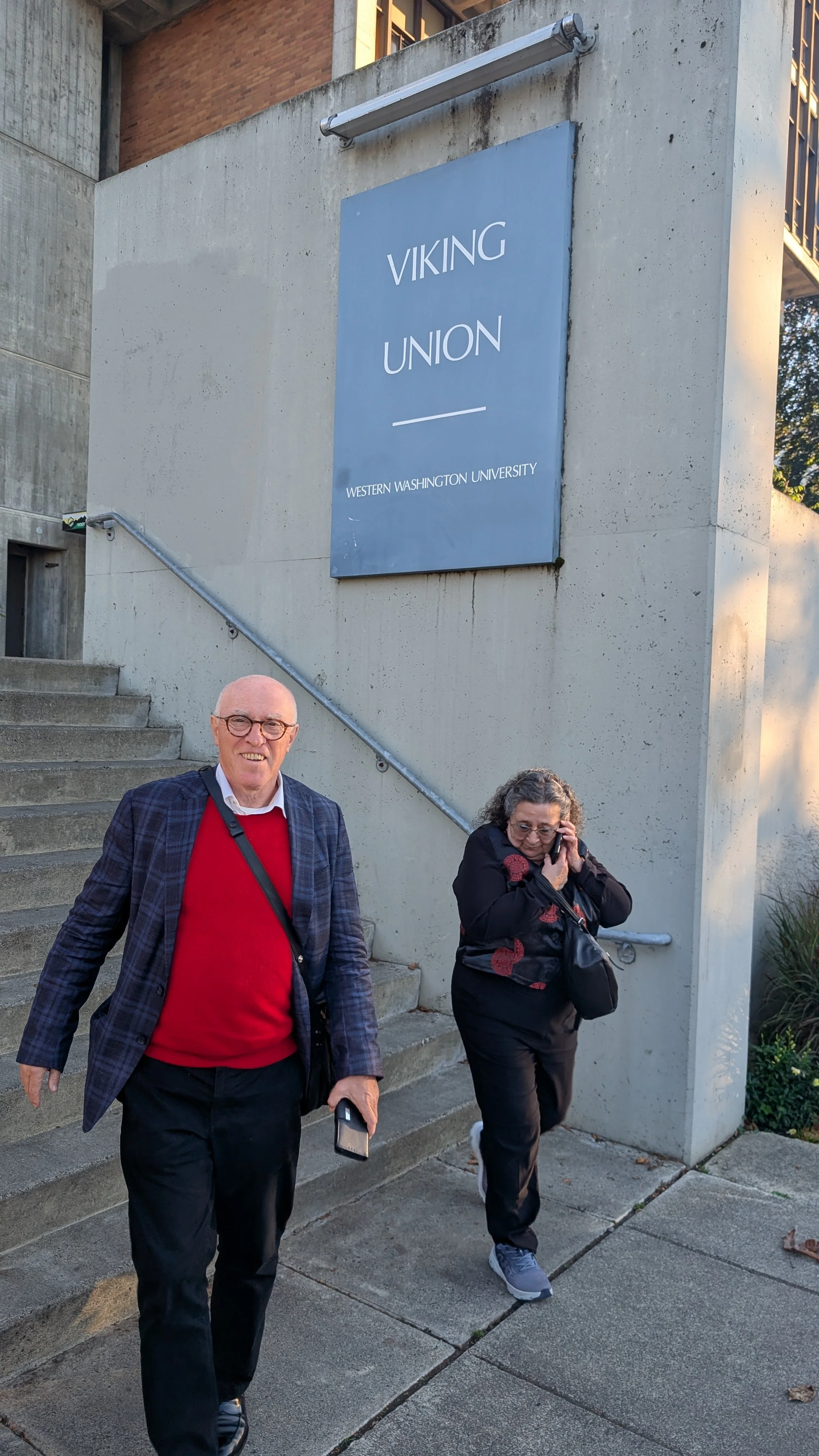
Pres. Klecheski and Ms. Drost leaving the Viking Union at the end of the conference.